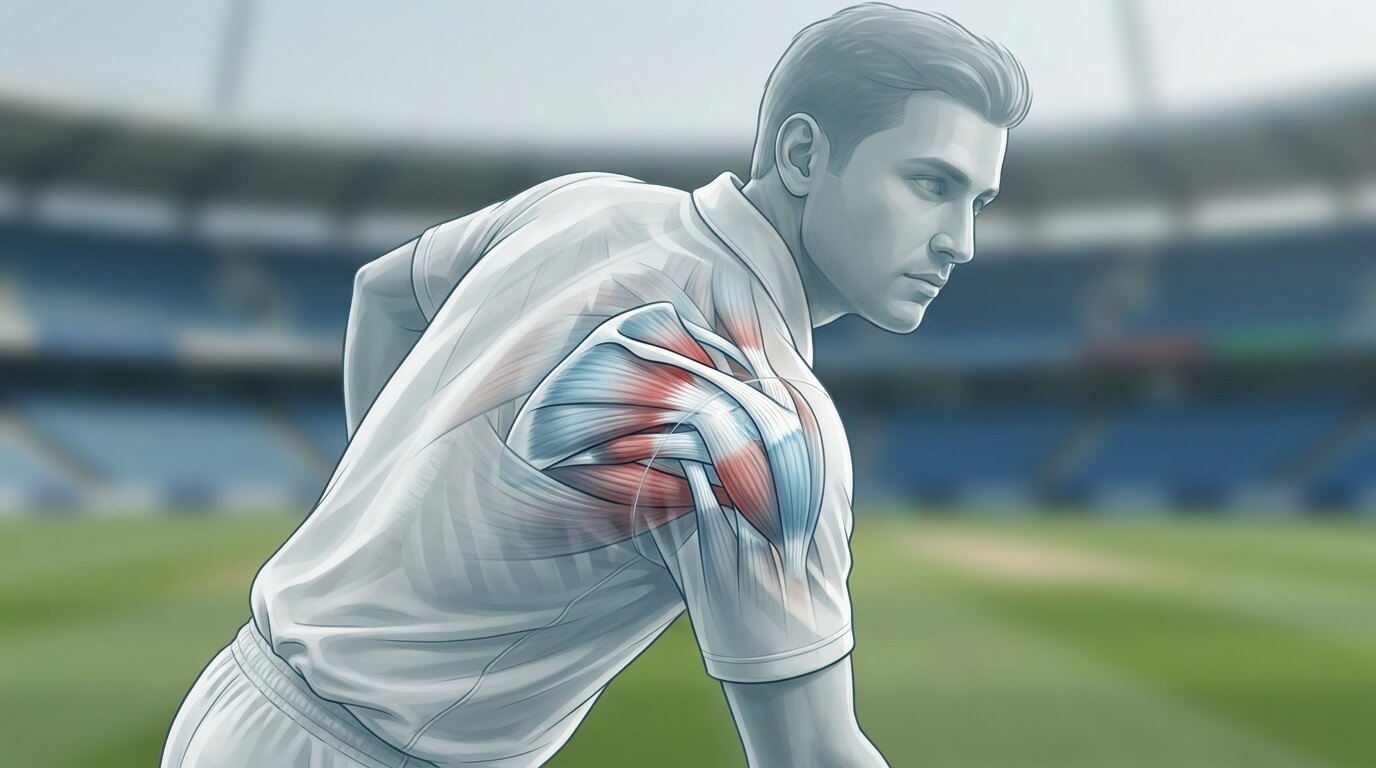
Lower back pain is one of the most common and disruptive injuries in cricket, particularly among fast bowlers, but it can affect players in every role. This guide explains what causes lower back pain in cricketers, why fast bowlers are especially vulnerable, how to recognize warning signs, and what evidence-based treatment, rehabilitation, and prevention strategies look like.
Quick Summary
- Lower back pain in cricket is common, especially in fast bowlers, due to repeated high-load spinal extension and rotation during delivery.
- Young fast bowlers are at particular risk of stress-related bone injuries such as Spondylolysis.
- Symptoms can range from localized stiffness to pain radiating into the leg, with or without neurological signs.
- Recurring or worsening pain, especially if it changes bowling mechanics or persists despite rest, should not be ignored.
- Diagnosis requires clinical assessment; imaging (X-ray, MRI, CT) is used selectively based on symptoms and risk factors.
- Treatment is individualized and may include activity modification, physiotherapy, targeted exercises, and gradual return to cricket-specific loads.
- Rehabilitation follows progressive stages: calming symptoms, restoring movement and strength, building capacity, and returning to full competition.
- Return to play depends on pain control, strength, mobility, functional testing, and workload progression—not just pain resolution.
- Prevention focuses on workload management, strength and mobility, technique, warm-up, sleep, and nutrition.
- Seek medical attention for severe, persistent, recurrent, or neurological symptoms, or after significant trauma.
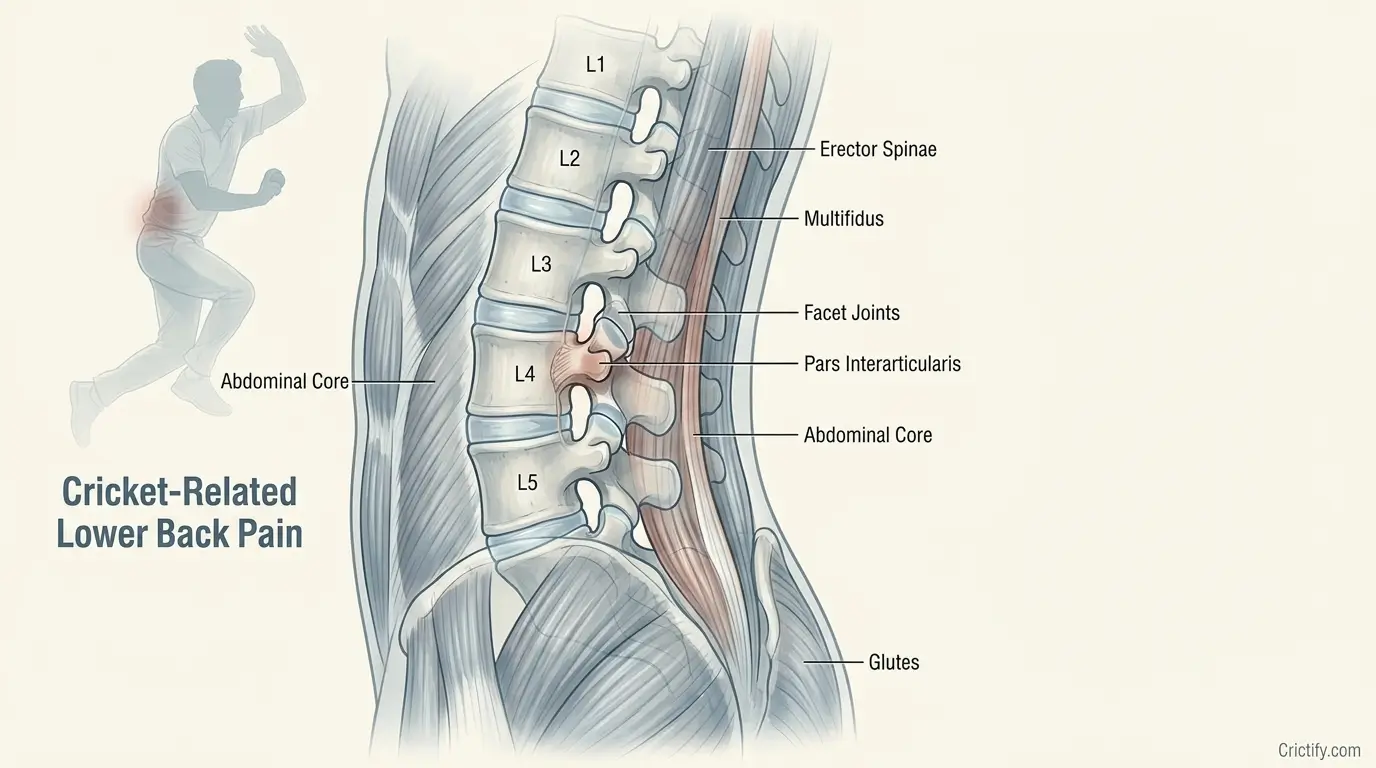
Lower back pain refers to discomfort, stiffness, or pain in the lumbar region of the spine—the area between the bottom of the ribs and the top of the pelvis. In cricketers, this pain can arise from multiple structures: muscles, ligaments, facet joints, inter vertebral discs, or bones such as the pars inarticulate.
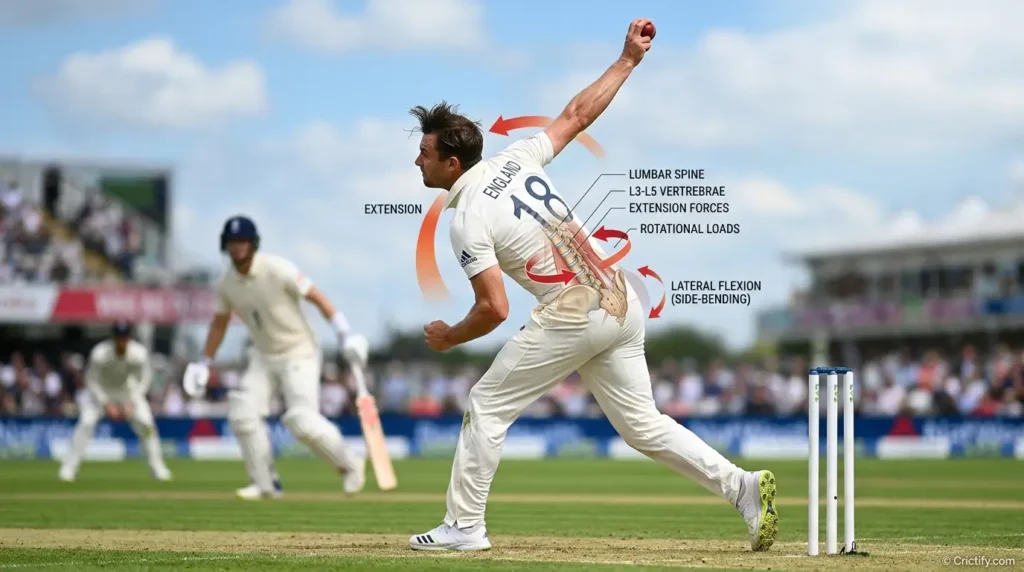
The lumbar spine is designed to provide stability while allowing controlled movement. During cricket activities—especially fast bowling—it experiences repeated extension (arching), rotation (twisting), and side-bending under high load. Over time, or with sudden workload spikes, these forces can irritate or injure tissues, leading to pain.
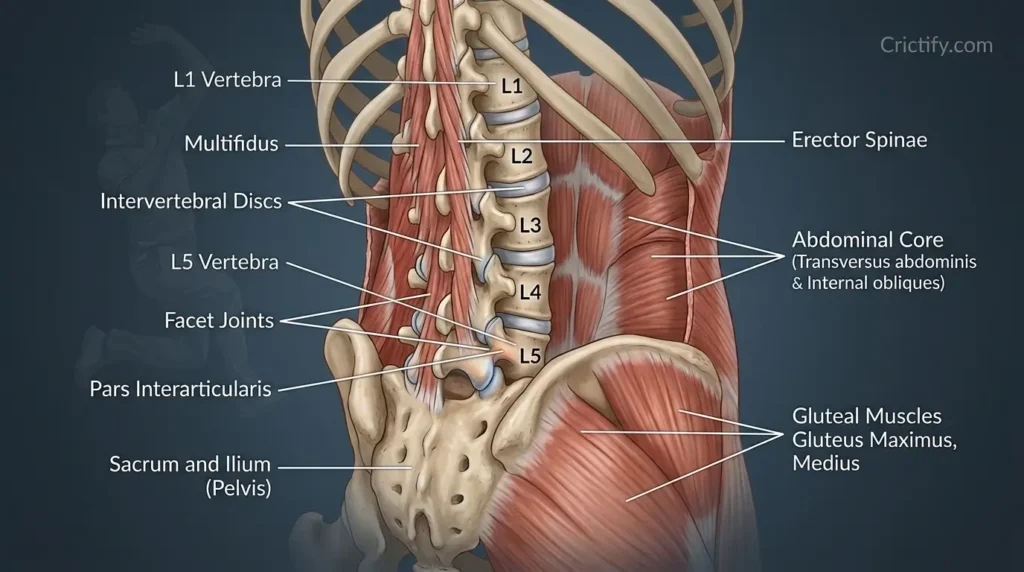
Lower back pain is not a single diagnosis. It is a symptom that can result from different underlying causes, and the appropriate management depends on identifying the likely source and severity.
How Common Is Lower Back Pain in Cricket?
Lower back pain is one of the most frequently reported injuries in cricket, particularly among fast bowlers. Epidemiological studies from Australia, South Africa, England, and the West Indies consistently show that fast bowlers have the highest injury rates in cricket, with the lower back being the most susceptible region.
Lumbar spine injuries in fast bowlers account for the greatest amount of missed playing time in cricket. In young athletes, Spondylolysis (a stress injury to the pars inarticulate) has consistently been found to be the most common cause of back pain.
Research indicates that lumbar bone stress injuries (LBSI) have been recognized as a common cause of back pain in cricket fast bowlers for at least 40 years. Spondylolysis has been reported in up to 44% of professional athletes in some studies, significantly more common than in amateur athletes and non-athletes.
Adolescent fast bowlers are particularly vulnerable during growth phases, especially when school, club, representative, and net loads overlap. One MRI study found that the prevalence of lumbar spondylolysis in the general population is 4–6% by age 18, but prevalence is higher in cricketers.
Why Is Lower Back Pain So Important in Cricket?
Lower back pain matters in cricket because it can:
- Cause significant time loss from training and competition.
- Disrupt skill development, especially in young fast bowlers.
- Lead to chronic issues if not managed appropriately.
- Affect bowling speed, accuracy, and consistency.
- Impact batting, fielding, and overall athletic performance.
Lumbar spine injuries in fast bowlers account for the greatest missed playing time in cricket. Lower back pain (LBP) poses a significant challenge for cricketers of all standards, often leading to rehabilitation periods exceeding eight months and potential termination of the playing season.
For young athletes, delayed diagnosis of stress-related injuries can increase the risk of progression to more serious conditions such as spondylolisthesis (slippage of a vertebra). Early recognition and appropriate management are therefore critical.
Which Cricket Players Are Most at Risk?
Fast Bowlers
Fast bowlers are at the highest risk of lower back pain in cricket. The bowling action involves repeated high-load extension, rotation, and side-bending of the lumbar spine at speed.
As the front leg comes forward to deliver the ball, forces travelling through the leg and up into the lumbar spine can be 3–9 times that of body weight. Counter-rotations of 12–40 degrees during a delivery stride have predicted an increased incidence of lumbar spondylolysis, disc abnormality, and muscle injury in fast bowlers.
Mixed bowling actions (a combination of front-on and side-on) are associated with 89% of lumbar stress injuries in bowlers. Increased shoulder counter-rotation (associated with mixed bowling actions) and decreased anterior abdominal fascial slide may be associated with LBP in cricketers.
Spin Bowlers
Spin bowlers also experience lower back stress, though typically at lower magnitudes than fast bowlers. The repeated rotation and flexion during delivery, combined with high bowling volumes in training and matches, can contribute to mechanical low back pain and facet joint irritation.
Batters
Batters can develop lower back pain from repeated trunk rotation during shots, prolonged standing and bending in the field, and asymmetric loading patterns. Poor trunk control, reduced hip mobility, and fatigue can shift more load into the lumbar spine during batting and fielding.
Wicketkeepers
Wicket keepers spend long periods in semi-squat positions with the trunk flexed, which can lead to stiffness and mechanical low back pain. Repeated bending, twisting, and sudden movements to take catches or effect stumping add cumulative load to the lower back.
Fielders
Fielders may experience lower back pain from repeated bending, twisting, throwing, and sprinting, especially if core and hip strength are inadequate. Poor landing mechanics and fatigue can increase spinal load during high-intensity fielding drills.
Junior Players
Junior cricketers, especially fast bowlers, are more vulnerable during growth phases. Spondylolysis has consistently been found to be the most common cause of back pain in young athletes. Longer and more intense training sessions, poor preparation and technique, longer spells of bowling, and overlapping school/club/representative loads increase risk.
Adolescent fast bowlers should be encouraged to report low back pain when it occurs to avoid delaying the diagnosis of a lumbar stress injury.
Professional Players
Professional cricketers face high cumulative workloads across formats, travel, and training camps. High acute match workload and high previous season workload were risk factors for tendon injuries, while high medium-term (3-month) workload and low career workload were risk factors for bone stress injuries.
Why Does Cricket Put Stress on the Lower Back?
Repeated Bowling
Fast bowling repeatedly loads the lumbar spine through extension, rotation, and side-flexion at high speeds. When bowling volume rises faster than recovery, the pars can become irritated and develop a lumbar bone stress injury.
Spinal Extension
The lumbar spine extends (arches) significantly during the delivery stride, especially in bowlers with mixed or front-on actions. Repetitive lumbar spine hyperextension is a key mechanism in spondylolysis.
Spinal Rotation
Cricket bowling and batting involve substantial trunk rotation. Rotation under load, especially when combined with extension, increases stress on facet joints, discs, and the pars interarticularis.
Combined Extension and Rotation
The combination of extension and rotation during fast bowling creates high shear and compressive forces on the lumbar spine. This combination is particularly demanding on the pars interarticularis and facet joints.
Sudden Changes in Training Load
Spikes in acute workload are associated with increased injury risk in elite cricket fast bowlers. Fast bowlers with an internal workload training-stress balance of greater than 200% had a relative risk of injury of 4.5 compared with those with a training-stress balance between 50% and 99%.
Poor Recovery
Inadequate recovery between sessions reduces the spine’s ability to adapt to load. Fatigue can shift more load into the lumbar spine as hip and trunk control diminish.
Weak Core or Hip Muscles
Reduced trunk control through increased side flexion during the bowling action is associated with low back pain. Weak glutes, poor core stability, and reduced hip mobility can increase lumbar stress.
Poor Movement Mechanics
Compromised dynamic balance, lumbar proprioception deficits, and poor bowling technique can increase injury risk. Technique deteriorates with fatigue, potentially increasing spinal load.
Common Causes of Lower Back Pain in Cricketers
Lower back pain in cricketers can arise from multiple structures. The table below summarizes common causes.
| Cause | What It Is | Typical Features in Cricketers |
|---|---|---|
| Muscle Strain | Overstretching or tearing of lower back muscles (e.g., erector spinae, quadratus lumborum) | Sudden onset pain after a spell or session; localized tenderness; pain with movement |
| Ligament Strain | Injury to ligaments supporting the lumbar spine | Pain with extension or rotation; may follow awkward movement or overload |
| Mechanical Low Back Pain | Non-specific pain from joints, discs, or soft tissues without clear structural damage | Stiffness, ache after bowling or sitting; improves with movement; common in batters and keepers |
| Facet Joint Irritation | Inflammation of the small joints at the back of the spine | Pain with extension and rotation; localized to one side; common in spin bowlers and batters |
| Disc-Related Problems | Irritation or herniation of intervertebral discs | Pain may radiate into the leg; worse with sitting, bending, or coughing; may have neurological symptoms |
| Stress-Related Bone Injuries (LBSI) | Bone stress reaction or fracture in the pars interarticularis (spondylolysis) | Common in young fast bowlers; pain contralateral to bowling arm; worse with extension |
| Spondylolisthesis | Forward slippage of a vertebra, often following spondylolysis | Persistent pain, possible neurological symptoms; requires medical assessment |
| Other Possible Causes | Sacroiliac joint dysfunction, hip pathology, referred pain | May mimic back pain; requires thorough assessment |
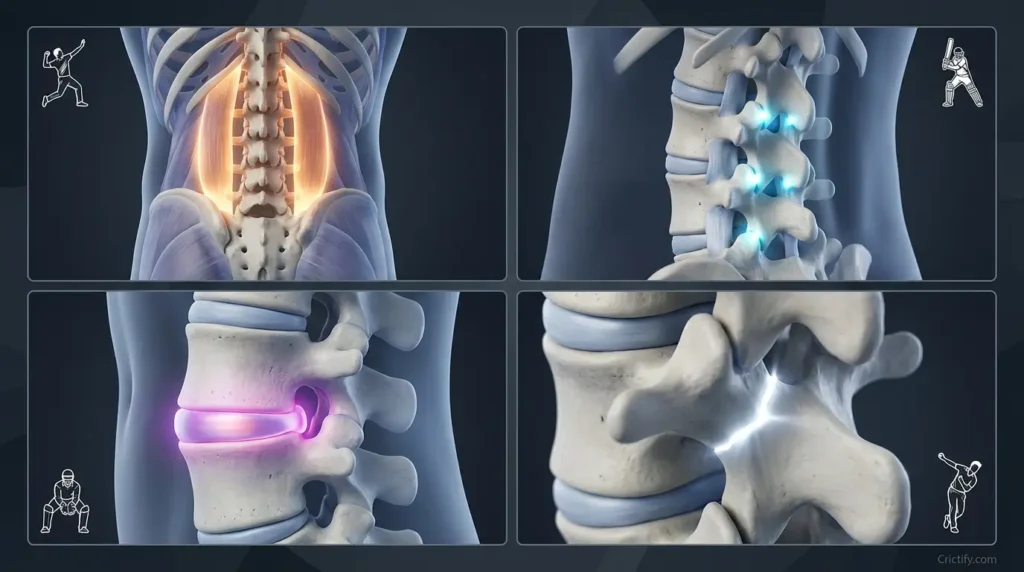
It is important not to assume every case of cricket-related back pain is caused by the same structure. A clinical assessment is needed to determine the likely cause and appropriate management.
Risk Factors
Multiple factors can increase the risk of lower back pain in cricketers.
| Risk Factor | How It Increases Risk |
|---|---|
| Sudden increase in bowling workload | Spikes in acute workload are associated with increased injury risk |
| High bowling volume | High medium-term workload is a risk factor for bone stress injuries |
| Repeated high-intensity sessions | Insufficient recovery between intense sessions reduces tissue adaptation |
| Poor technique | Mixed bowling actions and increased shoulder counter-rotation are associated with LBP |
| Inadequate warm-up | Poor preparation increases injury risk during high-load activities |
| Muscle weakness | Weak core, glutes, and hip muscles increase lumbar stress |
| Reduced hip mobility | Tight hips increase lumbar stress during bowling and batting |
| Reduced thoracic mobility | Limited thoracic rotation shifts more rotation demand to the lumbar spine |
| Poor trunk control | Increased side flexion during bowling is associated with LBP |
| Fatigue | Technique deteriorates with fatigue, increasing spinal load |
| Insufficient sleep | Poor sleep reduces recovery and increases injury risk |
| Poor recovery | Inadequate recovery between sessions reduces tissue adaptation |
| Previous back injury | History of LBP increases risk of recurrence |
| Training errors | Overlapping school/club/representative loads increase cumulative stress |
| Playing surface | Hard or uneven surfaces may increase impact forces |
| Age and skeletal maturity | Young athletes during growth phases are more vulnerable to stress injuries |
Symptoms of Lower Back Pain in Cricket
Symptoms of lower back pain in cricketers can vary depending on the underlying cause. The table below outlines common symptoms and what they may indicate.
| Symptom | What It May Feel Like | What It Can Mean |
|---|---|---|
| Localized pain | Ache or sharp pain in one area of the lower back | Muscle strain, facet joint irritation, or stress injury |
| Stiffness | Tightness, especially after sitting or upon waking | Mechanical low back pain, facet joint irritation |
| Pain after bowling | Dull ache or sharp pain following a spell | Overload, muscle strain, or early stress reaction |
| Pain during bowling | Sharp or catching pain during delivery | Possible stress injury, facet irritation, or disc issue |
| Pain during batting | Discomfort during trunk rotation or follow-through | Mechanical pain, facet joint irritation, or disc-related |
| Pain during fielding | Pain when bending, twisting, or throwing | Mechanical pain, muscle strain, or hip-related |
| Pain when bending | Discomfort during flexion (e.g., tying shoelaces) | Disc-related or muscle strain |
| Pain when extending the back | Pain when arching backward | Facet joint irritation or stress injury |
| Pain with rotation | Discomfort during twisting | Facet joint irritation, disc issue, or mechanical pain |
| Pain after prolonged sitting | Stiffness or ache after sitting | Mechanical low back pain or disc-related |
| Muscle tightness | Feeling of tight bands in the lower back | Muscle strain or protective spasm |
| Reduced movement | Difficulty bending or twisting | Protective guarding, stiffness, or structural issue |
| Pain radiating into the leg | Shooting or burning pain down the leg | Possible nerve root irritation or disc herniation |
| Numbness or tingling | Pins and needles in the leg or foot | Nerve involvement; requires medical assessment |
| Weakness | Reduced strength in the leg or foot | Possible nerve compression; requires urgent assessment |
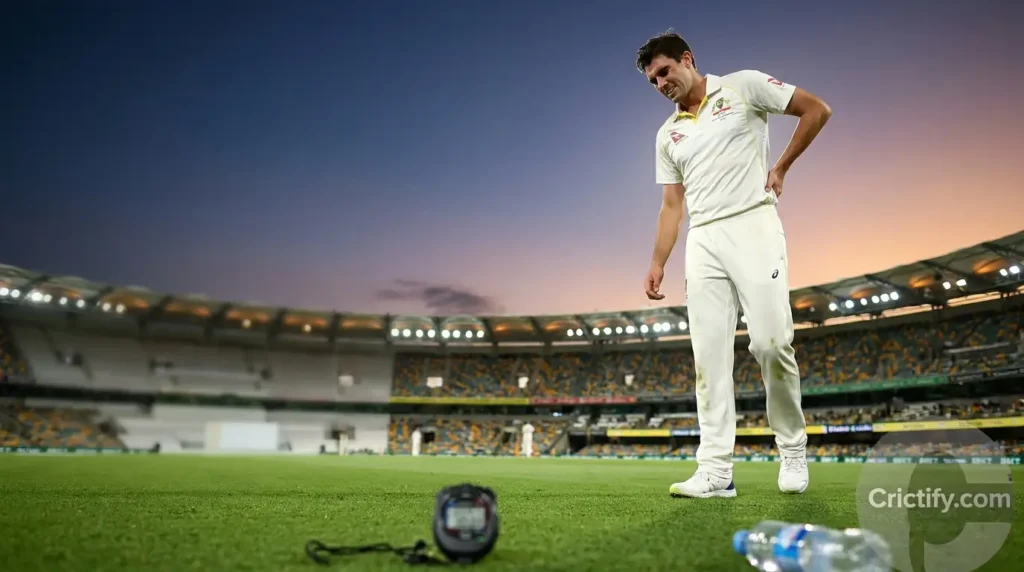
It is important to distinguish common mechanical symptoms from warning signs requiring medical assessment.
Early Warning Signs Cricketers Should Not Ignore
Some signs suggest that lower back pain may be more serious or require prompt assessment.
- Pain that repeatedly returns after bowling: Recurrent pain suggests the tissue is not tolerating the load.
- Pain that progressively worsens: Increasing pain over days or weeks may indicate a stress injury or other structural issue.
- Pain that changes bowling mechanics: Altering your action to avoid pain can increase injury risk elsewhere.
- Pain that causes reduced performance: Decline in speed, accuracy, or endurance may signal significant load intolerance.
- Persistent pain despite rest: Pain that does not improve with activity modification warrants assessment.
- Night pain when clinically concerning: Unremitting night pain can be a red flag for serious pathology.
- Neurological symptoms: Numbness, tingling, or weakness in the leg or foot requires medical evaluation.
- Weakness: New or progressive weakness in the leg or foot is a red flag.
- Numbness: Sensory changes in the leg, foot, or perineal area require urgent assessment.
- Pain traveling into the leg: Radicular pain below the knee may indicate nerve root involvement.
- Loss of function: Difficulty walking, standing, or performing daily activities warrants prompt assessment.
If you experience these signs, especially neurological symptoms or unremitting night pain, stop training and seek professional assessment.
Diagnosis
Diagnosis of lower back pain in cricketers requires a thorough clinical assessment by a qualified healthcare professional.
Medical History
Your clinician will ask about:
- Onset, location, and nature of pain.
- Relationship to cricket activities (bowling, batting, fielding).
- Training history and bowling workload.
- Previous injuries and medical history.
- Symptoms such as stiffness, radiating pain, numbness, or weakness.
Training History
Understanding your recent and chronic workload is critical. Clinicians may ask about:
- Number of balls bowled per week and per session.
- Match and training intensity.
- Recovery between sessions.
- Recent changes in training load.
Bowling Workload
Bowling workload is a well-recognized contributor to gradual-onset injuries in cricket fast bowlers. High acute match workload and high previous season workload were risk factors for tendon injuries, while high medium-term workload and low career workload were risk factors for bone stress injuries.
Physical Examination
A physical examination may include:
- Observation of posture and movement.
- Assessment of lumbar movement (flexion, extension, rotation, side-bending).
- Palpation for tenderness.
- Neurological examination when appropriate (reflexes, sensation, strength).
- Strength assessment of core, glutes, and hip muscles.
- Flexibility/mobility assessment of hips, hamstrings, and thoracic spine.
Movement Assessment
Functional movement tests may assess:
- Single-leg control.
- Squat and lunge patterns.
- Hip hinge mechanics.
- Cricket-specific movements (e.g., bowling simulation).
Neurological Examination When Appropriate
If there are symptoms suggesting nerve involvement (radiating pain, numbness, weakness), a neurological examination is essential. This may include:
- Reflex testing.
- Sensation testing.
- Muscle strength testing.
- Special tests for nerve root irritation.
Imaging
Imaging is not always necessary but may be considered based on clinical findings.
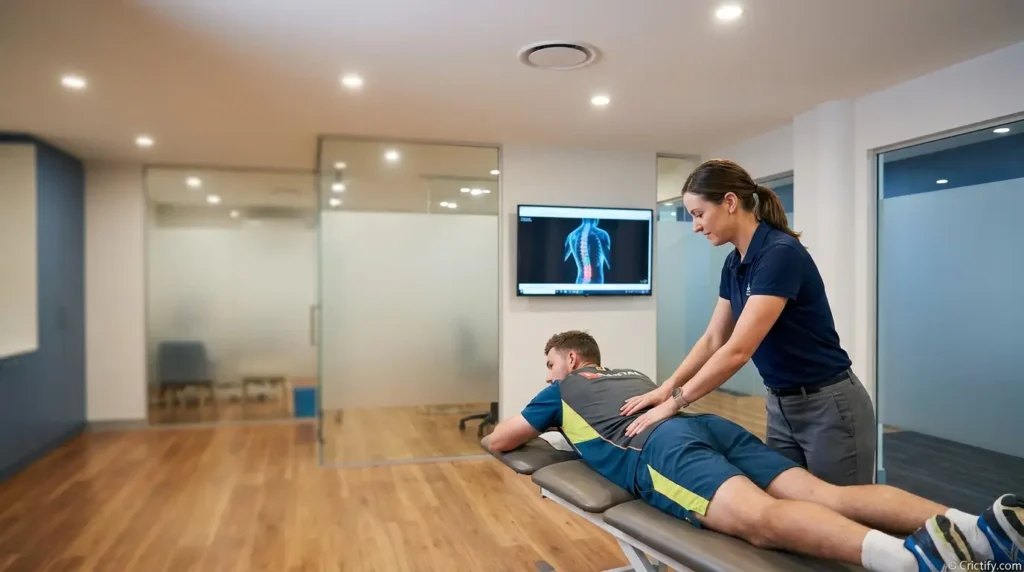

| Test | What It Can Show | When It May Be Used |
|---|---|---|
| X-ray | Arthritis, fractures, spondylolisthesis | Suspected bone injury, persistent pain, or red flags |
| MRI | Discs, nerves, muscles, ligaments, bone stress | Suspected disc herniation, nerve compression, or stress injury |
| CT Scan | Detailed bone anatomy | Suspected pars fracture or complex bony pathology |
| Ultrasound | Soft tissues (muscles, tendons) | Less common for lumbar spine; may assess surrounding structures |
| When Imaging May Be Considered | Based on clinical findings, red flags, or persistent symptoms | Not routinely needed for uncomplicated mechanical low back pain |
There is no role for imaging in the initial evaluation of the patient with back pain in the absence of signs or symptoms of systemic disease or red flags.
Important Cricket-Specific Conditions
Several conditions can cause lower back pain in cricketers. These are described in simple language below.
Muscle Strain
A muscle strain occurs when lower back muscles are overstretched or torn. This can happen after a sudden increase in workload, poor warm-up, or fatigue. Symptoms include localized pain, tenderness, and pain with movement.
Mechanical Low Back Pain
Mechanical low back pain refers to non-specific pain from joints, discs, or soft tissues without clear structural damage. It is common in cricketers and often improves with movement and appropriate rehabilitation.
Disc-Related Pain
Intervertebral discs can become irritated or herniated, potentially pressing on nerves. Symptoms may include pain radiating into the leg, numbness, tingling, or weakness. This requires medical assessment.
Facet Joint Irritation
Facet joints are small joints at the back of the spine that can become irritated with repeated extension and rotation. This is common in spin bowlers and batters. Symptoms include localized pain with extension and rotation.
Stress-Related Bone Injury
Stress-related bone injuries (lumbar bone stress injuries, LBSI) occur when repetitive load exceeds the bone’s ability to adapt. These are common in young fast bowlers.
Spondylolysis
Spondylolysis is a stress injury or fracture of the pars interarticularis, a small bony bridge in the vertebra. It occurs in 80–95% of cases at L5, with L4 as the second most likely. Spondylolysis has consistently been found to be the most common cause of back pain in young athletes.
Spondylolisthesis
Spondylolisthesis is forward slippage of a vertebra, often following spondylolysis. This can cause persistent pain and possibly neurological symptoms. It requires medical assessment and management.
Other Lumbar Spine Problems
Other conditions such as sacroiliac joint dysfunction, hip pathology, or referred pain can mimic lower back pain. A thorough assessment is needed to differentiate these.
Treatment for Lower Back Pain in Cricketers
Treatment depends on the underlying diagnosis and severity. The table below summarizes common treatment options.
| Treatment | Main Goal | When It May Help | Important Consideration |
|---|---|---|---|
| Relative Rest and Activity Modification | Reduce aggravating loads while maintaining activity | Early stage of most back pain | Avoid complete rest; modify cricket-specific loads |
| Reducing Bowling Load | Decrease spinal stress to allow tissue recovery | Fast bowlers with LBP or stress injury | Gradual return based on symptoms and clinical guidance |
| Pain Management | Control pain to facilitate rehabilitation | Acute or subacute pain | Use under guidance of healthcare professional |
| Medication | Reduce inflammation and pain | Short-term use for acute pain | Discuss with healthcare professional, especially for young athletes |
| Physiotherapy | Restore movement, strength, and function | Most cases of LBP in cricketers | Individualized programme based on assessment |
| Mobility Work | Improve hip, thoracic, and lumbar mobility | Stiffness, reduced movement | Avoid aggressive stretching in acute phase |
| Strength Training | Build core, glute, and hip strength | Weakness, poor trunk control | Progress gradually; focus on control |
| Core Rehabilitation | Improve trunk stability and control | Poor trunk control, recurrent LBP | Emphasize neutral spine and control |
| Hip Strength and Control | Offload lumbar spine by improving hip function | Weak glutes, poor hip control | Include single-leg and functional exercises |
| Technique Modification | Reduce spinal load through improved mechanics | Mixed actions, poor trunk control | Work with qualified coach and clinician |
| Gradual Return to Training | Rebuild cricket-specific capacity | After symptoms settle | Follow staged progression; monitor symptoms |
| When Surgery May Be Considered | Address structural issues not responding to conservative care | Rare; severe or progressive cases | Nonsurgical therapy should be first-line treatment |
Nonsurgical therapy should be the first-line treatment in all athletes with lower back conditions because successful recovery rates from rehabilitation protocols are high. Surgical management of lower back injuries among elite athletes is typically considered after all nonsurgical treatment has failed.
Physiotherapy
A sports physiotherapist plays a key role in assessing and managing lower back pain in cricketers.
What a Sports Physiotherapist May Assess
- Pain: Location, intensity, and behavior with activity.
- Lumbar movement: Flexion, extension, rotation, side-bending.
- Hip mobility: Flexion, extension, rotation.
- Thoracic mobility: Rotation and extension.
- Core control: Ability to maintain neutral spine during movement.
- Glute strength: Hip extension and abduction strength.
- Hamstring function: Flexibility and strength.
- Single-leg control: Balance and strength on one leg.
- Bowling mechanics: Action analysis to identify high-risk patterns.
- Training load: Recent and chronic workload.
Why Rehabilitation Should Be Individualized
Rehabilitation depends on understanding the involved sport and the specific injury. Each player’s age, injury, medical history, playing role, training load, and clinical findings influence the programme.
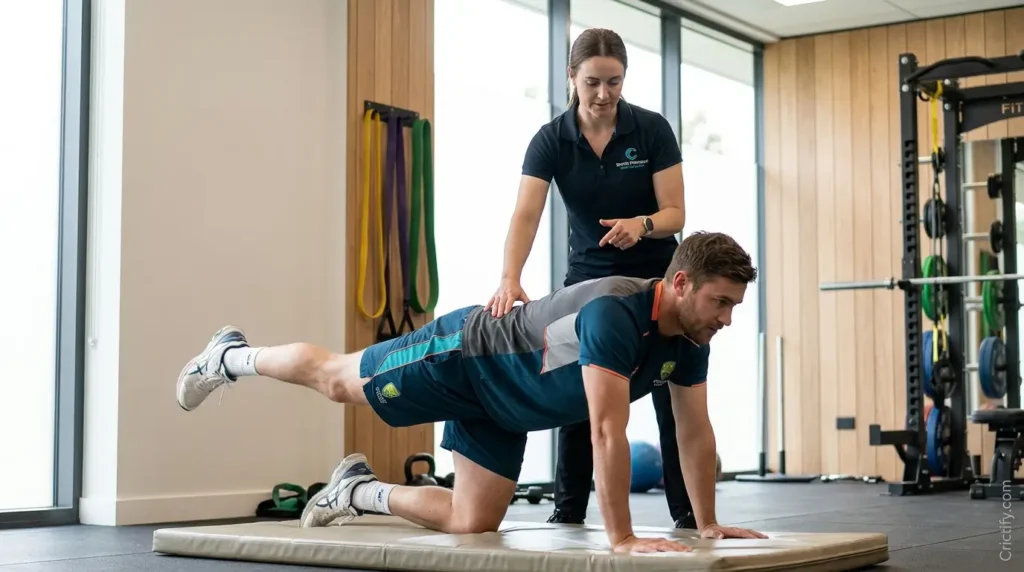
Exercises for Lower Back Pain in Cricketers
Exercise selection depends on diagnosis, symptoms, age, severity, and clinical assessment. The table below provides general guidance.
| Exercise | Main Purpose | General Benefit for Cricketers | Important Note |
|---|---|---|---|
| Dead bug | Core stability, neutral spine control | Improves trunk control during bowling and batting | Maintain neutral lumbar spine; stop if pain increases |
| Bird dog | Core and multifidus activation, anti-rotation | Enhances spinal stability during rotation | Emphasize glute and core control; avoid lumbar extension |
| Glute bridge | Glute and posterior chain strength | Offloads lumbar spine by improving hip extension | Focus on glutes, not lower back extension |
| Side plank | Lateral core stability | Improves trunk control during side-bending | Maintain straight line; avoid sagging or hiking |
| Pallof press | Anti-rotation core strength | Enhances trunk stability during bowling and batting | Emphasize stable, upright trunk |
| Hip mobility drills | Improve hip flexion, extension, rotation | Reduces lumbar stress by improving hip contribution | Gentle, controlled movements; avoid forcing range |
| Thoracic rotation drills | Improve thoracic spine rotation | Reduces compensatory lumbar rotation | Focus on upper back, not lower back |
| Controlled squat patterns | Lower body strength, trunk control | Builds functional strength for cricket movements | Maintain neutral spine; progress gradually |
| Hip hinge training | Posterior chain strength, lumbar control | Teaches safe bending patterns for lifting and fielding | Emphasize hip movement, not lumbar flexion |
Starting Position, Basic Movement, What It Trains, Common Mistakes, When to Stop
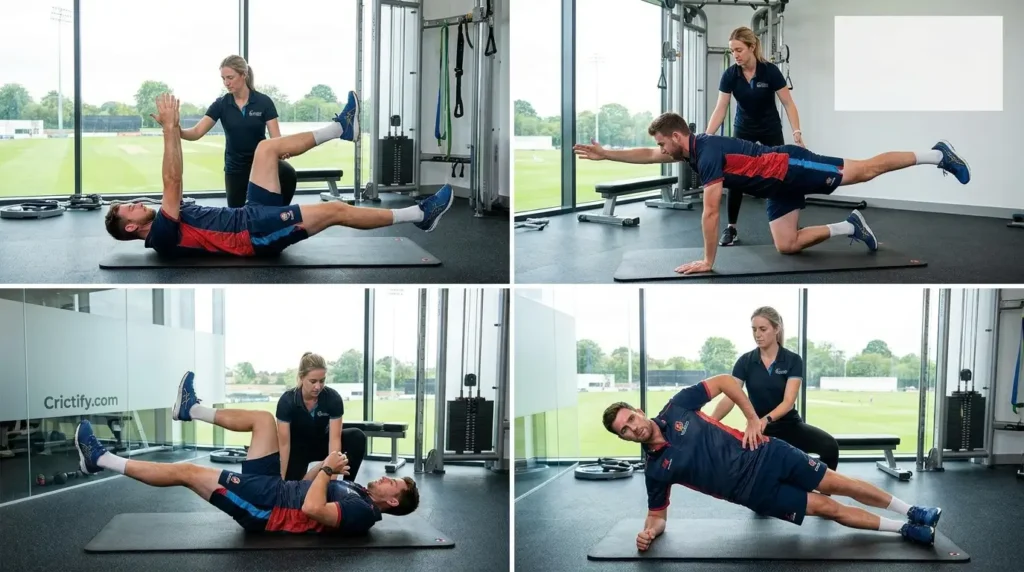
- Dead bug: Lie on your back, arms extended toward ceiling, knees bent at 90 degrees. Slowly lower opposite arm and leg while maintaining neutral spine. Trains core stability. Common mistake: arching lower back. Stop if pain increases.
- Bird dog: On hands and knees, extend opposite arm and leg while maintaining neutral spine. Trains core and multifidus. Common mistake: rotating trunk or extending lumbar spine. Stop if pain increases.
- Glute bridge: Lie on back, knees bent, feet flat. Lift hips by squeezing glutes, not arching lower back. Trains glutes and posterior chain. Common mistake: overextending lumbar spine. Stop if pain increases.
- Side plank: Lie on side, prop up on elbow, lift hips to form straight line. Trains lateral core. Common mistake: sagging hips or hiking. Stop if pain increases.
- Pallof press: Stand sideways to cable or band, hold handle at chest, press forward while resisting rotation. Trains anti-rotation core strength. Common mistake: allowing trunk to rotate. Stop if pain increases.
Do not prescribe an aggressive exercise programme to someone with undiagnosed severe back pain.
Lower Back Rehabilitation for Cricketers
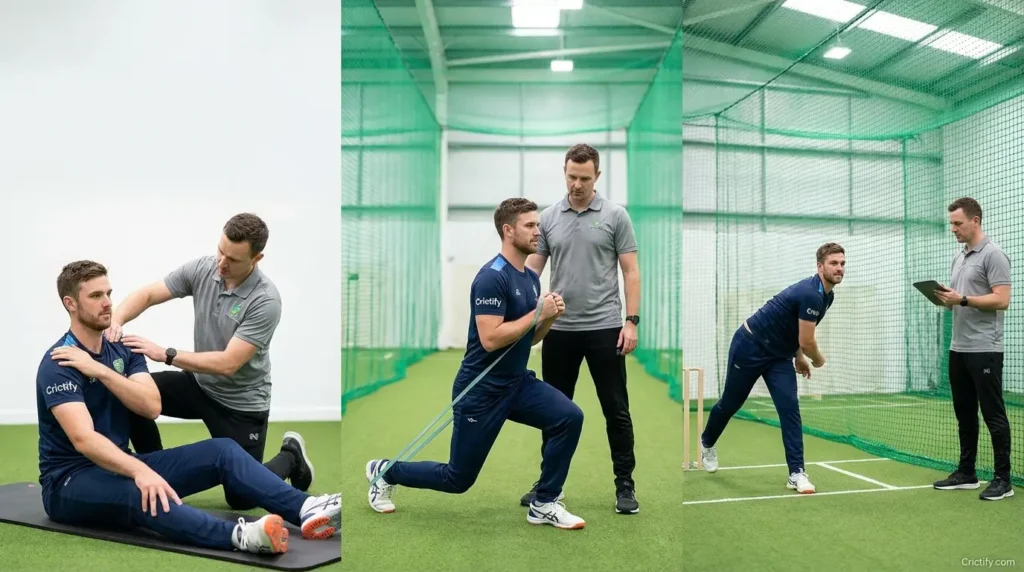
Rehabilitation follows progressive stages. The table below outlines a typical framework.
| Stage | Main Objective | What Training May Look Like | What Should Be Avoided | Progression Criteria |
|---|---|---|---|---|
| Stage 1 — Calm Symptoms | Reduce pain and irritation | Relative rest, gentle mobility, pain-free core activation | Aggressive stretching, high-load bowling, heavy lifting | Pain settles, movement improves |
| Stage 2 — Restore Movement | Regain full, pain-free lumbar, hip, and thoracic mobility | Gentle mobility drills, controlled lumbar movements | Forcing range, painful end-ranges | Full, comfortable movement |
| Stage 3 — Restore Strength | Build core, glute, and hip strength | Dead bug, bird dog, glute bridge, side plank, hip hinge | Heavy loads, poor form | Strength improves, no pain with exercises |
| Stage 4 — Build Cricket-Specific Capacity | Reintroduce cricket-specific loads | Controlled bowling simulation, batting drills, fielding movements | Full-intensity bowling, match simulation | Tolerates cricket-specific drills without pain |
| Stage 5 — Return to Bowling/Batting | Gradual return to full cricket skills | Progressive bowling volume, batting sessions, fielding drills | Sudden workload spikes, full match intensity | Tolerates progressive workload |
| Stage 6 — Return to Full Competition | Full match readiness | Match simulation, full training load | Ignoring symptoms, poor recovery | Medical/physiotherapy clearance when appropriate |
Recovery Timeline
Recovery differs between mild muscle-related pain, persistent mechanical pain, stress-related injuries, disc-related conditions, and more serious injuries. The table below provides general considerations.
| Recovery Stage | Main Goal | Typical Consideration |
|---|---|---|
| Acute (0–2 weeks) | Calm symptoms, protect tissues | Relative rest, gentle mobility, pain management |
| Subacute (2–6 weeks) | Restore movement and strength | Progressive exercises, cricket-specific drills |
| Intermediate (6–12 weeks) | Build capacity, return to training | Gradual bowling/batting progression |
| Advanced (3–6 months) | Full competition readiness | Match simulation, full workload |
| Long-term (>6 months) | Prevent recurrence, maintain resilience | Ongoing strength, mobility, workload management |
Lower back pain (LBP) poses a significant challenge for cricketers of all standards, often leading to rehabilitation periods exceeding eight months and potential termination of the playing season. Recovery depends on the underlying cause, severity, symptoms, age, training load, and clinical assessment.
When Can a Cricketer Return to Play After Lower Back Pain?
Pain reduction alone is not enough to determine return to play. Key criteria include:
- Pain-free or appropriately controlled movement: Able to move without significant pain.
- Restored strength: Core, glute, and hip strength adequate for cricket demands.
- Adequate mobility: Full, comfortable lumbar, hip, and thoracic movement.
- Functional testing: Able to perform cricket-specific drills without pain.
- Cricket-specific drills: Bowling, batting, and fielding progression tolerated.
- Gradual workload progression: Bowling volume and intensity increased gradually.
- Bowling progression: From low-intensity to full match intensity.
- Batting progression: From controlled shots to full match simulation.
- Fielding progression: From basic drills to high-intensity fielding.
- Confidence: Player feels confident in their back during cricket activities.
- Medical/physiotherapy clearance when appropriate: Especially for stress injuries or significant pathology.
As with any persons with a lower back injury, elite athletes should complete a rehabilitation program and be individually assessed for medical clearance before returning to work or play.
Return-to-Bowling Progression
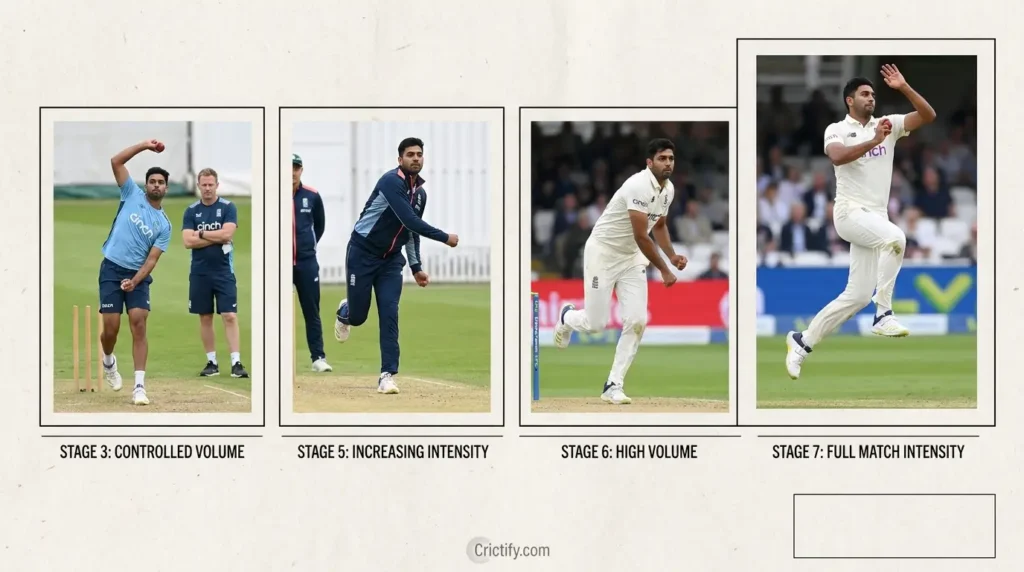
A staged return-to-bowling framework helps ensure safe progression.
| Stage | Description | Key Considerations |
|---|---|---|
| Stage 1: Walking / general conditioning | Low-impact aerobic activity (stationary bike, walking) as tolerated | Pain-free movement; no bowling |
| Stage 2: Low-intensity movement | Gentle jogging, dynamic mobility, core activation | Monitor symptoms; no bowling |
| Stage 3: Short bowling exposure | 10–20 balls at low intensity (50–60% effort) | Pain-free during and after; 24–48 hours between sessions |
| Stage 4: Progressive bowling volume | Gradual increase in balls (e.g., 20–40, then 40–60) at moderate intensity | Monitor symptoms; avoid spikes |
| Stage 5: Higher-intensity bowling | Increase intensity to 70–80%, then 80–90% | Ensure technique remains sound; monitor fatigue |
| Stage 6: Match simulation | Full-intensity spells, simulated match conditions | Tolerates full workload without pain |
| Stage 7: Competitive return | Full match play | Medical/physiotherapy clearance when appropriate |
Do not provide unsafe fixed workloads. Workload progression must be individualized. For every week off, expect 2–3 weeks to rebuild previous load.
Role-Specific Advice
Fast Bowlers
- Main back stresses: Repeated high-load extension, rotation, and side-bending.
- Common risk factors: High workload, mixed actions, poor trunk control, fatigue.
- Training considerations: Monitor workload, emphasize core and hip strength, manage recovery.
- Prevention strategies: Gradual workload progression, technique refinement, adequate warm-up, sleep, and nutrition.
- When to seek medical advice: Persistent pain, pain with neurological symptoms, or pain that changes mechanics.
Spin Bowlers
- Main back stresses: Repeated rotation and flexion during delivery.
- Common risk factors: High bowling volumes, poor thoracic mobility, weak core.
- Training considerations: Emphasize thoracic rotation, core stability, and workload management.
- Prevention strategies: Balanced training, mobility work, adequate recovery.
- When to seek medical advice: Persistent or worsening pain, especially with rotation.
Batters
- Main back stresses: Repeated trunk rotation during shots, prolonged standing and bending.
- Common risk factors: Poor trunk control, reduced hip mobility, fatigue.
- Training considerations: Core stability, hip mobility, balanced strength.
- Prevention strategies: Warm-up, mobility work, workload management.
- When to seek medical advice: Pain radiating into the leg, numbness, or weakness.
Wicketkeepers
- Main back stresses: Prolonged semi-squat positions, repeated bending and twisting.
- Common risk factors: Stiff hips, weak core, prolonged static postures.
- Training considerations: Hip mobility, core endurance, dynamic warm-up.
- Prevention strategies: Regular movement breaks, mobility drills, strength work.
- When to seek medical advice: Persistent stiffness or pain despite mobility work.
Fielders
- Main back stresses: Repeated bending, twisting, throwing, and sprinting.
- Common risk factors: Poor landing mechanics, weak core and hips, fatigue.
- Training considerations: Core and hip strength, landing mechanics, agility.
- Prevention strategies: Warm-up, strength training, workload management.
- When to seek medical advice: Pain after awkward movements or persistent pain.
Junior Cricketers
- Main back stresses: Growth-related vulnerability, high cumulative loads.
- Common risk factors: Overlapping school/club/representative loads, poor technique, inadequate recovery.
- Training considerations: Age-appropriate workload, technique coaching, education on reporting pain.
- Prevention strategies: Workload monitoring, adequate recovery, strength and mobility.
- When to seek medical advice: Any persistent back pain, especially in young fast bowlers.
Professional Cricketers
- Main back stresses: High cumulative workloads across formats, travel, training camps.
- Common risk factors: Workload spikes, inadequate recovery, fatigue.
- Training considerations: Individualized workload monitoring, recovery strategies, strength and mobility.
- Prevention strategies: Workload management, sleep, nutrition, physiotherapy support.
- When to seek medical advice: Persistent or recurrent pain, especially with neurological symptoms.
How to Prevent Lower Back Pain in Cricket
Prevention focuses on multiple factors.
- Proper warm-up: Dynamic mobility, hip and thoracic activation, core engagement.
- Strength training: Core, glutes, hips, and posterior chain.
- Core strength: Emphasize control and stability, not just intensity.
- Hip strength: Glute medius, maximus, and hip rotators.
- Glute strength: Essential for offloading the lumbar spine.
- Mobility: Hip flexion, extension, rotation; thoracic rotation.
- Thoracic movement: Adequate thoracic rotation reduces compensatory lumbar rotation.
- Bowling workload management: Monitor acute and chronic loads; avoid spikes.
- Recovery: Adequate rest between sessions, sleep, nutrition.
- Sleep: Critical for tissue repair and adaptation.
- Hydration: Supports overall recovery and performance.
- Nutrition: Adequate protein, carbohydrates, and overall energy availability.
- Technique: Work with qualified coaches to refine bowling and batting mechanics.
- Gradual training progression: Avoid sudden increases in workload.
- Avoiding sudden workload spikes: Spikes in acute workload are associated with increased injury risk.
- Monitoring symptoms: Report pain early; do not ignore recurring symptoms.
Warm-Up
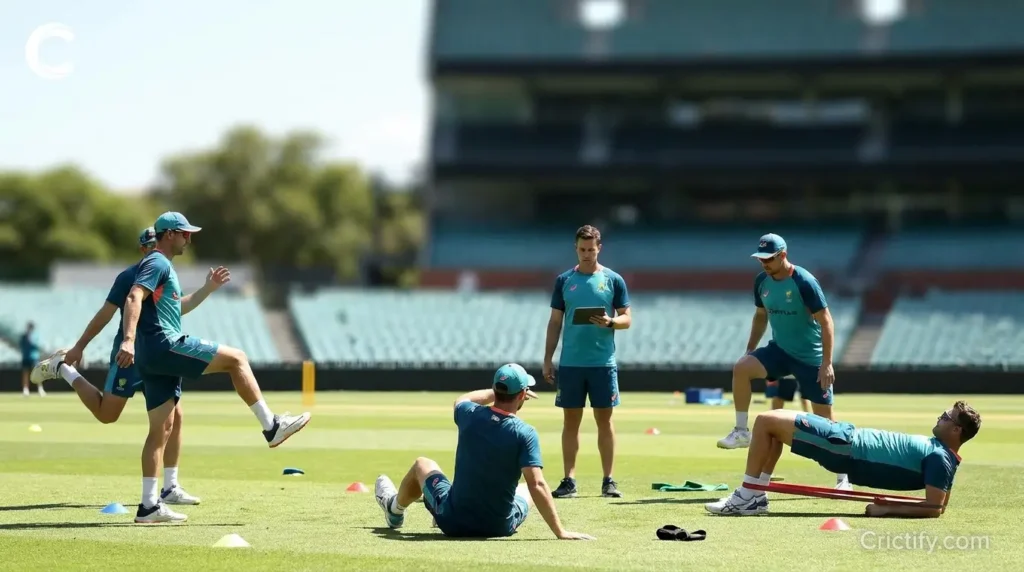
A cricket-specific warm-up should include:
- General movement: Light jogging, skipping, or dynamic activities to raise body temperature.
- Dynamic mobility: Leg swings, arm circles, trunk rotations.
- Hip mobility: Hip flexor, extensor, and rotator drills.
- Thoracic mobility: Thoracic rotation and extension drills.
- Glute activation: Clamshells, glute bridges, or band walks.
- Core activation: Dead bug, bird dog, or plank variations.
- Cricket-specific movement: Bowling simulation, batting shadows, fielding drills at low intensity.
Dynamic warm-up may be more appropriate before intense cricket activity than long static stretching alone.
Sleep, Nutrition & Recovery
Overall recovery supports training tolerance and injury resilience.
- Sleep: Aim for 7–9 hours per night; critical for tissue repair and adaptation.
- Hydration: Maintain adequate fluid intake before, during, and after training.
- Protein: Supports muscle repair and adaptation.
- Carbohydrates: Fuels training and supports recovery.
- Overall energy availability: Ensure adequate caloric intake to support training demands.
- Recovery between sessions: Plan rest days and active recovery to allow tissue adaptation.
Do not claim that food or hydration alone can cure structural back injuries.

Common Mistakes Cricketers Make With Lower Back Pain
- Playing through worsening pain: Ignoring progressive pain can lead to more serious injury.
- Ignoring recurring pain: Recurrent pain suggests the tissue is not tolerating the load.
- Returning to full bowling too quickly: Sudden workload increases raise injury risk.
- Taking complete rest for too long without rehabilitation: Prolonged rest without active rehab can delay recovery.
- Copying exercises from social media: Exercises may not be appropriate for your specific condition.
- Ignoring workload: Failing to monitor and manage bowling workload increases risk.
- Ignoring technique: Poor mechanics can increase spinal load.
- Treating symptoms without identifying the cause: Addressing pain without understanding the underlying issue may lead to recurrence.
- Returning because the pain temporarily improved: Pain reduction alone is not enough; strength and function must be restored.
- Ignoring neurological symptoms: Numbness, tingling, or weakness require prompt medical assessment.
Do’s & Don’ts
| Do | Don’t |
|---|---|
| Report pain early to coaching and medical staff | Ignore recurring or worsening pain |
| Follow a staged return-to-bowling progression | Return to full bowling too quickly |
| Work with a qualified physiotherapist and coach | Copy exercises from social media without assessment |
| Monitor and manage bowling workload | Ignore workload spikes |
| Emphasize core and hip strength in training | Neglect strength and mobility work |
| Prioritize sleep, nutrition, and recovery | Sacrifice recovery for extra training |
| Seek medical attention for neurological symptoms | Play through numbness, tingling, or weakness |
| Use dynamic warm-up before intense activity | Rely solely on long static stretching before play |
| Communicate with coaching and medical staff about symptoms | Hide pain or symptoms from support staff |
| Follow individualized rehabilitation programmes | Use generic programmes without assessment |
When Should a Cricketer See a Doctor for Lower Back Pain?
Seek medical attention for:
- Severe pain: Pain that is intense or disabling.
- Persistent pain: Pain that does not improve with activity modification.
- Recurrent pain: Pain that repeatedly returns after bowling or training.
- Pain after significant trauma: Fall, collision, or awkward landing.
- Neurological symptoms: Numbness, tingling, or weakness in the leg or foot.
- Numbness: Sensory changes in the leg, foot, or perineal area.
- Weakness: New or progressive weakness in the leg or foot.
- Pain radiating into the leg: Radicular pain below the knee.
- Loss of function: Difficulty walking, standing, or performing daily activities.
- Symptoms that worsen despite activity modification: Progressive pain despite rest and modification.
- Concerning symptoms in young athletes: Any persistent back pain in young fast bowlers.
Red flags such as unrelenting night pain, bowel or bladder dysfunction, saddle anesthesia, or severe neurological deficits require urgent medical assessment.
FAQs
1. Why do cricketers get lower back pain?
Cricketers get lower back pain due to repeated high-load spinal extension, rotation, and side-bending during bowling, batting, and fielding. Workload spikes, poor technique, weak core/hips, and inadequate recovery increase risk.
2. Why are fast bowlers more likely to develop back pain?
Fast bowlers repeatedly load the lumbar spine through extension, rotation, and side-bending at high speeds. Forces through the lumbar spine can be 3–9 times body weight during delivery. Mixed actions and high workloads further increase risk.
3. Can bowling cause lower back pain?
Yes. Bowling, especially fast bowling, places significant stress on the lumbar spine. Repeated high-load extension and rotation can irritate muscles, joints, discs, or bones.
4. Can I continue playing cricket with lower back pain?
It depends on the cause and severity. Mild mechanical pain may allow modified participation, but persistent, worsening, or neurological symptoms require assessment and possibly rest. Do not play through worsening pain.
5. How long does cricket-related lower back pain take to recover?
Recovery varies. Mild muscle-related pain may settle in weeks, while stress-related injuries can take months. Lower back pain often leads to rehabilitation periods exceeding eight months in severe cases.
6. Is MRI always needed for lower back pain?
No. Imaging is used selectively based on clinical findings, red flags, or persistent symptoms. There is no role for imaging in the initial evaluation without red flags.
7. What exercises help strengthen the lower back for cricketers?
Exercises such as dead bug, bird dog, glute bridge, side plank, and Pallof press can improve core and hip strength. Exercise selection depends on diagnosis and clinical assessment.
8. Should I stop bowling if my back hurts?
If pain is persistent, worsening, or associated with neurological symptoms, stop bowling and seek assessment. Mild pain may allow modified bowling under guidance.
9. Can poor bowling technique cause back pain?
Yes. Mixed bowling actions and increased shoulder counter-rotation are associated with LBP. Poor trunk control and technique deterioration with fatigue can increase spinal load.
10. How can young cricketers prevent back injuries?
Young cricketers should monitor workload, emphasize technique, prioritize recovery, and report pain early. Age-appropriate training and strength/mobility work are essential.
11. When should a cricketer see a doctor?
See a doctor for severe, persistent, recurrent, or neurological symptoms, or after significant trauma. Young athletes with persistent back pain should be assessed promptly.
12. Can lower back pain spread into the leg?
Yes. Disc-related problems or nerve root irritation can cause pain radiating into the leg, with or without numbness or tingling. This requires medical assessment.
13. How should I return to bowling after a back injury?
Follow a staged progression: low-intensity movement, short bowling exposure, progressive volume and intensity, match simulation, then competitive return. Workload progression must be individualized.
14. Can strength training prevent lower back pain in cricket?
Strength training, particularly core and hip strength, can reduce injury risk by improving trunk control and offloading the lumbar spine. It should be part of a comprehensive prevention strategy.
15. How can I reduce the risk of recurring lower back pain?
Manage workload, maintain strength and mobility, prioritize recovery, refine technique, and report pain early. Ongoing rehabilitation and prevention strategies are essential.
Medical Disclaimer
This article is for general education and does not replace an examination, diagnosis, or personalised treatment plan from a qualified doctor, sports physician, physiotherapist, or other licensed healthcare professional. Lower back pain in a cricketer may result from different muscles, joints, discs, bones, nerves, or other medical conditions, and online information cannot determine the exact cause or severity.
Do not use this article to decide whether to continue playing, take medication, receive an injection, or return to bowling or competition. Seek prompt medical attention after significant trauma, severe or worsening pain, new weakness, numbness, loss of function, or other concerning symptoms. Any exercise or return-to-play programme should be adapted to the individual player’s age, injury, medical history, playing role, training load, and clinical findings.