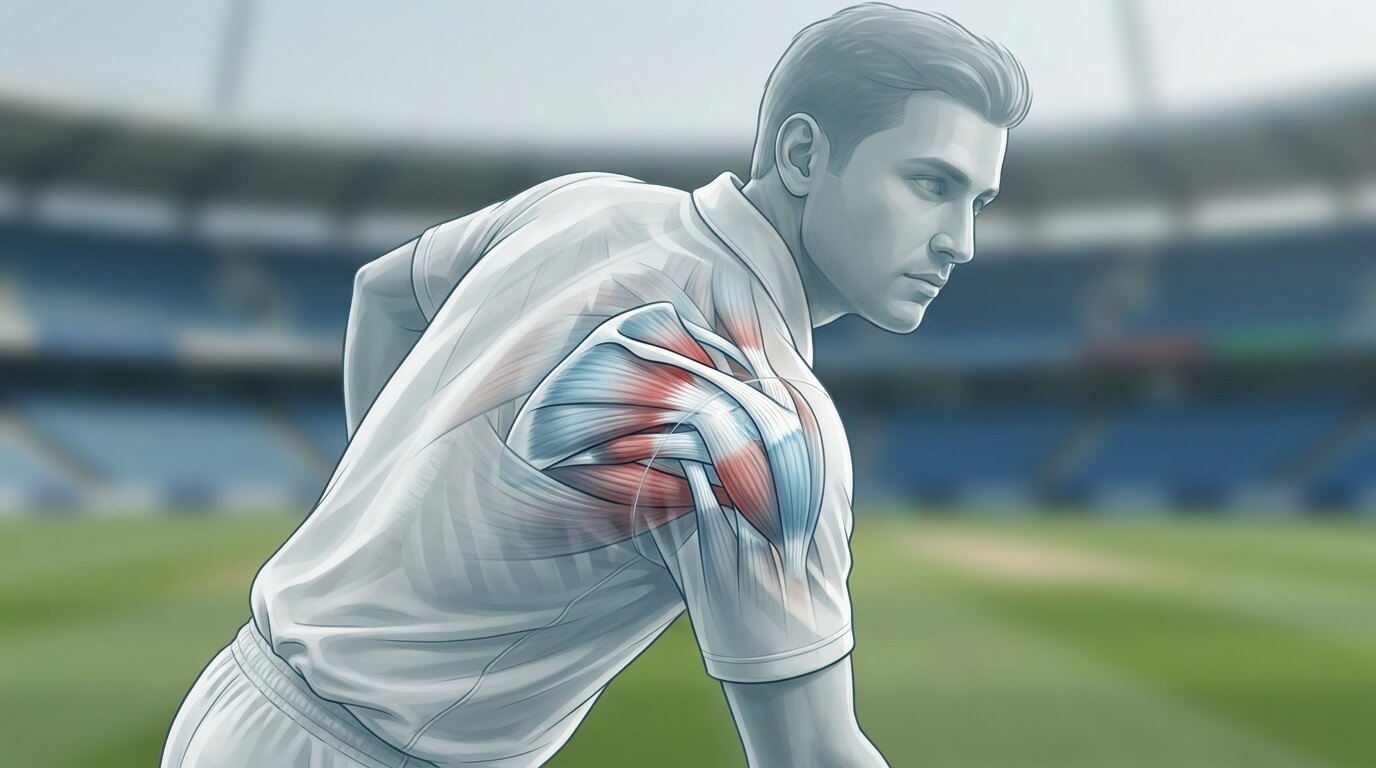
Knee injuries are among the most frequently encountered problems in cricket, affecting players across all levels—from junior club cricketers to international fast bowlers. Because cricket demands repeated running, sudden changes of direction, jumping, landing, and role-specific movements such as bowling delivery strides and wicketkeeping squats, the knee is exposed to significant physical load throughout a season.
This guide provides a comprehensive, cricket-specific overview of knee injuries: what they are, why they occur in cricketers, which players are most at risk, common injury types, symptoms, diagnosis, treatment options, rehabilitation exercises, recovery timelines, and structured return-to-play guidance for bowling, batting, wicketkeeping, and fielding. The content is designed to be useful for professional and amateur cricketers, coaches, strength and conditioning staff, sports physiotherapists, and parents of young players.
Quick Summary
- Knee injuries in cricket result from acute trauma (twisting, landing awkwardly, direct impact) and overuse (repetitive loading, high workloads, inadequate recovery).
- Fast bowlers, wicketkeepers, and fielders face higher risk due to repetitive knee loading, squatting, jumping, and sudden direction changes.
- Common knee conditions include ligament sprains (ACL, MCL), meniscus tears, patellar tendinopathy, patellofemoral pain, and cartilage-related problems.
- Symptoms may include pain, swelling, stiffness, clicking, catching, locking, instability, and reduced range of motion during cricket activities.
- Recurrent swelling, repeated giving way, or persistent pain after cricket sessions should be assessed by a qualified healthcare professional.
- Diagnosis involves medical history, physical examination, and when indicated, imaging such as X-ray, MRI, CT, or ultrasound.
- Treatment is individualized and may include activity modification, physiotherapy, strength and neuromuscular training, and in some cases surgery.
- Rehabilitation follows progressive stages: pain and swelling control, mobility restoration, strength, balance, running preparation, cricket-specific training, and return to competition.
- Return to cricket depends on strength, movement quality, functional testing, training tolerance, and medical clearance—not just pain reduction.
- Prevention strategies include structured warm-ups, strength training, workload management, recovery practices, and addressing previous injuries.
What Is a Knee Injury?
A knee injury refers to damage to any of the structures that make up the knee joint or surrounding tissues. The knee is a complex hinge joint formed primarily by three bones: the femur (thigh bone), tibia (shin bone), and patella (kneecap). Several key structures contribute to knee stability and function:
- Ligaments: Strong bands that connect bones and provide stability. The anterior cruciate ligament (ACL) and posterior cruciate ligament (PCL) control forward-backward and rotational stability. The medial collateral ligament (MCL) and lateral collateral ligament (LCL) stabilize the inner and outer sides of the knee.
- Meniscus: Two C-shaped pieces of cartilage (medial and lateral) that act as shock absorbers between the femur and tibia.
- Articular cartilage: Smooth tissue covering the ends of bones to allow frictionless movement.
- Patellar tendon: Connects the patella to the tibia and is essential for extending the knee.
- Muscles: The quadriceps (front of thigh), hamstrings (back of thigh), calf muscles, and hip muscles all influence knee movement and stability.
In cricket, these structures are repeatedly loaded during running, bowling, batting footwork, wicketkeeping squats, and fielding movements. Injury can occur when load exceeds the tissue’s capacity—either suddenly (acute injury) or over time (overuse injury).

How Common Are Knee Problems in Cricket?
Knee injuries are consistently reported among the most common lower-limb injuries in cricket, particularly at elite and competitive levels. Research on cricket injuries indicates that lower-limb injuries account for a substantial proportion of all time-loss injuries, with the knee being one of the frequently affected regions alongside the ankle, hamstring, and lower back.
Fast bowlers show particularly high rates of lower-limb overuse injuries due to the repetitive nature of their role. Wicketkeepers and fielders also experience significant knee load from squatting, jumping, diving, and rapid direction changes. While exact prevalence varies by competition level, format, and study methodology, knee problems remain a prominent concern across all formats of the game.
Why Is the Knee Important in Cricket?
The knee is central to nearly every cricket movement. It acts as a shock absorber during landing, a stabilizer during changes of direction, and a powerful extensor during sprinting, jumping, and bowling. During the bowling delivery stride, the front knee undergoes high compressive and shear forces as the bowler plants the foot and transfers momentum through the body. Batters rely on knee flexion and extension for stance, footwork, lunging, and running between wickets. Wicketkeepers perform hundreds of repeated squats and explosive rises per match, loading the patellar tendon and patellofemoral joint repeatedly. Fielders sprint, brake, cut, jump, and land—often on uneven outfield surfaces—placing multi-directional stress on the knee.
When the knee is injured or not functioning optimally, it can affect running speed, bowling accuracy and pace, batting footwork, wicketkeeping agility, and fielding effectiveness.
Which Cricket Players Are Most at Risk?
Fast Bowlers
Fast bowlers are among the highest-risk groups for knee injuries in cricket. The bowling action involves a run-up, delivery stride, and follow-through that repeatedly load the front and back leg. The front knee experiences high impact forces during the delivery stride, while the back leg contributes to propulsion and follow-through stability. Overuse conditions such as patellar tendinopathy, patellofemoral pain, and anteromedial articular impingement have been specifically described in fast bowlers.
Spin Bowlers
Spin bowlers generally experience lower impact forces than fast bowlers but still load the knee during the delivery stride, pivot, and follow-through. Repetitive twisting on a fixed foot can stress the meniscus and collateral ligaments, especially if the shoe studs catch in the turf.
Batters
Batters face knee stress through stance maintenance, footwork adjustments, lunging for shots, and running between wickets. Repeated batting sessions, especially on hard or uneven surfaces, can contribute to patellofemoral pain and overuse symptoms.
Wicketkeepers
Wicketkeepers perform prolonged periods of deep squatting and explosive rising, which place significant demand on the patellar tendon and patellofemoral joint. Diving, lateral movement, and repeated crouching add further load. Patellar tendinopathy and patellofemoral pain are commonly reported in this group.
Fielders
Fielders are exposed to high-speed running, sudden deceleration, direction changes, jumping, and landing—often on variable outfield conditions. Boundary fielders who cover large distances and dive frequently may experience cumulative knee load.
Junior Cricketers
Young cricketers are susceptible to overuse injuries due to growth-related changes, training errors, and inadequate recovery. Conditions such as Osgood-Schlatter disease (traction apophysitis at the tibial tubercle) and patellofemoral pain are seen in adolescent players, particularly during periods of rapid growth or sudden workload increases.
Professional Cricketers
Professional players face high match and training volumes across multiple formats, increasing cumulative knee load. The condensed international calendar, frequent travel, and limited recovery windows can elevate injury risk, especially when previous injuries are not fully rehabilitated.
Why Does Cricket Put Stress on the Knee?
Running
Cricket requires repeated running during batting, bowling, and fielding. Running generates cyclical loading through the knee with each stride, particularly during faster running or sprinting.
Sudden Deceleration
Braking quickly when fielding or running between wickets creates high eccentric load on the quadriceps and patellar tendon, increasing stress on the knee joint.
Direction Changes
Cutting and pivoting involve rotational and valgus/varus forces at the knee. Poor control during direction changes can increase ligament and meniscus stress.
Jumping and Landing
Fielders and wicketkeepers frequently jump to catch or dive. Landing mechanics influence how forces are absorbed through the knee. Stiff or poorly controlled landings can increase joint load.
Bowling Delivery Stride
The delivery stride is one of the most demanding knee-loading actions in cricket. The front leg accepts high ground reaction forces as the bowler transfers momentum into ball release. Repetitive delivery strides without adequate recovery can contribute to overuse injuries.

Batting Footwork
Batters shift weight between legs, lunge forward or back, and rotate through shots. Repeated lunging and twisting can stress the knee, especially on hard pitches or when fatigued.
Wicketkeeping Squatting
Wicketkeepers maintain a low squat for extended periods and rise explosively to collect deliveries or effect stumpings. This repeated deep flexion and extension loads the patellofemoral joint and patellar tendon.
Fielding on Uneven Surfaces
Outfields vary in quality and firmness. Uneven or slippery surfaces can increase the risk of awkward landings, twisting, and ankle-knee chain injuries.
Repetitive Training Load
High training volumes, multiple sessions per day, and limited recovery increase cumulative knee load. Sudden spikes in workload—such as pre-season intensification or tournament play—are common triggers for overuse injuries.
Fatigue
Fatigue reduces neuromuscular control, alters movement mechanics, and impairs landing and deceleration strategies, potentially increasing injury risk during late training sessions or matches.
Common Knee Injuries in Cricketers
Knee Sprain
A sprain refers to stretching or tearing of ligaments. Mild sprains (Grade I) involve microscopic tearing with minimal instability. Moderate (Grade II) and severe (Grade III) sprains involve more significant tearing and may cause noticeable instability. Collateral ligament sprains (MCL, LCL) can occur with twisting or side-impact mechanisms.
ACL Injury
The ACL stabilizes rotational and anterior translation of the tibia. ACL injuries often occur with non-contact twisting, pivoting, or awkward landing mechanisms. Symptoms may include a popping sensation, rapid swelling, pain, and instability. ACL injuries require careful assessment and individualized management, which may include rehabilitation alone or surgical reconstruction depending on the player’s goals and clinical findings.
MCL Injury
The MCL stabilizes the inner knee. MCL sprains often result from valgus stress (knee collapsing inward) or twisting on a fixed foot. Most MCL injuries heal well with structured rehabilitation and bracing when indicated.
Meniscus Injury
The meniscus can tear with twisting on a flexed knee, deep squatting, or degenerative changes. Symptoms may include joint-line pain, swelling, catching, locking, and difficulty with squatting. Treatment ranges from rehabilitation to arthroscopic surgery depending on tear type, symptoms, and functional demands.
Patellar Tendon Problems
Patellar tendinopathy (often called “jumper’s knee”) involves pain and dysfunction in the patellar tendon, commonly from repetitive jumping, running, and squatting. Fast bowlers and wicketkeepers are particularly susceptible. Management emphasizes load management, progressive strengthening, and movement retraining.
Patellofemoral Pain
Patellofemoral pain syndrome (PFPS) presents as pain around or behind the kneecap, aggravated by running, squatting, stairs, and prolonged sitting. It is associated with altered patellar tracking, muscle imbalances, and training errors. Rehabilitation focuses on strength, mobility, and load modification.
Cartilage-Related Problems
Articular cartilage damage can occur from acute trauma or repetitive loading. In fast bowlers, anteromedial articular impingement has been described as a specific overuse lesion affecting the front-inner part of the knee joint. Cartilage injuries may cause pain, swelling, and mechanical symptoms and require specialist assessment.
Other Knee Conditions
Other conditions that may affect cricketers include bursitis (inflammation of fluid-filled sacs), iliotibial band-related lateral knee pain, stress fractures around the knee (tibial or femoral), and growth-related conditions in younger players such as Osgood-Schlatter disease.
Common Causes of Knee Injuries in Cricket
Knee injuries in cricket arise from a combination of acute mechanisms and cumulative load. Understanding these causes helps guide prevention and management.
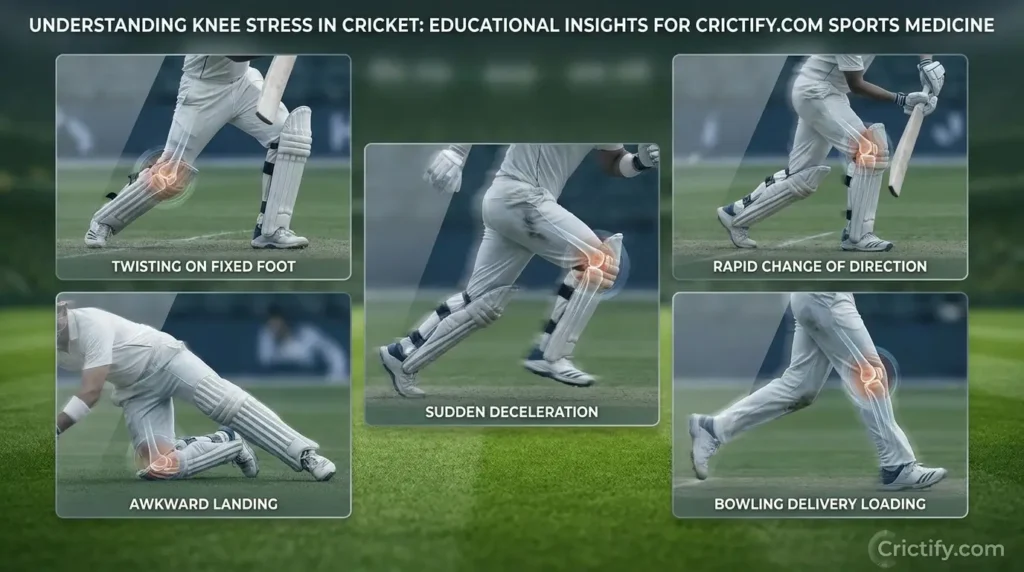
- Sudden twisting: Pivoting on a fixed foot during fielding, bowling, or batting can stress ligaments and meniscus.
- Rapid changes of direction: Cutting and decelerating place high eccentric and rotational loads on the knee.
- Awkward landing: Jumping and landing with poor control can increase joint stress.
- Direct impact: Being struck by the ball or colliding with another player can cause acute trauma.
- Overuse: Repetitive loading without adequate recovery can lead to tendinopathy, patellofemoral pain, and stress reactions.
- Repetitive loading: High bowling volumes, repeated sprinting, or prolonged wicketkeeping sessions accumulate stress.
- Sudden workload increases: Rapid spikes in training or match load are common triggers for overuse injuries.
- Poor movement mechanics: Suboptimal landing, cutting, or squatting techniques can increase joint stress.
- Muscle weakness: Inadequate quadriceps, hamstring, glute, or calf strength reduces load tolerance.
- Poor neuromuscular control: Impaired balance and coordination can affect dynamic knee stability.
- Hip weakness: Weak hip abductors and external rotators can contribute to valgus knee positioning during movement.
- Fatigue: Tired muscles provide less support and control, increasing injury risk.
- Inadequate recovery: Insufficient rest between sessions limits tissue adaptation and repair.
- Previous injury: Incompletely rehabilitated injuries increase re-injury risk.
- Poor rehabilitation: Returning to play without restoring strength, movement quality, and tolerance elevates risk.
- Training errors: Excessive volume, intensity, or frequency without progression can overload tissues.
- Training surface: Hard, uneven, or slippery surfaces can increase stress and alter mechanics.
Acute injuries typically result from a single event (e.g., twisting during fielding), while overuse injuries develop gradually from repetitive loading exceeding the tissue’s capacity.
Risk Factors for Knee Injuries in Cricket
| Risk Factor | Why It May Increase Risk | Practical Cricket Consideration |
|---|---|---|
| Previous knee injury | Altered mechanics, residual weakness, incomplete rehabilitation | Ensure full rehabilitation before return; monitor load carefully |
| Sudden training-load increase | Tissues cannot adapt quickly enough to new demands | Progress workload gradually; avoid large spikes in bowling or running volume |
| High match workload | Cumulative fatigue and insufficient recovery | Manage match and training balance; schedule rest days |
| High bowling workload | Repetitive front-leg loading during delivery stride | Monitor overs bowled; implement bowling load management |
| Repeated sprinting | High eccentric and impact loads on knee | Build sprint capacity progressively; include recovery |
| Repeated jumping | Patellar tendon and patellofemoral joint stress | Strengthen lower limb; manage jumping volume |
| Poor landing mechanics | Increased joint stress and valgus loading | Train controlled landing technique; include plyometric progressions |
| Muscle weakness | Reduced shock absorption and stability | Implement strength training for quads, hamstrings, glutes, calves |
| Reduced mobility | Altered movement patterns and compensations | Include ankle, hip, and knee mobility work |
| Poor balance | Impaired dynamic stability during cutting and landing | Include single-leg balance and neuromuscular training |
| Fatigue | Decreased neuromuscular control and altered mechanics | Monitor session intensity; prioritize recovery and sleep |
| Insufficient recovery | Inadequate tissue repair and adaptation | Schedule rest days; manage travel and tournament loads |
| Inadequate rehabilitation | Residual deficits increase re-injury risk | Follow structured, criteria-based rehab before return |
| Poor technique | Suboptimal movement increases joint stress | Work with coaches on bowling, batting, and fielding mechanics |
| Inadequate warm-up | Muscles and joints not prepared for high load | Implement dynamic, cricket-specific warm-up routines |
| Training surface | Uneven or hard surfaces increase stress | Assess ground conditions; adjust footwear and intensity |
| Age | Younger players may have growth-related vulnerabilities; older players may have degenerative changes | Tailor training and load to age and development stage |
| Skeletal maturity | Growing bones and tendons are susceptible to traction injuries | Monitor adolescent workload; avoid excessive repetition |
| Sport specialization | High volume in one sport without cross-training | Encourage varied movement and adequate rest periods |
Symptoms of Knee Injury in Cricket
Knee injury symptoms vary depending on the structure involved and the severity of damage. Common symptoms reported by cricketers include:
- Knee pain: May be sharp, dull, aching, or localized to specific areas (front, inner, outer, or back of knee).
- Swelling: Can appear immediately after acute injury or develop gradually with overuse.
- Stiffness: Reduced ease of movement, especially after rest or prolonged sitting.
- Tenderness: Pain when pressing on specific areas such as the joint line, patellar tendon, or around the kneecap.
- Clicking: Audible or palpable clicking during movement, which may or may not be painful.
- Catching: Sensation of something catching inside the knee during certain movements.
- Locking: Knee getting stuck in a position, often indicating a mechanical block such as a meniscus tear.
- Giving way: Feeling that the knee is unstable or may collapse, particularly during cutting or landing.
- Instability: Sensation of the knee shifting or not feeling secure during activity.
- Reduced range of motion: Difficulty fully bending or straightening the knee.
- Pain while running: Discomfort that increases with running speed or duration.
- Pain while jumping or landing: Pain during take-off or upon landing from a jump.
- Pain during bowling: Discomfort during the run-up, delivery stride, or follow-through.
- Pain during batting: Pain during footwork, lunging, or running between wickets.
- Pain during fielding: Pain during sprinting, direction changes, diving, or throwing.
- Pain during squatting: Discomfort in deep knee flexion positions, common in wicketkeepers.
- Pain during wicketkeeping: Pain during repeated squatting and explosive rising.

| Symptom | What It May Feel Like | Why It Matters |
|---|---|---|
| Pain | Aching, sharp, or burning sensation in or around the knee | Indicates tissue stress or damage; guides activity modification |
| Swelling | Tightness, puffiness, or visible enlargement around the knee | Suggests inflammation or internal bleeding; may limit movement |
| Stiffness | Reduced ease of bending or straightening, especially after rest | Can affect batting footwork, bowling stride, and fielding agility |
| Clicking | Audible or palpable click during movement | May be benign or indicate meniscus or cartilage involvement |
| Locking | Knee getting stuck and requiring manipulation to move | Suggests mechanical block such as meniscus tear; needs assessment |
| Giving way | Feeling of instability or knee collapsing during activity | Indicates potential ligament or neuromuscular control issues |
| Reduced range of motion | Inability to fully bend or straighten the knee | Affects squatting, lunging, and running mechanics |
It is important to distinguish common symptoms from concerning signs. Persistent swelling, repeated giving way, locking, or pain that worsens over time should be evaluated by a healthcare professional.
Early Warning Signs Cricketers Should Not Ignore
Some symptoms suggest that a knee problem may be more than simple soreness and deserves professional assessment:
- Repeated swelling after cricket: Swelling that recurs after training or matches indicates ongoing irritation.
- Knee repeatedly giving way: Recurrent instability suggests possible ligament or neuromuscular issues.
- Persistent pain: Pain lasting more than a few days despite rest and activity modification.
- Pain that progressively worsens: Increasing pain over days or weeks signals escalating tissue stress.
- Locking or catching: Mechanical symptoms may indicate meniscus or cartilage involvement.
- Inability to fully bend or straighten the knee: Significant movement restriction warrants assessment.
- Pain that changes running or bowling mechanics: Altered movement to avoid pain can create secondary problems.
- Pain that returns every training session: Recurrent symptoms with load suggest insufficient recovery or underlying pathology.
- Reduced performance: Decline in running speed, bowling accuracy, or fielding agility linked to knee symptoms.
- Persistent stiffness: Ongoing stiffness, especially in the morning or after sitting, may indicate joint irritation.
- Symptoms after a twisting injury: Twisting mechanisms can injure ligaments or meniscus and should be assessed.
Recurrent or worsening symptoms should not be ignored or repeatedly self-treated. Early assessment can guide appropriate management and prevent chronic issues.
What to Do Immediately After a Knee Injury
If a knee injury occurs during training or a match, practical early steps can help manage symptoms and reduce further damage:
- Stop the activity if necessary: If pain is significant or the knee feels unstable, stop playing to avoid worsening the injury.
- Protect the knee: Avoid forcing painful movements or continuing high-load activities.
- Avoid forcing painful movement: Do not try to “push through” severe pain or test the knee aggressively.
- Seek medical assessment when indicated: Significant injuries, deformity, inability to bear weight, or severe swelling should be evaluated promptly.
- Monitor swelling: Note whether swelling develops quickly (within hours) or gradually (over days), as this can inform diagnosis.
- Do not immediately return to competition because pain temporarily improves: Pain may settle briefly with rest or adrenaline, but underlying damage may still be present.
Initial management often includes relative rest, ice, compression, and elevation to control pain and swelling. However, specific treatment should be guided by a qualified healthcare professional based on the injury type and severity.
How Is a Knee Injury Diagnosed?
Accurate diagnosis is essential for appropriate management. A healthcare professional will typically begin with a detailed assessment:
- Medical history: Questions about how the injury occurred, previous knee problems, training load, and symptoms.
- Injury mechanism: Understanding whether the injury was acute (e.g., twisting) or gradual (overuse).
- Training history: Recent changes in workload, match frequency, and recovery.
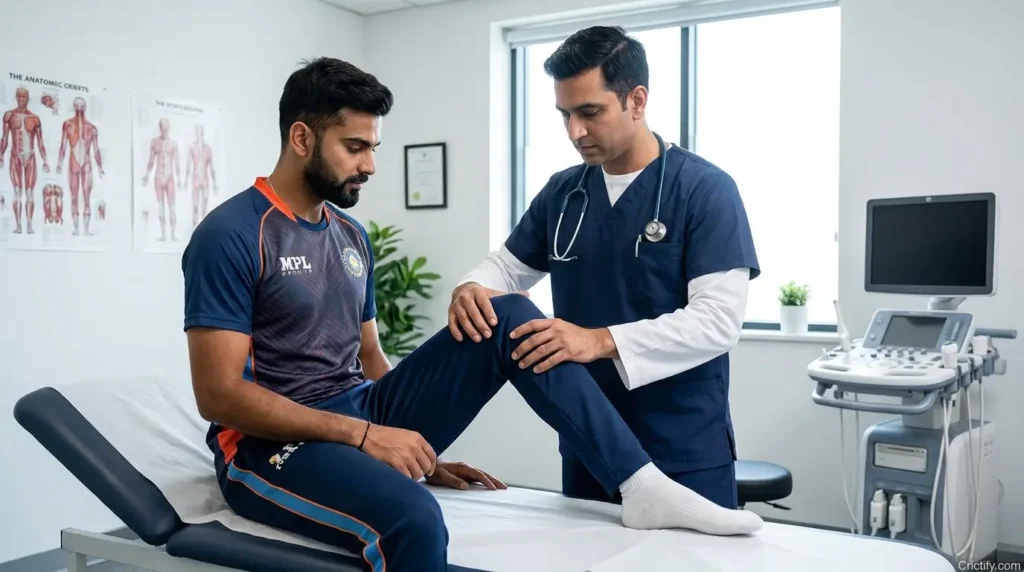
- Physical examination: Inspection for swelling, bruising, or deformity; palpation for tenderness; assessment of range of motion, strength, stability, and functional movement.
- Range of motion: Measuring how far the knee can bend and straighten.
- Strength testing: Evaluating quadriceps, hamstring, calf, and hip strength.
- Stability testing: Assessing ligament integrity with specific clinical tests.
- Functional assessment: Observing walking, squatting, single-leg balance, and other movements.
- Gait assessment: Analyzing walking and running patterns for compensations.
- Cricket-specific movement assessment: Observing bowling, batting, or fielding movements when appropriate to identify pain or dysfunction.
Imaging may be used to complement clinical findings when indicated.
X-ray
X-rays show bone structures and can identify fractures, bone spurs, or signs of arthritis. They do not show soft tissues such as ligaments, meniscus, or tendons. X-rays may be useful after significant trauma or when bony pathology is suspected.
MRI
Magnetic resonance imaging (MRI) provides detailed images of soft tissues, including ligaments, meniscus, cartilage, tendons, and bone marrow. MRI is often used when ligament or meniscus injury is suspected, or when symptoms persist despite initial treatment. Not every knee injury requires MRI; clinical assessment guides the need for imaging.
CT Scan
Computed tomography (CT) scans provide detailed bone images and may be used when complex fractures or bony abnormalities are suspected. CT is less commonly used for soft-tissue knee injuries.
Ultrasound
Ultrasound can visualize superficial structures such as tendons and some ligaments. It is dynamic (can be performed during movement) and may be useful for assessing patellar tendon problems or guiding injections. Ultrasound has limitations for deep structures like the meniscus or ACL.
| Test | What It Can Show | When It May Be Used |
|---|---|---|
| X-ray | Bone fractures, alignment, arthritis, bone spurs | After significant trauma; suspected bony injury; persistent pain in older players |
| MRI | Ligaments, meniscus, cartilage, tendons, bone marrow | Suspected ACL, meniscus, or cartilage injury; persistent symptoms; pre-surgical planning |
| CT | Detailed bone anatomy, complex fractures | Complex bony injuries; surgical planning for fractures |
| Ultrasound | Tendons, superficial ligaments, fluid collections | Patellar tendon assessment; guided injections; dynamic evaluation |

Treatment for Knee Injuries in Cricketers
Treatment depends on the specific diagnosis, severity, and individual player factors. General principles include:
- Activity modification: Temporarily reducing or modifying activities that aggravate symptoms while maintaining overall fitness.
- Relative rest: Avoiding complete immobilization unless specifically indicated; maintaining safe movement to promote recovery.
- Pain management: Using appropriate strategies such as ice, compression, and medications when advised by a healthcare professional.
- Swelling management: Elevation, compression, and activity modification to control swelling.
- Physiotherapy: Individualized rehabilitation addressing pain, mobility, strength, balance, and movement quality.
- Strength training: Progressive loading to restore muscle capacity and joint tolerance.
- Mobility: Restoring ankle, knee, and hip range of motion as needed.
- Neuromuscular training: Improving balance, coordination, and dynamic stability.
- Movement retraining: Correcting faulty movement patterns during running, jumping, landing, and cricket-specific actions.
- Cricket-specific rehabilitation: Gradually reintroducing bowling, batting, wicketkeeping, and fielding demands.
- Gradual return to training: Progressing load based on symptoms, strength, and functional testing.
- Surgery when appropriate: Some injuries (e.g., certain ACL tears, meniscus repairs) may require surgical intervention followed by structured rehabilitation.
| Treatment | Main Goal | When It May Be Used | Important Consideration |
|---|---|---|---|
| Activity modification | Reduce aggravating load while maintaining fitness | Early stage of most injuries; overuse conditions | Avoid complete rest unless indicated; maintain safe movement |
| Physiotherapy | Restore mobility, strength, and function | Nearly all knee injuries | Individualized programs based on diagnosis and goals |
| Strength training | Improve muscle capacity and joint tolerance | Rehabilitation and prevention | Progress load gradually; monitor symptoms |
| Neuromuscular training | Enhance balance and dynamic stability | Rehabilitation and prevention | Include single-leg and cricket-specific drills |
| Surgery | Repair or reconstruct damaged structures | Selected ligament, meniscus, or cartilage injuries | Requires post-operative rehabilitation; return-to-play criteria apply |
Medication decisions should be made in consultation with a qualified healthcare professional. Self-medicating without guidance can mask symptoms or delay appropriate care.
Physiotherapy for Knee Injuries in Cricket
A sports physiotherapist plays a central role in assessing and managing knee injuries in cricketers. Assessment may include:
- Pain: Location, intensity, and behavior with activity and rest.
- Swelling: Presence, timing, and response to load.
- Knee mobility: Range of motion in flexion and extension.
- Quadriceps strength: Essential for knee extension and shock absorption.
- Hamstring strength: Important for deceleration and knee stability.
- Calf strength: Contributes to push-off and landing control.
- Hip strength: Gluteal muscles influence knee alignment during movement.
- Balance: Single-leg stance and dynamic balance tests.
- Single-leg control: Quality of single-leg squat, landing, and cutting.
- Landing mechanics: Observing how the player absorbs impact during jumps.
- Running mechanics: Analyzing gait for compensations or asymmetries.
- Jumping mechanics: Assessing take-off and landing strategies.
- Cricket-specific movement: Bowling, batting, wicketkeeping, and fielding actions.
- Training workload: Reviewing recent and planned training and match loads.
Rehabilitation must be individualized based on the specific injury, severity, player role, and goals. A fast bowler’s rehab will differ from a wicketkeeper’s or a junior player’s program.

Exercises for Knee Injury Rehabilitation
Exercises should be selected based on diagnosis, severity, pain, swelling, age, surgical status, clinical findings, and rehabilitation stage. The following examples illustrate common exercises that may be included in a knee rehabilitation program. They are not universally safe for every injury and should be progressed under professional guidance.
- Quad sets: Tightening the quadriceps muscle while the leg is straight. Main purpose: activate quadriceps without joint movement. Common mistakes: allowing the knee to bend or compensating with hip muscles. Appropriate in early rehabilitation when movement is limited.
- Straight-leg raises: Lifting the straight leg while lying on the back. Main purpose: strengthen quadriceps and hip flexors with minimal knee load. Common mistakes: arching the back or bending the knee. Appropriate when quad sets are tolerated.
- Glute bridges: Lifting the hips off the ground while lying on the back with knees bent. Main purpose: strengthen glutes and hamstrings. Common mistakes: over-arching the lower back or pushing through the toes instead of heels. Appropriate for posterior chain strengthening.
- Calf raises: Rising onto the toes while standing. Main purpose: strengthen calf muscles for push-off and landing control. Common mistakes: leaning forward excessively or rising too quickly. Appropriate when weight-bearing is tolerated.
- Step-ups: Stepping onto a low platform and returning down. Main purpose: strengthen quadriceps, glutes, and improve single-leg control. Common mistakes: letting the knee collapse inward or using momentum. Appropriate in mid-stage rehabilitation.
- Controlled squats: Squatting to a comfortable depth with good alignment. Main purpose: strengthen quadriceps, glutes, and improve movement patterns. Common mistakes: knees collapsing inward, heels lifting, or excessive depth too soon. Appropriate when basic strength is restored.
- Split squats: Lunging forward or backward with controlled movement. Main purpose: strengthen legs in a staggered stance, mimicking batting and bowling positions. Common mistakes: losing balance or allowing the front knee to collapse. Appropriate in later rehabilitation stages.
- Hamstring strengthening: Exercises such as hamstring curls or bridges. Main purpose: improve deceleration and knee stability. Common mistakes: using momentum or poor alignment. Appropriate when basic loading is tolerated.
- Hip abductor strengthening: Side-lying leg raises or band-resisted lateral walks. Main purpose: strengthen hip muscles to control knee alignment. Common mistakes: rotating the trunk or using momentum. Appropriate for neuromuscular control.
- Single-leg balance: Standing on one leg with progressive challenges. Main purpose: improve balance and proprioception. Common mistakes: allowing the knee to collapse or holding onto support unnecessarily. Appropriate throughout rehabilitation.
- Controlled landing drills: Practicing soft, controlled landings from small jumps. Main purpose: teach safe absorption of impact. Common mistakes: stiff landings or valgus knee positioning. Appropriate in later stages before return to sport.
- Progressive running drills: Gradual reintroduction of running from walking to jogging to sprinting. Main purpose: restore running tolerance and mechanics. Common mistakes: progressing too quickly or ignoring symptoms. Appropriate when strength and balance are adequate.
| Exercise | Main Purpose | Cricket Relevance | Important Note |
|---|---|---|---|
| Quad sets | Activate quadriceps | Supports knee extension in bowling and batting | Start early; progress as tolerated |
| Straight-leg raises | Strengthen quads with minimal joint load | Maintains quad function during early rehab | Avoid if painful |
| Glute bridges | Strengthen glutes and hamstrings | Supports hip-knee control during movement | Focus on quality over quantity |
| Calf raises | Strengthen calves | Improves push-off and landing | Progress height and load gradually |
| Step-ups | Strengthen legs and improve single-leg control | Mimics stepping and lunging in cricket | Use low step initially |
| Controlled squats | Strengthen quads and glutes | Supports batting stance and wicketkeeping | Maintain knee alignment |
| Split squats | Strengthen legs in staggered stance | Relevant to batting footwork and bowling | Progress depth carefully |
| Hamstring strengthening | Improve deceleration and stability | Supports braking and landing | Include eccentric focus |
| Hip abductor strengthening | Control knee alignment | Reduces valgus stress during cutting | Use bands or bodyweight |
| Single-leg balance | Improve balance and proprioception | Supports fielding and bowling stability | Progress by closing eyes or adding movement |
| Controlled landing drills | Teach safe impact absorption | Reduces landing stress in fielding | Start with small heights |
| Progressive running drills | Restore running tolerance | Essential for all cricket roles | Follow pain and swelling response |

Knee Rehabilitation for Cricketers
Rehabilitation typically follows progressive stages. Timelines vary widely depending on injury type, severity, surgical status, and individual response.
Stage 1 — Control Pain and Swelling
- Main objective: Reduce pain and swelling to allow safe movement.
- Typical training focus: Relative rest, ice, compression, elevation, gentle range-of-motion exercises, isometric muscle activation.
- What should be avoided: Aggressive loading, painful activities, high-impact movements.
- Progression considerations: Move to Stage 2 when pain and swelling are manageable and basic movement is tolerated.
Stage 2 — Restore Movement
- Main objective: Regain full or near-full knee range of motion.
- Typical training focus: Gentle stretching, mobility drills, soft-tissue work, low-load movement patterns.
- What should be avoided: Forcing end-range movements that provoke significant pain.
- Progression considerations: Progress to Stage 3 when mobility is adequate for daily and cricket-specific tasks.
Stage 3 — Restore Strength
- Main objective: Rebuild quadriceps, hamstring, glute, and calf strength.
- Typical training focus: Progressive resistance exercises, single-leg strengthening, closed-chain movements.
- What should be avoided: Heavy loading before adequate movement quality is established.
- Progression considerations: Advance to Stage 4 when strength is improving and symptoms are stable with load.
Stage 4 — Restore Balance and Neuromuscular Control
- Main objective: Improve balance, coordination, and dynamic stability.
- Typical training focus: Single-leg balance, perturbation training, controlled landing drills, agility basics.
- What should be avoided: High-speed cutting or jumping before control is established.
- Progression considerations: Move to Stage 5 when balance and control are adequate for running preparation.
Stage 5 — Running and Change-of-Direction Preparation
- Main objective: Reintroduce running and controlled direction changes.
- Typical training focus: Walk-jog progression, straight-line running, gradual acceleration and deceleration, basic cutting drills.
- What should be avoided: Sprinting or aggressive cutting before tolerance is built.
- Progression considerations: Progress to Stage 6 when running is tolerated without significant symptoms.
Stage 6 — Cricket-Specific Training
- Main objective: Reintroduce bowling, batting, wicketkeeping, and fielding demands.
- Typical training focus: Controlled bowling drills, batting footwork, wicketkeeping squats, fielding movement patterns, progressive workload.
- What should be avoided: Full match intensity before training tolerance is established.
- Progression considerations: Advance to Stage 7 when cricket-specific training is tolerated and functional testing is passed.
Stage 7 — Return to Competition
- Main objective: Return to match play with appropriate load management.
- Typical training focus: Match simulation, progressive overs or innings, monitoring symptoms and workload.
- What should be avoided: Sudden spikes in match load without preparation.
- Progression considerations: Ongoing monitoring and maintenance exercises to prevent recurrence.

Knee Injury Recovery Timeline
Recovery timelines vary significantly depending on injury type, severity, treatment approach, and individual factors. The following table provides general considerations, not fixed predictions.
| Injury/Recovery Stage | General Recovery Consideration | What Determines Progression |
|---|---|---|
| Mild soft-tissue injuries | Days to weeks with appropriate management | Pain, swelling, mobility, and strength response |
| Tendon-related problems | Weeks to months; load management is key | Symptom response to loading, strength, and function |
| Meniscus injuries | Weeks to months; depends on tear type and treatment | Symptoms, mechanical signs, imaging, and functional testing |
| Ligament injuries (non-surgical) | Weeks to months with rehabilitation | Stability, strength, functional testing, and sport demands |
| ACL reconstruction | Months (often 9–12+ for high-demand sports) | Strength symmetry, functional testing, movement quality, and confidence |
| Overuse injuries | Weeks to months; load modification essential | Workload tolerance, strength, and movement patterns |
| Stress-related conditions | Weeks to months; requires load reduction | Bone healing, pain response, and gradual reloading |
Recovery is not linear. Flare-ups may occur with increased load, and progression should be guided by symptoms, functional testing, and professional advice.
Returning to Running After a Knee Injury
Returning to running should follow a gradual progression based on injury type and rehabilitation status:
- Walking comfortably: Pain-free walking without limping.
- Brisk walking: Increased pace without symptoms.
- Easy jogging: Short intervals of light jogging on flat surfaces.
- Continuous running: Building duration without significant symptoms.
- Acceleration/deceleration: Introducing controlled speed changes.
- Controlled direction changes: Basic cutting and pivoting drills.
- Cricket-specific running: Running patterns relevant to batting, bowling, and fielding.
- Sprinting: Progressive speed work when tolerance is established.
- Match-intensity movement: Simulating game demands before return to competition.
Progression should be guided by pain, swelling, strength, and functional testing—not just time since injury.

When Can a Cricketer Return to Cricket After a Knee Injury?
Return to cricket depends on multiple factors beyond pain reduction. Key considerations include:
- Strength: Adequate quadriceps, hamstring, glute, and calf strength compared to the uninjured side.
- Range of motion: Near-full knee flexion and extension for cricket demands.
- Stability: No significant giving way during functional tasks.
- Balance: Adequate single-leg control for bowling, batting, and fielding.
- Functional testing: Passing hop tests, landing assessments, and sport-specific drills.
- Running: Tolerating running at match intensity without symptoms.
- Jumping: Safe take-off and landing mechanics.
- Landing: Controlled absorption of impact during fielding and bowling.
- Deceleration: Ability to brake quickly without pain or compensation.
- Direction changes: Cutting and pivoting with good alignment.
- Cricket-specific drills: Tolerating bowling, batting, wicketkeeping, and fielding simulations.
- Confidence: Psychological readiness to trust the knee during play.
- Training tolerance: Handling progressive training loads without flare-ups.
- Workload progression: Gradual increase in overs, innings, or fielding demands.
- Medical/physiotherapy clearance when appropriate: Professional sign-off for significant injuries or post-surgical cases.
| Return-to-Play Factor | What Should Be Considered |
|---|---|
| Strength | Symmetry and absolute strength for role demands |
| Range of motion | Ability to squat, lunge, and extend fully |
| Stability | No recurrent giving way during drills |
| Balance | Single-leg control during dynamic tasks |
| Functional testing | Hop tests, landing assessments, agility drills |
| Running tolerance | Match-intensity running without symptoms |
| Cricket-specific load | Bowling, batting, wicketkeeping, fielding tolerance |
| Confidence | Willingness to trust the knee in competition |
| Workload management | Gradual progression to avoid spikes |
| Professional clearance | When indicated for significant injuries |
Returning to Bowling After a Knee Injury
Fast bowlers require particular attention to knee load during return:
- Walking: Pain-free walking without limping.
- Running: Build running tolerance before bowling.
- Controlled bowling drills: Start with walk-through or reduced run-up drills.
- Short bowling exposure: Limited overs or deliveries initially.
- Progressive intensity: Gradually increase pace and effort.
- Progressive volume: Build number of deliveries over weeks.
- Full bowling spell preparation: Simulate match spell lengths in training.
- Match simulation: Practice under match-like conditions.
- Competitive return: Gradual reintroduction to matches with workload monitoring.
Fast bowlers should pay attention to run-up mechanics, delivery stride loading, front-leg and back-leg forces, landing quality, follow-through stability, and repeated bowling volume. Sudden increases in overs bowled should be avoided.

Returning to Batting After a Knee Injury
Batters should gradually rebuild tolerance to batting demands:
- Stance: Re-establish comfortable stance without pain.
- Weight transfer: Practice shifting weight between legs.
- Front-foot movement: Reintroduce forward strides and lunges.
- Back-foot movement: Practice back-foot shots with controlled loading.
- Running between wickets: Build running tolerance progressively.
- Turning: Practice quick turns at the crease.
- Sudden acceleration: Reintroduce sprinting between wickets.
- Lunging: Controlled lunges for shots without pain.
- Defensive movement: Practice small adjustments in stance.
- Repeated batting sessions: Build volume over time to match demands.
Gradual exposure to batting-specific loads helps ensure the knee tolerates match intensity.
Knee Injury Considerations for Wicketkeepers
Wicketkeepers face unique knee demands:
- Repeated squatting: Hundreds of deep squats per match and training session.
- Deep flexion: Maintaining low positions for extended periods.
- Explosive rising: Quick extensions to collect deliveries or effect stumpings.
- Lateral movement: Side-to-side shuffling and reaching.
- Diving: Occasional dives to stop byes or leg byes.
- Repeated crouching: Frequent transitions between standing and squatting.
- Long periods in a low position: Endurance demand on quadriceps and patellofemoral joint.
Rehabilitation should gradually rebuild squat depth, duration, and explosive rising capacity. Isometric holds, controlled squats, and progressive wicketkeeping drills help restore tolerance.
Knee Injury Considerations for Fielders
Fielders must restore high-speed and multi-directional capabilities:
- Sprinting: Build straight-line running speed.
- Braking: Practice controlled deceleration.
- Direction changes: Reintroduce cutting and pivoting.
- Diving: Progress from controlled dives to full-effort attempts.
- Jumping: Restore vertical and horizontal jumping.
- Landing: Emphasize soft, controlled landings.
- Uneven ground: Practice on variable outfield surfaces when possible.
- Boundary fielding: Build endurance for covering large distances.
- Throwing after sudden movement: Integrate fielding and throwing under fatigue.
Fielding drills should progress from controlled movements to match-intensity efforts.
Role-Specific Considerations
Fast Bowlers
- Main knee demands: High-impact front-leg loading, repetitive delivery strides, run-up mechanics.
- Common risk factors: High bowling workload, sudden workload spikes, previous knee injury, poor landing mechanics.
- Training considerations: Monitor overs bowled; include strength and neuromuscular training; manage recovery.
- Prevention: Gradual workload progression; address biomechanics; maintain strength and mobility.
- Return-to-play considerations: Progressive bowling volume; monitor front-leg symptoms; ensure strength symmetry.
Spin Bowlers
- Main knee demands: Twisting on delivery, pivot mechanics, follow-through stability.
- Common risk factors: Repetitive twisting on fixed foot, poor footwork, inadequate warm-up.
- Training considerations: Include rotational control drills; manage spell lengths.
- Prevention: Warm-up thoroughly; strengthen hip and knee stabilizers.
- Return-to-play considerations: Gradual reintroduction of spin bowling volume; monitor twisting tolerance.
Batters
- Main knee demands: Stance maintenance, footwork, lunging, running between wickets.
- Common risk factors: Repeated batting sessions, hard pitches, inadequate recovery.
- Training considerations: Build batting-specific endurance; strengthen legs for lunging.
- Prevention: Manage batting volume; include strength and mobility work.
- Return-to-play considerations: Progressive batting sessions; monitor running between wickets tolerance.
Wicketkeepers
- Main knee demands: Repeated squatting, explosive rising, lateral movement.
- Common risk factors: High keeping volume, deep flexion demands, previous patellar tendon issues.
- Training considerations: Build squat endurance; strengthen quadriceps and glutes.
- Prevention: Manage keeping load; include isometric and eccentric strengthening.
- Return-to-play considerations: Gradual reintroduction of keeping sessions; monitor patellar tendon symptoms.
Fielders
- Main knee demands: Sprinting, braking, direction changes, jumping, landing.
- Common risk factors: High fielding workload, uneven surfaces, fatigue.
- Training considerations: Include agility, plyometrics, and landing drills.
- Prevention: Warm-up dynamically; strengthen lower limb; manage fielding load.
- Return-to-play considerations: Progressive fielding intensity; monitor cutting and landing tolerance.
Junior Cricketers
- Main knee demands: Growth-related changes, skill development, increasing workload.
- Common risk factors: Rapid growth, training errors, inadequate recovery, sport specialization.
- Training considerations: Age-appropriate strength training; technique coaching; workload monitoring.
- Prevention: Educate on early symptom reporting; avoid excessive repetition; ensure recovery.
- Return-to-play considerations: Conservative progression; prioritize long-term development over short-term performance.
Professional Cricketers
- Main knee demands: High match and training volumes across formats, travel, limited recovery.
- Common risk factors: Cumulative load, previous injuries, condensed schedules.
- Training considerations: Individualized load management; recovery strategies; ongoing strength maintenance.
- Prevention: Monitor workload; address niggles early; maintain strength and mobility.
- Return-to-play considerations: Criteria-based progression; coordinate with medical and coaching staff.
Knee Injuries in Young Cricketers
Young cricketers require special consideration due to growth and development:
- Growth and development: Bones, tendons, and muscles are still maturing, making them susceptible to traction injuries and overuse.
- Training load: Excessive repetition without adequate recovery can lead to overuse injuries.
- Overuse: Conditions such as Osgood-Schlatter disease and patellofemoral pain are common in adolescents.
- Recovery: Young athletes need sufficient rest between sessions and matches.
- Strength training: Age-appropriate strength work can improve resilience but must be supervised.
- Technique: Coaching on bowling, batting, and fielding mechanics helps reduce unnecessary stress.
- Early reporting of symptoms: Encouraging young players to report pain early prevents chronic issues.
- Why young players should not simply “play through” persistent pain: Persistent pain may indicate underlying pathology that requires assessment. Playing through pain can worsen injury and prolong recovery.
Parents, coaches, and medical staff should work together to monitor workload, ensure adequate recovery, and address symptoms promptly in young cricketers.
How to Prevent Knee Injuries in Cricket
Prevention strategies focus on preparing the body for cricket demands and managing load:
- Warm-up: Dynamic, cricket-specific preparation before training and matches.
- Strength training: Quadriceps, hamstrings, glutes, calves, and hip muscles.
- Quadriceps strength: Essential for knee extension and shock absorption.
- Hamstring strength: Supports deceleration and knee stability.
- Glute strength: Controls hip and knee alignment during movement.
- Calf strength: Contributes to push-off and landing.
- Hip control: Hip abductors and external rotators influence knee positioning.
- Balance: Single-leg stability for bowling, batting, and fielding.
- Landing mechanics: Soft, controlled landings reduce joint stress.
- Deceleration: Training braking mechanics for fielding and running.
- Change-of-direction mechanics: Efficient cutting and pivoting techniques.
- Mobility: Ankle, hip, and knee range of motion for optimal movement.
- Training-load management: Gradual progression; avoid sudden spikes.
- Recovery: Adequate rest between sessions and matches.
- Sleep: Quality sleep supports tissue repair and adaptation.
- Hydration: Maintains performance and reduces fatigue-related risk.
- Nutrition: Adequate energy and nutrients support tissue health.
- Proper footwear: Appropriate shoes for surface conditions.
- Playing surface awareness: Adjust intensity and technique for ground conditions.
- Gradual workload progression: Build volume and intensity over time.
- Previous injury management: Fully rehabilitate and maintain strength after injury.
Cricket-Specific Knee Warm-Up
A structured warm-up prepares the body for cricket demands:
- General movement: Light jogging or skipping to increase blood flow.
- Dynamic mobility: Leg swings, hip circles, ankle mobility drills.
- Hip mobility: Lunges with rotation, hip openers.
- Ankle mobility: Calf stretches, ankle circles.
- Glute activation: Glute bridges, band walks.
- Quadriceps activation: Bodyweight squats, leg extensions.
- Hamstring preparation: Dynamic hamstring stretches, leg swings.
- Calf preparation: Calf raises, ankle hops.
- Balance: Single-leg stance with progressive challenges.
- Controlled acceleration: Build-up runs from walk to jog to stride.
- Cricket-specific movement: Bowling walk-throughs, batting footwork, fielding drills.
Preparation should be progressive rather than jumping immediately into maximal sprinting or bowling.

Strength Training for Knee Injury Prevention
Strength training builds physical capacity to tolerate cricket loads:
- Quadriceps: Support knee extension and landing.
- Hamstrings: Aid deceleration and knee stability.
- Glutes: Control hip and knee alignment.
- Calves: Contribute to push-off and landing control.
- Hip abductors: Prevent valgus knee positioning during cutting.
- Core: Supports trunk stability during bowling and batting.
- Single-leg strength: Mimics unilateral demands of cricket.
- Balance: Enhances proprioception and dynamic stability.
- Neuromuscular control: Improves coordination during complex movements.
Stronger muscles can improve physical capacity but do not guarantee injury prevention. Strength training should be combined with workload management and technique coaching.
Nutrition and Recovery for Healthy Knees
Supporting knee health extends beyond exercise:
- Adequate energy intake: Ensures the body has resources for repair and adaptation.
- Protein: Supports muscle maintenance and repair.
- Carbohydrates: Fuels training and match performance.
- Micronutrients: Vitamins and minerals support bone and tissue health.
- Hydration: Maintains performance and reduces fatigue.
- Sleep: Critical for tissue repair, hormone regulation, and recovery.
- Recovery between sessions: Allows tissues to adapt to load.
Nutrition alone cannot repair a torn ligament or damaged meniscus, but it supports overall tissue health and recovery capacity.
Common Mistakes Cricketers Make After a Knee Injury
- Playing through worsening pain: Ignoring escalating symptoms can worsen injury.
- Ignoring swelling: Persistent swelling indicates ongoing irritation.
- Ignoring instability: Recurrent giving way suggests underlying issues.
- Returning too quickly: Rushing back increases re-injury risk.
- Stopping all movement for too long without rehabilitation: Prolonged rest without guided rehab leads to deconditioning.
- Copying random exercises from social media: Exercises may not suit the specific injury or stage.
- Increasing workload too quickly: Sudden spikes in training or match load trigger flare-ups.
- Ignoring previous injuries: Unresolved deficits increase recurrence risk.
- Skipping strength training: Strength is essential for load tolerance.
- Returning because pain temporarily disappeared: Pain relief does not equal full recovery.
- Ignoring locking or catching: Mechanical symptoms warrant assessment.
- Treating every knee injury as the same condition: Different injuries require different management.
Do’s and Don’ts for Knee Injury Management
| Do | Don’t |
|---|---|
| Seek professional assessment for persistent or severe symptoms | Ignore worsening pain or recurrent swelling |
| Follow a structured, individualized rehabilitation program | Copy generic exercises without considering your injury |
| Progress workload gradually based on symptoms and testing | Return to full training or matches too quickly |
| Maintain strength and mobility work during and after recovery | Stop all exercise for prolonged periods without guidance |
| Communicate with coaches and medical staff about symptoms | Hide pain or play through significant discomfort |
| Use appropriate footwear and consider surface conditions | Train or play on unsafe surfaces without adjustment |
| Prioritize sleep, nutrition, and hydration for recovery | Neglect recovery practices between sessions |
| Address previous injuries with ongoing maintenance | Assume past injuries are fully resolved without follow-up |
| Warm up dynamically before training and matches | Jump straight into maximal efforts without preparation |
| Monitor training and match loads to avoid spikes | Increase bowling overs or fielding intensity abruptly |
When Should a Cricketer See a Doctor for Knee Pain?
Certain situations warrant prompt medical assessment:
- Significant injury: High-energy trauma or major impact.
- Sudden swelling: Rapid swelling within hours of injury.
- Inability to bear weight: Cannot walk or put weight on the leg.
- Knee deformity: Visible abnormality in knee shape or alignment.
- Knee locking: Knee gets stuck and cannot move freely.
- Repeated giving way: Recurrent instability during activity.
- Severe pain: Pain that prevents normal activity or sleep.
- Persistent pain: Pain lasting more than a few days despite rest.
- Recurrent swelling: Swelling that returns with activity.
- Major loss of movement: Inability to bend or straighten the knee significantly.
- Suspected ligament injury: Mechanism and symptoms suggest ligament damage.
- Suspected meniscus injury: Twisting injury with locking, catching, or joint-line pain.
- Symptoms that worsen despite activity modification: Progressive symptoms need assessment.
- Concerning symptoms in young athletes: Persistent pain, swelling, or mechanical symptoms in growing players.
Urgent or emergency situations include inability to bear weight, major deformity, severe pain, or suspected fracture or dislocation. These require immediate medical attention.

Frequently Asked Questions (FAQs)
1. Why do cricketers get knee injuries?
Cricketers get knee injuries due to the repetitive and multi-directional demands of the sport. Running, bowling, batting footwork, wicketkeeping squats, and fielding movements place significant load on the knee. Acute injuries can occur from twisting, landing awkwardly, or direct impact, while overuse injuries develop from repetitive loading without adequate recovery.
2. Why are fast bowlers at risk of knee problems?
Fast bowlers repeatedly load the front knee during the delivery stride, absorbing high impact forces with each delivery. High bowling volumes, sudden workload increases, and previous injuries elevate risk. Overuse conditions such as patellar tendinopathy, patellofemoral pain, and anteromedial articular impingement are commonly reported in fast bowlers.
3. Can bowling cause knee pain?
Yes, bowling can cause knee pain, particularly in fast bowlers due to repetitive front-leg loading. Spin bowlers may also experience knee pain from twisting on delivery. Pain may arise from tendons, ligaments, meniscus, cartilage, or other structures and should be assessed if persistent.
4. Can I play cricket with knee pain?
Playing with knee pain depends on the cause and severity. Mild, transient soreness may be manageable with load modification, but persistent, worsening, or mechanical symptoms (locking, giving way) warrant assessment. Continuing to play through significant pain can worsen injury and prolong recovery.
5. How long does a knee injury take to recover?
Recovery time varies widely depending on injury type, severity, treatment, and individual factors. Mild soft-tissue injuries may resolve in weeks, while ligament reconstructions can take many months. Progression should be guided by symptoms, strength, functional testing, and professional advice—not fixed timelines.
6. Does every knee injury require an MRI?
No, not every knee injury requires MRI. Many injuries can be diagnosed clinically through history and physical examination. MRI is useful when ligament, meniscus, or cartilage injury is suspected, or when symptoms persist despite initial treatment. Imaging decisions should be made by a qualified healthcare professional.
7. What exercises strengthen the knee for cricket?
Exercises that may strengthen the knee include quad sets, straight-leg raises, glute bridges, calf raises, step-ups, controlled squats, split squats, hamstring strengthening, hip abductor work, single-leg balance, and progressive running drills. Exercise selection should be individualized based on diagnosis and rehabilitation stage.
8. What should I do if my knee swells after cricket?
If your knee swells after cricket, reduce aggravating activities, apply ice, use compression, and elevate the leg. Monitor symptoms and avoid returning to full training until swelling settles. Recurrent or significant swelling should be assessed by a healthcare professional.
9. What does it mean if my knee keeps giving way?
Recurrent giving way suggests instability, which may be due to ligament injury, meniscus pathology, or neuromuscular control deficits. This symptom warrants professional assessment to determine the cause and appropriate management.
10. Can a cricketer return to cricket after an ACL injury?
Yes, many cricketers return to cricket after ACL injury, with or without surgery, depending on individual factors. Return requires structured rehabilitation, strength restoration, functional testing, and gradual reintroduction of cricket-specific loads. Clearance from a healthcare professional is often recommended for significant injuries.
11. How can young cricketers prevent knee injuries?
Young cricketers can prevent knee injuries by managing training load, ensuring adequate recovery, participating in age-appropriate strength training, learning proper technique, warming up dynamically, and reporting symptoms early. Parents and coaches should monitor workload and avoid excessive repetition during growth periods.
12. When should a cricketer see a doctor for knee pain?
A cricketer should see a doctor for knee pain if there is significant injury, sudden swelling, inability to bear weight, deformity, locking, repeated giving way, severe or persistent pain, recurrent swelling, major loss of movement, or concerning symptoms in young athletes. Early assessment guides appropriate management.
13. How should I return to running after a knee injury?
Return to running should follow a gradual progression: walking comfortably, brisk walking, easy jogging, continuous running, acceleration/deceleration, controlled direction changes, cricket-specific running, sprinting, and match-intensity movement. Progression depends on injury type, rehabilitation status, and symptom response.
14. Can strength training reduce the risk of knee injuries?
Strength training can improve physical capacity and load tolerance, potentially reducing injury risk. Stronger quadriceps, hamstrings, glutes, and hip muscles support knee stability during cricket movements. However, strength training alone does not guarantee prevention; workload management and technique are also important.
15. How can I prevent a knee injury from happening again?
Preventing recurrence involves completing full rehabilitation, maintaining strength and mobility, managing training and match loads, warming up properly, addressing biomechanical factors, and monitoring symptoms. Ongoing maintenance exercises and communication with medical and coaching staff help reduce re-injury risk.
Medical Disclaimer
This article is for general education and does not replace an examination, diagnosis, or personalised treatment plan from a qualified doctor, sports physician, physiotherapist, or other licensed healthcare professional. Knee pain in a cricketer may result from different muscles, tendons, ligaments, cartilage, bones, or other medical conditions, and online information cannot determine the exact cause or severity. Do not use this article to decide whether to continue playing, take medication, receive an injection, undergo surgery, or return to cricket. Seek prompt medical attention after significant trauma, severe or worsening pain, major swelling, deformity, inability to bear weight, locking, repeated giving way, new weakness, or other concerning symptoms. Any exercise or return-to-play programme should be adapted to the individual player’s age, injury, medical history, playing role, training load, and clinical findings.