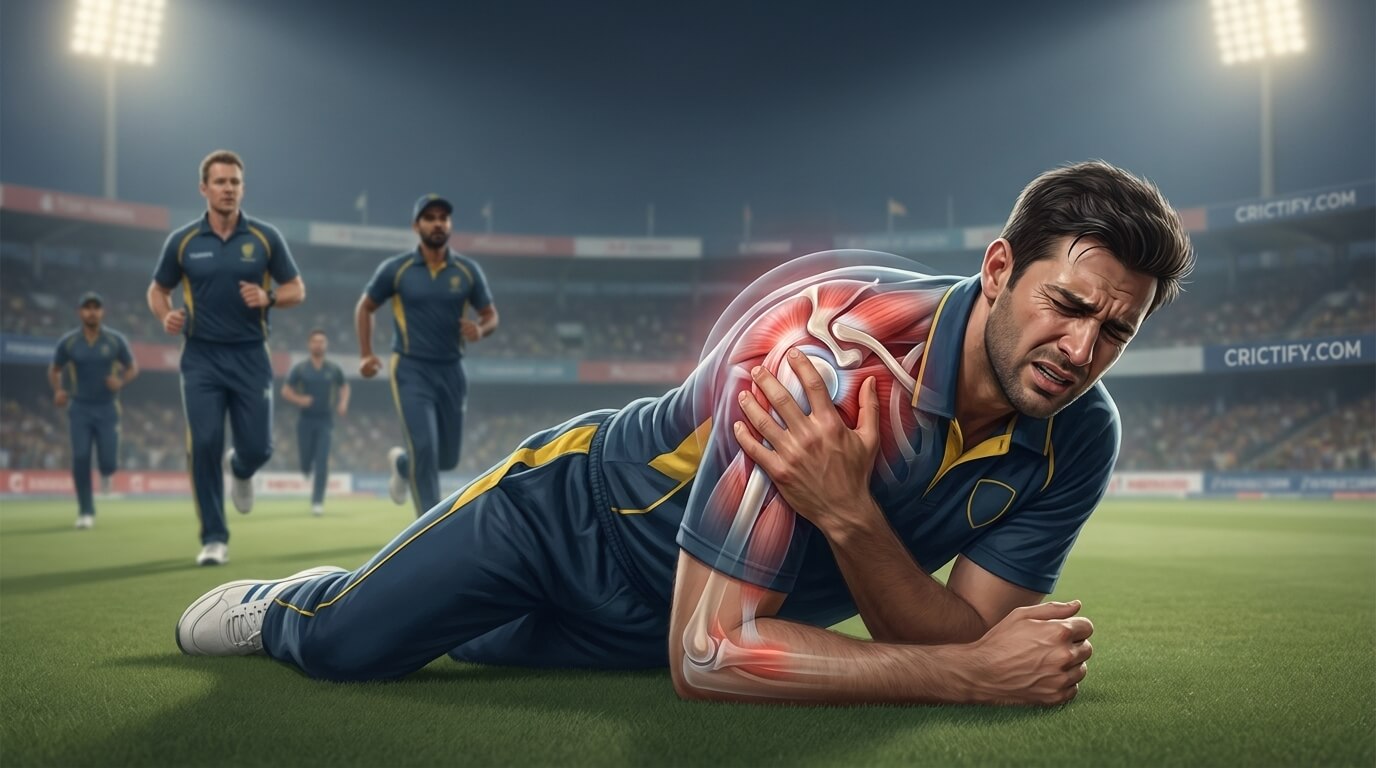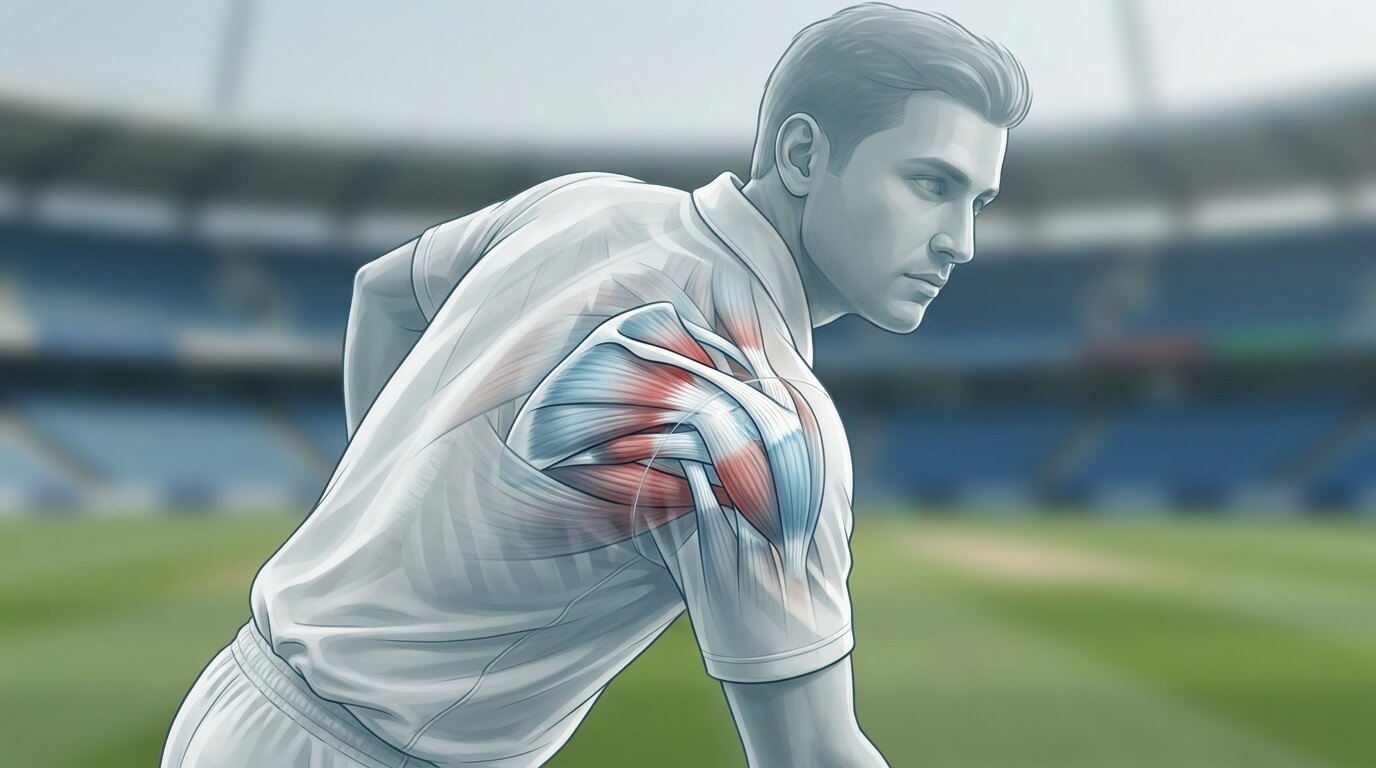
Shoulder dislocation is one of the most serious shoulder injuries a cricketer can suffer, and it can make the difference between a full career and a recurring, confidence‑sapping problem if not managed correctly. This in‑depth guide explains shoulder dislocation specifically in cricket—how it happens, how to treat it, how to rehab it, and how to safely return to bowling, batting, wicketkeeping, and fielding.
Introduction
In modern cricket, players dive more, throw harder, and bowl faster than ever before, which has pushed shoulder injuries—including dislocations—into the spotlight. A shoulder dislocation is not just “a pop and some pain”; it can damage the labrum, capsule, cartilage, and bone, and set up years of shoulder instability if it is not treated and rehabilitated properly
In cricket, dislocations typically occur during:
- Full‑length dives for catches or stops on the boundary
- High‑velocity throws from the deep or inner ring.
- Collisions in the outfield or at the crease (bat–fielder or fielder–fielder impacts).
This article breaks the injury down from pitch‑side first aid to surgery, rehab, mental recovery, and cricket‑specific return‑to‑play.
Quick Summary
- A shoulder dislocation happens when the ball of the upper arm (humeral head) comes completely out of the socket (glenoid), usually at the front (anterior dislocation) in cricketers.
- It often occurs during diving fielding efforts, high‑velocity throws, or awkward falls with the arm outstretched and rotated.
- Immediate priorities are: stop play, protect the neck and shoulder, assess nerve and blood supply, immobilise the arm in a sling, and get urgent medical evaluation.
- X‑rays rule out fractures and confirm direction of dislocation; MRI identifies labral tears (Bankart lesion), bone loss (Hill‑Sachs lesion), and associated soft‑tissue damage.
- Recurrent dislocation is common in young overhead athletes, especially if rehab is incomplete or if structural damage is left untreated.
- Surgery (usually arthroscopic Bankart stabilisation) is often recommended for competitive cricketers with recurrent instability, bone defects, or high‑demand roles like fast bowling and throwing from the deep.
- Evidence‑based rehab can take 3–6 months without surgery and 6–9+ months after surgery, with progressive, cricket‑specific return‑to‑bowling, throwing, batting, wicketkeeping, and fielding.
What Is a Shoulder Dislocation?
A shoulder dislocation is when the humeral head (ball) comes completely out of the glenoid socket, losing all contact until it is relocated. In cricket this is almost always an anterior dislocation, where the ball slips forwards, usually with the arm out to the side and rotated back—exactly the position of a fast bowler in cocking phase or a fielder preparing a powerful throw.
Key features:
- Sudden, severe pain and inability to move the arm.
- Obvious change in shoulder contour, often with a visible “squared‑off” step.
- Player supports the injured arm with the other hand and refuses to let it be moved.
Shoulder Joint Anatomy
To understand why dislocations happen so often in cricketers, you need to understand the joint’s anatomy.
- Glenohumeral joint: A ball‑and‑socket joint where a large “ball” (humeral head) sits on a relatively shallow “saucer” (glenoid), allowing huge range of motion but sacrificing inherent stability.
- Labrum: A fibrocartilage rim that deepens the socket and acts like a bumper to keep the ball in place and anchor ligaments.
- Capsule and ligaments: A fibrous envelope and thickenings (glenohumeral ligaments) that guide movement and resist excessive translation, especially in the vulnerable abducted–externally rotated position used in bowling and throwing.
- Rotator cuff: A group of four muscles (supraspinatus, infraspinatus, teres minor, subscapularis) that compress the ball into the socket and fine‑tune motion; this cuff is often strained or torn with dislocations.
- Scapular stabilisers: Muscles like serratus anterior, trapezius, rhomboids, and levator scapulae that control shoulder blade position; altered scapular posture is common in young elite cricketers with shoulder problems.

How Common Is It in Cricket?
Large epidemiological studies show that shoulder injuries are among the top injuries in cricket, particularly with the game’s increasing physical demands. While overuse tendon problems are more frequent, traumatic injuries such as glenohumeral dislocations feature prominently among serious shoulder injuries that cost significant playing time.
Elite and professional cricketers, especially those in formats that demand high‑intensity fielding and repeated throwing (T20, ODIs, franchise leagues), are at higher risk compared with purely recreational players.
Which Cricket Players Are Most at Risk?
Different roles stress the shoulder in different ways.
Fast bowlers:
- Extreme shoulder abduction and external rotation in the cocking phase, followed by explosive internal rotation and adduction.
- High deceleration forces during follow‑through make them vulnerable if stability or strength is inadequate.
Spin bowlers:
- Lower peak forces than fast bowlers, but frequent repetition and variations (doosra, carrom ball) in some actions can still load the capsule and labrum.
- Risk increases with poor scapular control or pre‑existing laxity.
Batters:
- Less risk from the swing itself, more from diving back to the crease, collisions, and sliding dives while running or stealing singles.
- Top‑order batters who also field in hotspots face cumulative risk.
Wicket keepers:
- Diving catches and awkward landings on an outstretched arm when moving laterally.
- Occasionally contact injuries during stumpings or collisions with batters.
Fielders (inner ring and boundary):
- Highest risk group for traumatic dislocation due to high‑speed dives and maximal‑effort throws from the deep.
Junior cricketers (adolescents):
- Developing skeleton and often poor scapular strength and throwing mechanics.
- A first dislocation at a young age carries a particularly high risk of recurrence, especially in overhead sports.
Professional cricketers:
- Dense match calendars, multiple formats, travel fatigue, and pressure to play through pain increase the likelihood of both initial dislocation and recurrence if management is rushed.
Causes
In cricket, shoulder dislocation usually results from one of three mechanisms.
- Diving injuries
- Full‑length dives for catches or stops with the arm abducted and externally rotated; landing force drives the humeral head forward out of the socket.
- High‑velocity throws
- Powerful throws from the boundary or inner ring put the shoulder into extreme cocking; a sudden slip, collision, or loss of coordination can push the ball out of the socket.
- Collisions and falls
- Outfielders colliding at full pace, batters colliding with fielders, or falls over the boundary boards can directly impact the shoulder or force it into a vulnerable position.
Sometimes, a player with pre‑existing instability or laxity will dislocate with relatively minor trauma such as a routine dive that would not injure a stable shoulder
Risk Factors
Key risk factors for shoulder dislocation in cricketers include:
- Previous shoulder dislocation or subluxation (strongest risk factor for recurrence).
- Young age at first dislocation (late teens to early 20s).
- High‑demand overhead roles (fast bowling, power hitting, throwing from the deep).
- Poor rotator cuff and scapular strength, including global weakness seen in some cricket cohorts.
- Altered scapular positioning, such as downward rotation in young elite players with shoulder problems.
- Glenohumeral internal rotation deficit (GIRD) and loss of total rotational range, which can change throwing mechanics.
- High workload—too many overs or throws with inadequate rest and conditioning.
- Generalised ligamentous laxity (naturally “loose” joints).
Symptoms
Typical symptoms of an acute shoulder dislocation include:
- Sudden, intense shoulder pain at the moment of injury.
- Feeling or hearing a “pop” or “shift”.
- Inability or refusal to move the arm.
- Visible change in shoulder shape (flattened or squared appearance).
- The arm is often held slightly away from the body and supported by the other hand.
- Possible numbness, tingling, or weakness down the arm if nerves are stretched or compressed.
After relocation, lingering symptoms include deep aching, apprehension with overhead positions, and a sense that the shoulder is “about to slip out” in certain positions.

Early Warning Signs
Cricketers often have subtle instability before a full dislocation.
Warning signs include:
- Repeated episodes of the shoulder “slipping” or “shifting” but popping back (subluxations).
- Pain or a dead‑arm feeling after powerful throws.
- Loss of confidence in the shoulder, especially in the cocked throwing or bowling position.
- Weakness or rapid fatigue in overhead positions.
- Clicking or catching sensations in the front of the shoulder.
These signs should prompt early assessment and preventative rehab before a full dislocation occurs.
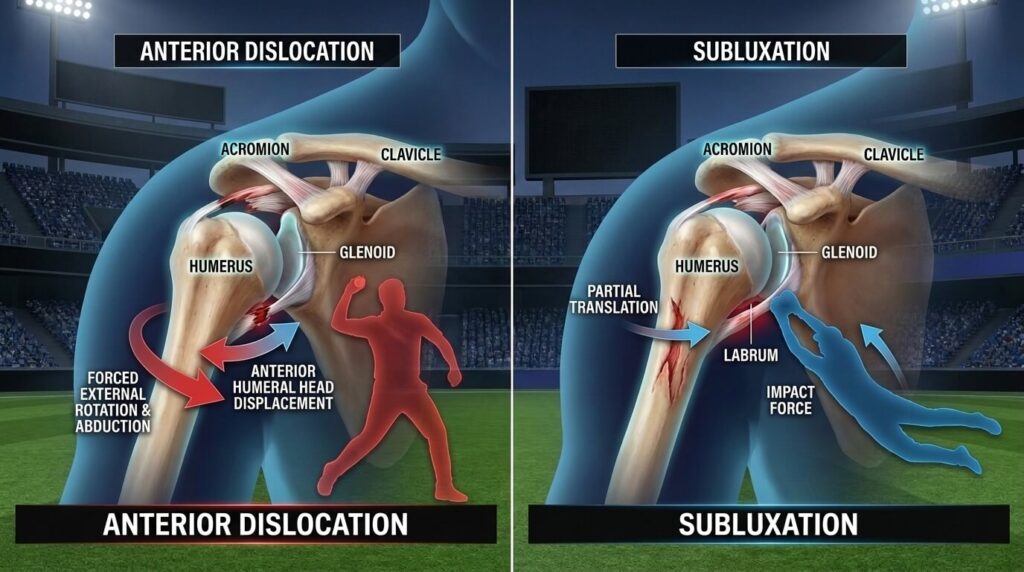
Shoulder Dislocation vs Subluxation
A dislocation is a complete loss of joint congruence; a subluxation is a partial, transient slip where the ball moves excessively but then returns to the socket without full dislocation.
- Dislocation:
- Often requires manual reduction.
- Dramatic pain, deformity, and loss of function.
- Higher likelihood of labral tears and bony injuries (Bankart, Hill‑Sachs).
- Subluxation:
- Player may describe shoulder “almost coming out” during a throw or dive.
- Pain and instability but usually less obvious deformity.
- Still associated with labral and capsular stretching over time.
In cricket, repeated subluxations during throws or dives can be just as performance‑limiting as a single frank dislocation and need serious attention.
Shoulder Dislocation vs Rotator Cuff Injury
Rotator cuff injuries and dislocations can coexist, but they are distinct problems.
Shoulder dislocation (glenohumeral instability):
- Mechanism: Traumatic event (dive, fall, collision, violent throw).
- Structure affected: Labrum, capsule, ligaments, bony socket and humeral head; rotator cuff secondarily.
- Symptoms: Sudden deformity, extreme pain, immediate loss of function.
Rotator cuff injury:
- Mechanism: Overuse (repeated bowling/throwing) or acute strain/tear.
- Structure affected: Tendons of rotator cuff muscles (especially supraspinatus).
- Symptoms: Pain with overhead movement, weakness, painful arc, often no deformity.
Many cricketers with instability develop secondary cuff overload because the rotator cuff works harder to compensate for a loose joint. For detailed information, Crictify should internally link to “Rotator Cuff Injury in Cricket” from this section.
Shoulder Dislocation vs Shoulder Impingement
Shoulder impingement involves painful pinching of rotator cuff tendons or bursa under the acromion during elevation, not the ball leaving the socket.
- Impingement causes: Overuse, poor scapular mechanics, tight posterior capsule, weak rotator cuff.
- Symptoms: Gradual onset, pain with overhead motion, night pain, but no frank deformity.
Dislocation is an acute instability event; impingement is a chronic overload pattern—though long‑term instability and scapular issues can contribute to impingement. From here, link internally to “Shoulder Impingement Syndrome in Cricket”.
Diagnosis
Diagnosis combines history, physical examination, and imaging.
Physical Examination
After the immediate emergency phase, a sports doctor or orthopedic specialist will:
- Take a detailed history of the injury mechanism and any prior shoulder issues.
- Inspect the shoulder for deformity, swelling, and bruising.
- Palpate bony landmarks and soft tissues.
- Assess active and passive range of motion (cautiously in acute phases).
- Test specific instability signs once pain allows (e.g., apprehension and relocation tests).
- Check neurovascular status—sensation over the lateral shoulder (axillary nerve), hand and fingers, pulses.
X‑ray
Plain radiographs are essential in suspected dislocation to:
- Confirm that the shoulder is dislocated and identify the direction (anterior, posterior, inferior).
- Exclude fractures of the glenoid, humeral head, surgical neck, or greater tuberosity.
- After reduction, verify correct joint alignment and look for Hill‑Sachs defects and glenoid rim fractures.
MRI
MRI is the gold standard for assessing soft‑tissue and many bony injuries after a dislocation.
Typical MRI findings in cricketers with traumatic instability include:
- Bankart lesion: Tear of the anteroinferior labrum and capsular attachment from the glenoid rim, often seen after anterior dislocation.
- Hill‑Sachs lesion: Compression fracture or indentation in the posterolateral humeral head from impact against the glenoid rim.
- Capsular stretching or redundancy.
- Rotator cuff and biceps tendon pathology.
MRI helps guide surgical decisions, especially in young athletes with recurring dislocation.

Ultrasound
Ultrasound is less useful for diagnosing the dislocation itself but can help:
- Assess rotator cuff tears or tendinopathy after dislocation.
- Check dynamic behaviour of the long head of biceps and subacromial bursa.
In cricket, ultrasound is often used to evaluate residual cuff and bursal pathology in players still having pain after the instability episode.
Severity Levels
Clinically, we can think of severity along several axes:
- Direction: Anterior (most common), posterior (rare but can occur with seizures, electric shock, or unusual trauma), inferior (luxatio erecta, very rare).
- Tissue damage:
- Simple dislocation with minor labral injury vs.
- Dislocation with Bankart tear, significant Hill‑Sachs lesion, capsular disruption, or rotator cuff tear.
- Recurrence:
- First‑time dislocation vs recurrent instability episodes.
- Associated injuries:
- Nerve (e.g., axillary) or vascular compromise, fractures.
A young professional cricketer with repeated dislocations and clear Bankart and Hill‑Sachs lesions represents a high‑severity instability profile that usually warrants surgical stabilisation.
Emergency First Aid
On‑Field Priorities
Pitch‑side guidelines for acute shoulder dislocation emphasise a structured approach.
- Stop play and call medical support.
- Primary survey: Rule out life‑threatening issues (airway, breathing, circulation, C‑spine in case of high‑energy collision).
- Immobilise:
- Ask the player to support the arm in the most comfortable position.
- Gently apply a sling or support; do not force the arm.
- Check nerves and circulation:
- Sensation over outer shoulder and hand, movement of fingers, pulses.
- Do not give food or drink in case sedation or anesthesia is later needed.
In community cricket without a doctor present, the safest approach is usually no on‑field reduction attempt, immediate immobilisation, and transfer to emergency care.
Should the Shoulder Be Relocated Immediately?
Whether to attempt reduction at the ground is controversial.
- Specialist setting (team doctor experienced in reductions):
- A carefully performed, appropriate reduction technique may be used pitch‑side once fractures or complex injuries are unlikely and neurovascular status is documented.
- Even with successful reduction, the player must still go for X‑rays and orthopedic review.
- Community or junior cricket without trained medical staff:
- Do not attempt forceful or improvised reductions.
- Poor technique can cause fractures, nerve injury, or soft‑tissue damage.
In all cases, reduction should be followed by imaging and specialist evaluation.

Medical Treatment
Closed Reduction
Closed reduction means putting the ball back into the socket without surgery.
- Performed in an emergency department or suitable medical setting.
- Often uses analgesia and/or sedation to relax muscles and reduce pain.
- Multiple gentle techniques exist (e.g., traction‑countertraction, external rotation methods), chosen by trained clinicians.
- After reduction, X‑rays confirm correct joint alignment and rule out new fractures.
The player often feels immediate pain relief but must not assume the injury is “sorted”; real work begins after relocation.
Immobilisation
Post‑reduction, the shoulder is immobilised using a sling or brace.
- Typical sling duration:
- Non‑surgical, first‑time dislocation: about 1–3 weeks depending on age, pain, and associated injuries.
- Post‑surgical stabilisation: often around 4 weeks of strict immobilisation followed by gradual motion.
Immobilisation allows soft tissues to begin healing but must be balanced with early controlled motion to prevent stiffness.

Physiotherapy
Physiotherapy is central to preventing recurrence and restoring performance.
Key early goals:
- Pain control (ice, manual therapy, education).
- Gradual return of pain‑free range of motion within surgeon/doctor guidelines.
- Early activation of scapular muscles and low‑load rotator cuff work in safe ranges.
As healing progresses:
- Progressive strengthening of rotator cuff, scapular stabilisers, deltoid, and kinetic chain (core, hips, legs).
- Proprioception and neuromuscular control drills (ball tosses, rhythm stabilisation, perturbations).
- Cricket‑specific patterns: bowling action drills, throwing drills, batting swings, wicketkeeping movements.
Rehabilitation
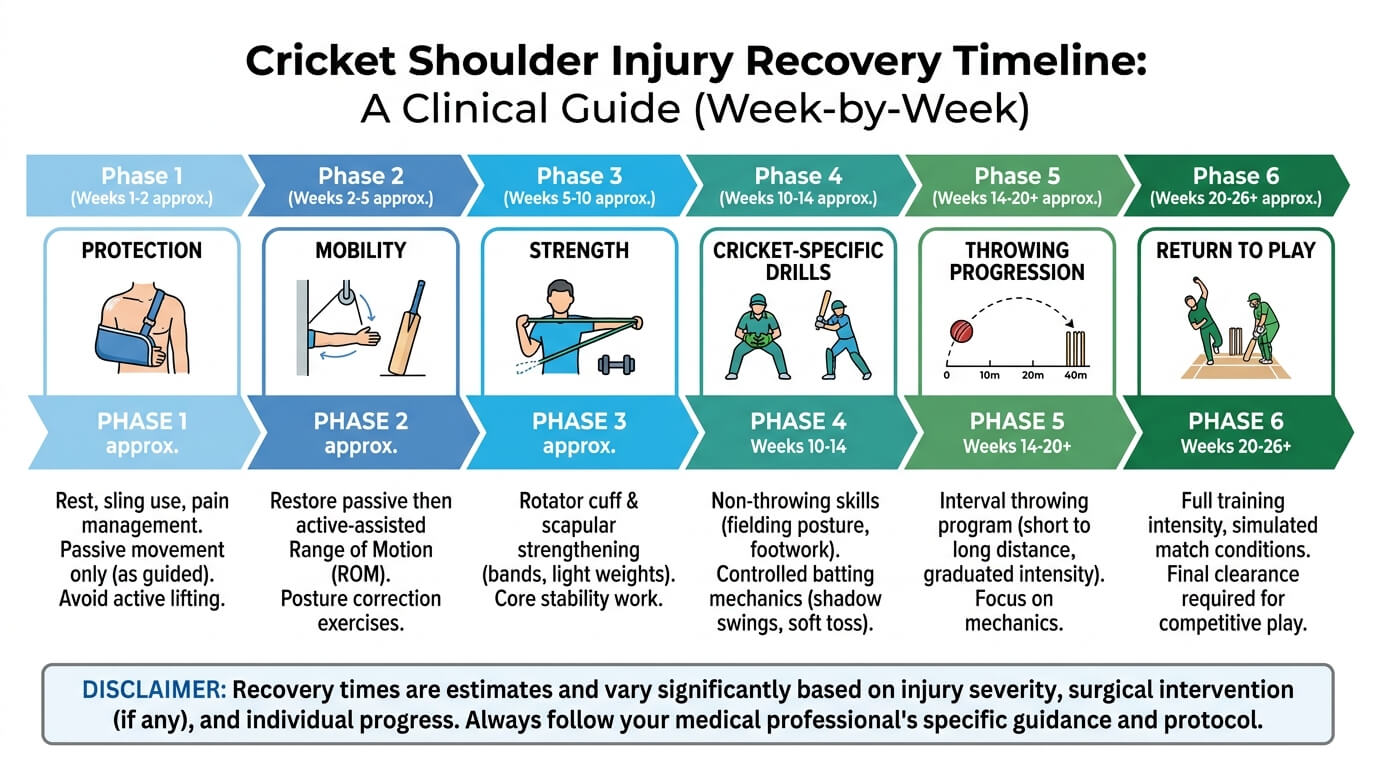
Rehab after a cricket shoulder dislocation follows phased, criteria‑based progressions rather than a one‑size‑fits‑all calendar.
Phase 1 – Protection and Pain Control (Weeks 0–3)
- Sling use as advised.
- Hand, wrist, and elbow mobility exercises.
- Gentle pendulums and assisted motion within safe ranges.
- Isometric shoulder activation (flexion, extension, abduction, internal/external rotation) against a wall when pain allows.
Phase 2 – Range of Motion and Early Strength (Weeks 3–6/8)
- Progress to active‑assisted then active range of motion in flexion and scaption.
- Begin light resistance band work for internal and external rotation at the side and gentle scapular strengthening.
- Continue isometrics and gradually increase repetitions and holds.
Phase 3 – Advanced Strength and Control (Weeks 6–12)
- Progressive resistance with bands and light dumbbells (1–3 kg) for rotator cuff and scapular muscles.
- Closed‑chain work: wall push‑ups, progressing to modified floor push‑ups.
- Proprioceptive drills: ball on wall, bodyblade, perturbation training.
- Integration of trunk and hip control drills relevant to bowling and throwing.
Phase 4 – Cricket‑Specific Conditioning (Weeks 12+ Non‑Surgical / 20+ Post‑Surgical)
- Gradual reintroduction of overhead throwing and bowling within an interval program.
- Plyometrics: medicine ball throws, overhead slams, side throws mimicking bowling action.
- High‑speed fielding drills, diving practice only when strength and control criteria are met.
- Batting and wicketkeeping skill work at increasing intensity.
For surgically stabilised athletes, return‑to‑play after Bankart repair often targets 6 months or more, guided by both time and objective strength, range of motion, and functional tests.

Surgery
When Surgery Is Required
Surgery is not mandatory for every cricket shoulder dislocation, but evidence supports early stabilisation in many young athletes with high‑demand overhead requirements.
Common indications in cricketers:
- Recurrent dislocations or symptomatic subluxations despite structured rehab.
- First‑time dislocation with significant Bankart lesion and/or bony defects in a young professional or elite player.
- Associated rotator cuff tear in older players or those with significant tissue damage.
- Failure of non‑operative treatment to restore confidence and performance.
Arthroscopic Stabilization
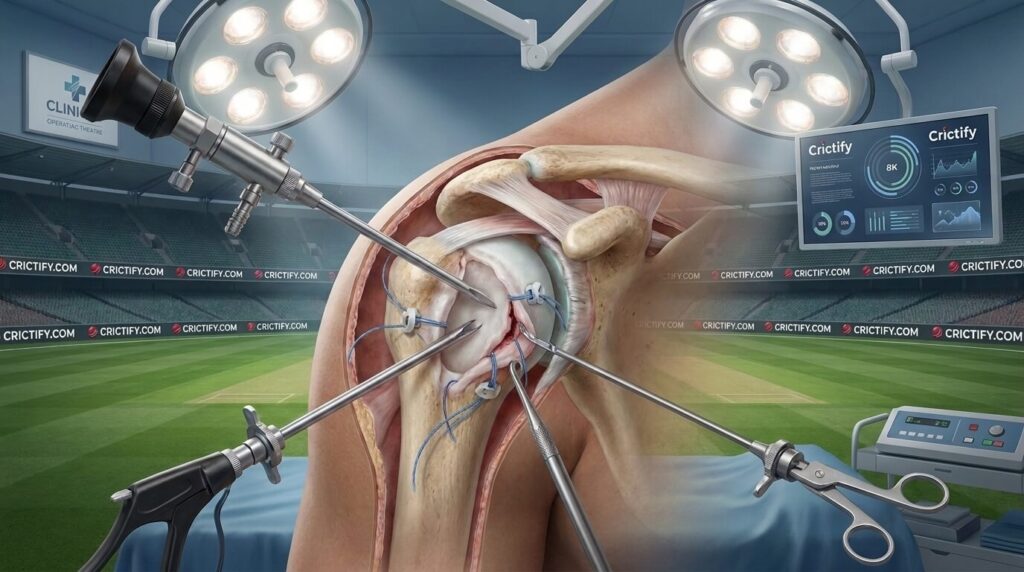
Arthroscopic Bankart repair is the most common shoulder stabilisation surgery in athletes.
Key elements:
- Performed via small keyhole incisions with an arthroscope.
- The torn anteroinferior labrum (Bankart lesion) is reattached to the glenoid rim using suture anchors.
- The capsule is tightened (capsular shift or plication) to restore stability.
- Sometimes combined with procedures addressing Hill‑Sachs or glenoid bone loss in more complex cases.
Post‑operative protocols typically include 4 weeks of immobilisation, gradual range of motion restoration over 3 months, strengthening from around 6 weeks, and a return‑to‑sport phase from 5–6 months onward depending on criteria.
Open Stabilization
Open surgery may be preferred when:
- There is significant bone loss (e.g., bony Bankart), requiring procedures like Latarjet.
- Previous arthroscopic stabilisation has failed.
- The surgeon’s preference or specific pathology suggests better outcomes with an open technique.
Open procedures generally achieve strong stability but may involve slightly different rehab timelines and external rotation limitations.
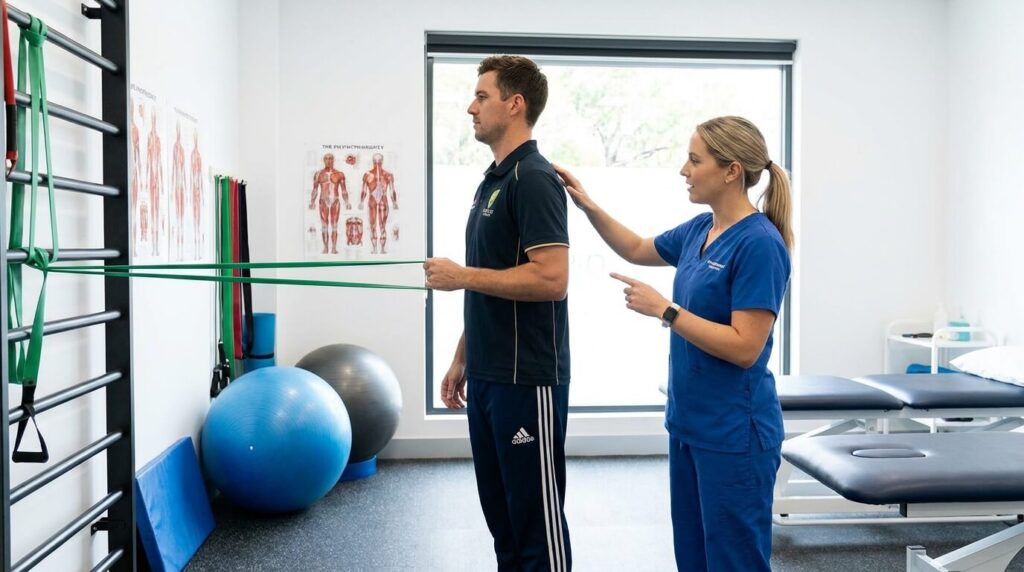
Best Rehabilitation Exercises
The best exercises are phased and tailored, but certain categories are near‑universal after dislocation.
- Early isometrics (pain‑guided):
- Isometric flexion, extension, abduction, internal and external rotation into a wall or towel.
- Scapular control:
- Scapular setting, shrugs, retraction–protraction, low‑load Y/T/W movements progressing from supported to prone.
- Rotator cuff strengthening:
- Resistance band internal and external rotation at 0° abduction, progressing to 45° and 90° positions.
- Closed‑chain stability:
- Wall push‑ups → incline → floor; serratus‑focused push‑up plus variations.
- Proprioception and plyometrics (later phases):
- Ball dribbles on wall, bodyblade, medicine ball throws, overhead and sideways patterns mimicking bowling and throwing.

Recovery Timeline
Recovery depends on:
- First‑time vs recurrent dislocation.
- Non‑operative vs surgical management.
- Role (fast bowler vs occasional fielder).
- Presence of associated lesions (Bankart, Hill‑Sachs, rotator cuff tears).
Typical broad ranges from sports medicine literature:
- Non‑operative first‑time dislocation:
- Daily activities: 2–6 weeks.
- Light cricket skills: 6–10 weeks (depending on pain, ROM, strength, and role).
- Full match intensity: often 3–4 months if criteria are met, but recurrence risk remains higher than after stable surgery in some young athletes.
- Post‑arthroscopic Bankart repair:
- Running and non‑contact fitness: around 10–12 weeks.
- Progressive overhead sport‑specific training: from about 20 weeks.
- Return to competitive overhead and contact sports: typically 6 months or more, up to 9–12 months in some protocols.
Objective criteria commonly include: pain‑free full or symmetrical range of motion, at least 80–90% strength of the opposite side, no apprehension, and successful completion of functional and psychological readiness tests.
Return to Cricket
Fast Bowlers
Fast bowlers place the greatest single‑action load on the shoulder.
Key return‑to‑play points:
- Bowling progression should follow a structured, overs‑based plan, beginning with low‑intensity drills and partial run‑ups.
- Early phases focus on technique drills at reduced speed, ensuring the arm path and trunk rotation are symmetrical and pain‑free.
- Overs and intensity build gradually, monitoring pain, fatigue, and mechanics; sudden spikes in workload must be avoided.
- Strengthening around the shoulder must be accompanied by trunk, hip, and lower‑limb conditioning to support the kinetic chain.
Post‑Bankart repair literature suggests sport‑specific bowling training may begin around week 20 with full return to competitive bowling closer to 6 months or later, provided all criteria are satisfied.

Spin Bowlers
Spin bowlers typically return slightly earlier than fast bowlers, but the overhead demands and repeat volume still require caution.
- Emphasis on gradual re‑introduction of spin action, starting with standing or half‑run‑up bowling.
- Focus on scapular control, trunk stability, and smooth rhythm rather than sheer speed.
- Variations (doosra, carrom ball) that demand extreme wrist and shoulder positions should be reintroduced last, once stability and confidence are high.
Batters
For batters, the main stressors are powerful hits, awkward dives, and collisions.
- Batting practice can often return earlier than fast bowling, starting with throwdowns and low‑velocity bowling machine work.
- High‑force shots (e.g., slog sweeps, lofted drives) must wait until the shoulder tolerates forceful horizontal adduction and internal rotation without apprehension.
- Running‑between‑wickets dives and slides should be reintroduced cautiously and only when stability drills are well developed.
Wicketkeepers
Wicketkeeping demands explosive lateral dives and shoulder‑first impacts with the ground.
- Return begins with footwork and catching drills in the crouch position.
- High‑stress dives to both sides are introduced as late‑phase plyometric and stability goals are met.
- Long throws to stumps from standing or running positions follow a similar throwing progression to fielders.
Fielders
Fielders, especially in the inner ring and boundary, must regain full confidence in diving and throwing.
- Throwing progression often parallels fast‑bowler return‑to‑bowl programs but with an emphasis on fielding distances and angles.
- Diving practice is introduced stepwise: low‑velocity, controlled dives on soft surfaces → more realistic fielding drills → full match‑intensity dives.
- Coaches and medical staff should monitor mechanics to avoid compensation patterns that might create new injuries (e.g., lumbar or elbow overload).

Shoulder Instability and Why Recurrence Is Common
Shoulder instability means the joint has an abnormal tendency to slip out of place—either fully (dislocation) or partially (subluxation).
In young overhead athletes, recurrence rates after traumatic dislocation can be high due to:
- Structural damage: Bankart labral tears and Hill‑Sachs lesions compromise the joint’s bony and soft‑tissue constraints.
- High sporting demands: Repeated overhead actions in vulnerable positions (cocking, abducted‑externally rotated) stress the repaired or healed tissues.
- Incomplete rehab: Stopping rehab once pain settles, without regaining full strength, proprioception, and kinetic‑chain control.
- Early return to play: Coming back before meeting objective return‑to‑sport criteria increases the likelihood of failure.
For cricketers who bowl and throw at high intensity, initial management decisions (conservative vs early surgical stabilisation) must account for this recurrence risk and long‑term performance goals.
Warm‑Up and Prevention
Warm‑Up
An effective cricket shoulder warm‑up should go beyond casual arm swings.
- General: Jogging, dynamic mobility for hips, trunk, and thoracic spine.
- Specific:
- Light band work for external/internal rotation and scapular activation.
- Dynamic Y and T raises, wall slides, and arm circles.
- Low‑intensity throws or gentle bowling to groove mechanics before maximal efforts.
Shoulder Stability
Shoulder stability training for cricketers should include:
- Rotator cuff strengthening with bands and light weights, emphasising external rotation.
- Scapular control drills to correct downward rotation or winging seen in some young cricketers with shoulder problems.
- Closed‑chain stability exercises such as push‑up variations and plank‑based drills.
Strength Training
Full‑body strength is protective, not just shoulder drills.
- Upper body: Rotator cuff, scapular stabilisers, deltoid, pecs, lats in controlled ranges.
- Lower body and core: Squats, deadlifts, lunges, anti‑rotation core work to support bowling and throwing mechanics.
- Avoid high‑load overhead lifting (e.g., heavy military press) early in rehab or in unstable shoulders.
Mobility
Balanced mobility is crucial; too stiff or too lax can both be problematic.
- Maintain thoracic rotation, posterior shoulder flexibility, and pectoralis minor length.
- Monitor for GIRD (loss of internal rotation) and address with specific posterior capsule and soft‑tissue stretches.
Workload Management
Workload spikes are a major, modifiable risk factor.
- Track overs, throws, and high‑intensity sessions, not just matches.
- Increase throwing and bowling loads gradually, especially early in the season or after lay‑offs.
- Build in rest days and recovery strategies.
Common Mistakes
Cricketers and teams often make avoidable errors:
- Playing on after a first dislocation once pain settles but before medical evaluation and imaging.
- Stopping rehab too early, once daily tasks feel okay but before high‑demand cricket skills are tested.
- Ignoring early instability symptoms like repeated “slips” or apprehension.
- Relying only on generic gym work, not targeted rotator cuff and scapular exercises.
- Rapid workload spikes, such as pre‑tournament camps with sudden increases in bowling and throwing volume.
Do’s and Don’ts
Do:
- Get urgent medical assessment after a suspected dislocation.
- Follow a structured, cricket‑specific rehab program to the end.
- Work on whole‑body strength and technique, not just shoulder muscles.
- Communicate honestly about shoulder pain or instability.
Don’t:
- Let untrained personnel attempt forceful on‑field reductions.
- Rush back into fast bowling or boundary throwing without meeting criteria.
- Assume surgery alone is enough—rehab and workload management remain crucial.
- Ignore psychological fear or loss of confidence; it can delay or derail full return.
Psychological Recovery After Dislocation
Psychological readiness is as important as physical metrics.
- Many athletes fear re‑dislocation in the exact position that caused the injury (e.g., full cocking before release in fast bowling).
- Validated tools like the Tampa Scale of Kinesiophobia (TSK‑11) have been integrated into return‑to‑play frameworks after shoulder stabilisation.
Cricketers benefit from:
- Gradual exposure to feared movements in a controlled rehab setting.
- Objective feedback from strength, range‑of‑motion, and functional tests.
- Clear communication between surgeon, physio, S&C coach, and player about risk and milestones.
In some cases, sports psychology support can help address persistent fear and rebuild competitive confidence.

When To See a Sports Doctor
Cricketers should seek specialist sports‑shoulder assessment if:
- They suspect a dislocation or subluxation (even if it “went back in” quickly).
- They have recurrent “dead arm” episodes or feelings of instability when bowling or throwing.
- There is persistent pain, weakness, or loss of performance after a previous shoulder injury.
- They are returning to high‑level cricket after surgical stabilisation and need clearance.
Early expert input improves outcomes and can prevent small problems from becoming career‑threatening.
Frequently Asked Questions (15 FAQs)
1. Can I continue bowling in the same match after my shoulder pops out and back in?
No. Even if the shoulder “goes back in”, the risk of further damage is high and you should be immobilised and assessed urgently.
2. Do all cricketers with a dislocated shoulder need surgery?
No, but young, high‑demand players with Bankart lesions and recurrent instability are often advised to consider early stabilisation.
3. How long before I can throw from the boundary again?
It varies, but after stabilisation surgery, interval throwing often starts around 4–5 months with full match‑intensity throwing closer to 6 months plus, if criteria are met.
4. Is one dislocation enough to end my career as a fast bowler?
Not usually. With appropriate treatment, stabilisation if needed, and high‑quality rehab, many fast bowlers return to pre‑injury levels.
5. Is an MRI always necessary?
Not always, but MRI is very useful in young athletes and those considering surgery, as it shows labral tears, bone defects, and associated soft‑tissue injuries.
6. Can I lift weights after a shoulder dislocation?
Yes, but only in a phased program under expert guidance; overhead and heavy pressing moves are delayed until stability and control are restored.
7. Will wearing a brace stop my shoulder from dislocating again?
Braces may provide some support in selected cases but cannot substitute for proper stabilisation (surgical or non‑surgical) and full rehab.
8. Is taping useful for shoulder instability in cricket?
Taping can provide proprioceptive feedback and mild support but should complement, not replace, strength and stability work.
9. Can a physio relocate my shoulder on the field?
Only trained clinicians following clear protocols should attempt reduction; many guidelines still recommend hospital reduction for safety, especially outside elite setups.
10. Do women cricketers face the same dislocation risks as men?
Yes, especially at elite levels; some studies show that even non‑time‑loss shoulder injuries significantly affect performance in female cricketers.
11. Will strengthening my rotator cuff prevent all dislocations?
It greatly helps, but structural lesions from a traumatic event still carry recurrence risk, especially without comprehensive management.
12. How is a Bankart lesion different from a rotator cuff tear?
A Bankart lesion is a labral/capsular tear at the front of the socket; a rotator cuff tear involves tendon damage of the shoulder muscles.
13. What is a Hill‑Sachs lesion and does it matter?
It is an indentation fracture in the humeral head from dislocation impact; large or engaging lesions can increase recurrence risk and influence surgical planning.
14. Can I play club‑level cricket with a mildly unstable shoulder if I avoid diving?
Many players do, but persistent instability can worsen over time; a sports shoulder specialist should help you weigh risks and long‑term consequences.
15. How do I know I am really ready to return?
You should have full, pain‑free range of motion, near‑normal strength, no apprehension, pass functional and sport‑specific tests, and feel psychologically ready, ideally confirmed by your medical team.
Final Thoughts
Shoulder dislocation in cricket is a high‑impact event with long‑term implications for performance and career longevity, especially for fast bowlers and throw‑heavy fielders. With prompt emergency care, evidence‑based rehab, thoughtful decisions about stabilisation surgery, and smart workload and technique management, most cricketers can return to the game they love with a stable, confident shoulder.
Medical Disclaimer
The information in this article is for general education only and is not a substitute for professional medical advice, diagnosis, or treatment. It does not create a doctor–patient relationship and should not be used to make decisions about your individual care. Shoulder injuries, including dislocations and instability, vary widely between players, and management must be tailored by a qualified healthcare professional who has examined you and reviewed your imaging. Always seek the advice of your doctor, sports physician, or orthopedic specialist with any questions you have regarding a medical condition, and never disregard or delay seeking professional medical advice because of something you have read on Crictify. If you think you may have a medical emergency, call your local emergency services immediately.