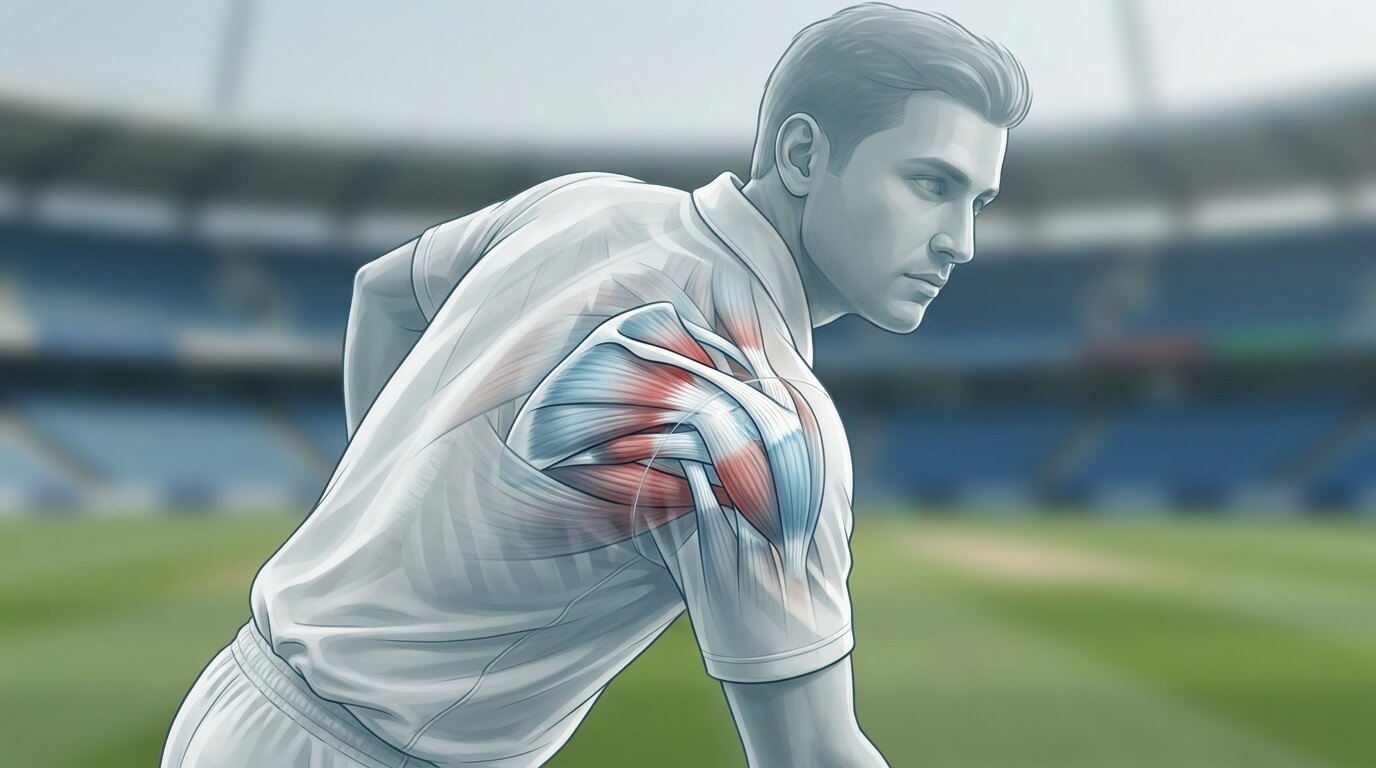
Rotator Cuff Injury in Cricket: Causes, Symptoms, Treatment, Recovery Time, Rehabilitation, Prevention, and Return to Cricket
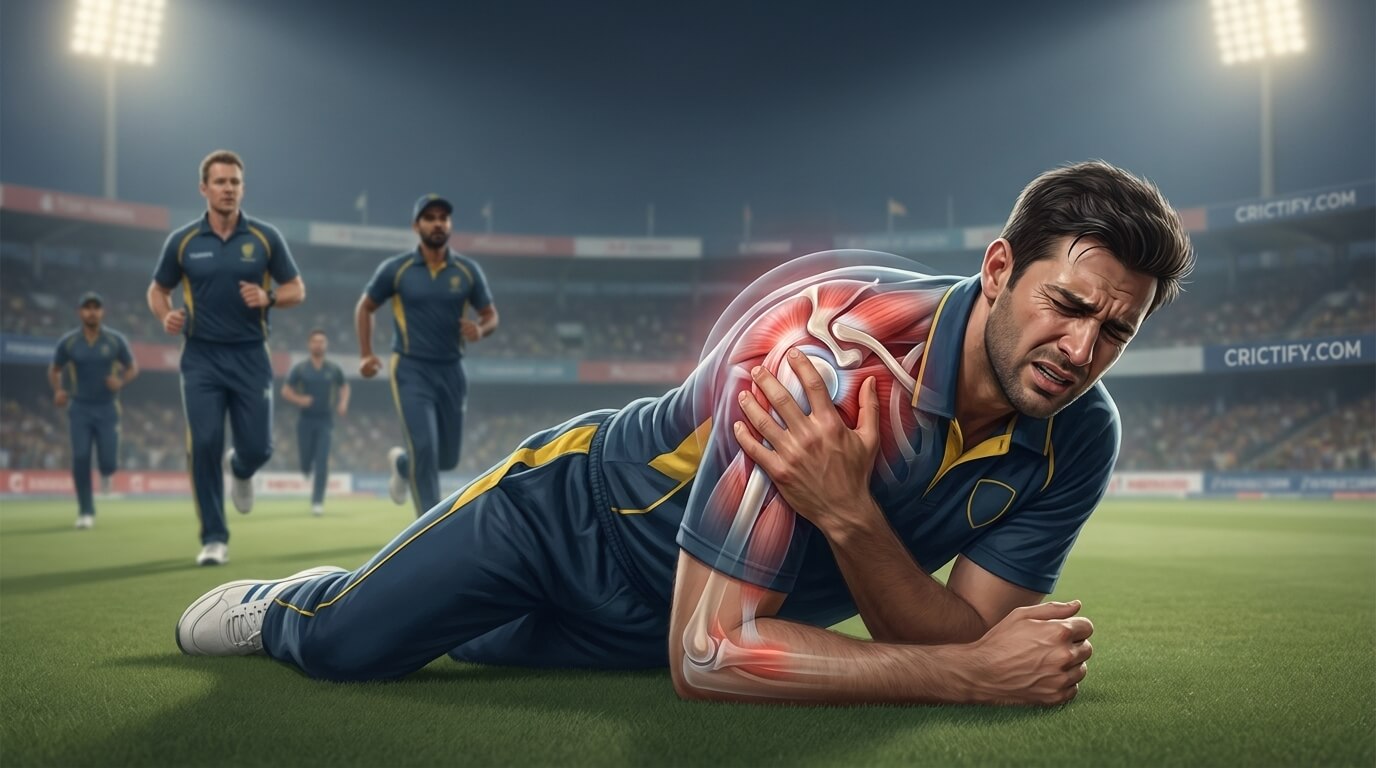
A cricketer can look perfectly fit and still be unable to bowl, throw, bat, or keep because of one painful shoulder movement. Rotator cuff problems are especially important in cricket because bowling, throwing, diving, catching, and repeated overhead training place demanding loads on the muscles and tendons that stabilise the shoulder.
A rotator cuff injury may involve irritation, tendinopathy, a strain, a partial-thickness tear, or a full-thickness tear. Typical symptoms include pain when lifting or rotating the arm, reduced power, difficulty throwing, and pain at night. The good news is that many cricket-related shoulder problems improve with appropriate activity modification, physiotherapy, and a gradual return-to-play plan. However, a sudden loss of strength, inability to raise the arm, or severe pain after a fall or delivery requires prompt medical assessment.

Quick Summary
| Question | Practical answer |
|---|---|
| What is the rotator cuff? | A group of four muscles and their tendons that centre the upper-arm bone in the shoulder socket and control rotation and elevation. |
| Why does cricket stress it? | Bowling, throwing, catching, diving, and gym exercises repeatedly load the shoulder, especially in overhead and high-speed movements. |
| Common symptoms | Deep shoulder pain, pain during bowling or throwing, weakness, painful lifting, reduced range of motion, clicking, and night pain. |
| Is every shoulder injury a rotator cuff injury? | No. Labral tears, shoulder instability, biceps tendon problems, AC-joint injury, neck pain, and fractures can feel similar. |
| First step | Stop or reduce the movement that causes pain, maintain comfortable movement, and arrange assessment if symptoms persist, worsen, or follow trauma. |
| Main treatment | Relative rest, pain control where medically appropriate, structured physiotherapy, and progressive strengthening. |
| When is surgery considered? | Usually for selected full-thickness tears, acute traumatic tears, persistent disabling symptoms, or failure of appropriate non-operative care. |
| Recovery time | Mild overload may settle over several weeks; significant tears or surgery may require several months. The diagnosis and functional progress matter more than a fixed calendar. |
| Return-to-play requirement | Pain-controlled full movement, near-normal strength, cricket-specific tolerance, and a staged increase in bowling, throwing, batting, or keeping. |
What Is This Injury?
The rotator cuff is made up of four muscles:
- Supraspinatus, which helps initiate arm elevation.
- Infraspinatus, which produces external rotation.
- Teres minor, which also assists external rotation.
- Subscapularis, the main internal rotator.
Their tendons attach around the head of the humerus, the upper-arm bone. Together, they help keep the ball of the shoulder joint centred in the relatively shallow socket while the arm moves. This stabilising role is crucial in cricket, where the shoulder must control both force production and force absorption.
A rotator cuff injury does not always mean that a tendon has completely torn. Cricket players may develop tendon irritation, tendinopathy, inflammation around the tendon, a muscle strain, a partial tear, or a full-thickness tear. “Impingement” is also used commonly, but shoulder pain is usually better understood as a combination of tendon capacity, load, movement, strength, and sensitivity rather than one structure being simply “trapped.”
The shoulder is built for mobility, so it depends heavily on coordinated muscles and the shoulder blade. During a fast delivery or long throw, the shoulder must move rapidly into elevation and rotation, transfer force from the trunk, decelerate the arm, and then recover for the next effort. If the muscles are fatigued or the workload rises too quickly, the tissues may not tolerate the demand.
Pain alone cannot determine the size of a tear. Some players with a small tear have considerable pain, while others with imaging abnormalities have few symptoms. A proper diagnosis combines the history, examination, movement testing, strength testing, and imaging when needed.

How Common Is It in Cricket?
Exact cricket-specific rates vary by playing level, age group, sex, playing role, training volume, and how injuries are recorded. It is therefore better not to present one universal percentage. What is clear is that the shoulder is repeatedly exposed to overhead, high-speed, and deceleration forces in cricket.
Fast bowlers
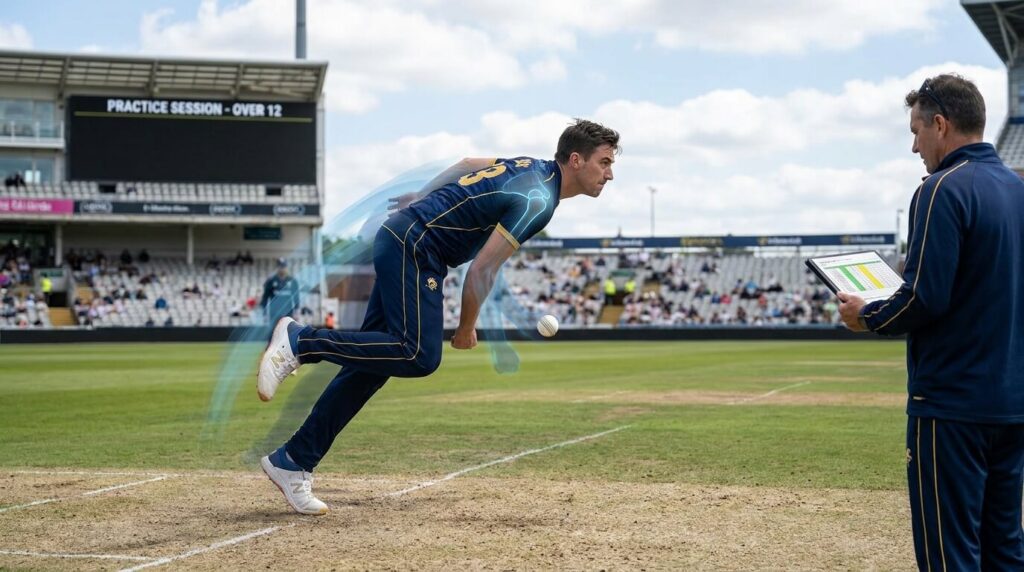
Fast bowlers generate substantial force through a linked sequence involving the run-up, front-leg bracing, trunk rotation, shoulder elevation, arm rotation, release, and follow-through. The shoulder does not work alone: poor control of the pelvis, trunk, or scapula can increase the demand on the arm.
The bowling arm must both accelerate the ball and slow the arm after release. Repeated spells, short recovery between sessions, sudden increases in overs, and bowling while fatigued can reduce technical control. A bowler may first notice discomfort only at the end of a spell, then later experience pain during warm-up or everyday movements.
Spin bowlers
Spin bowling generally involves lower ball-release speed but can still place substantial repetitive stress on the shoulder. The bowling arm may remain elevated for long periods, and variations in wrist position, shoulder rotation, and follow-through can irritate the cuff. Spin bowlers may also throw frequently when fielding, adding a separate workload that is easy to overlook.
Batters
Batters use the shoulder during backlift, powerful shots, pull shots, lofted drives, and repeated practice. The top hand and bottom hand may experience different demands depending on stance and stroke mechanics. A batter can also aggravate the shoulder through gym pressing, heavy lifting, or a fall while attempting a run or catch.
Wicketkeepers
Wicketkeepers repeatedly squat, rise, dive, catch, and throw. Quick releases often involve awkward arm positions, while long throws from the stumps may be made without ideal footwork. The non-dominant shoulder may also be affected during dives and landings.
Fielders
Fielders are exposed to powerful throws, overhead catches, boundary saves, dives, and direct impacts. A single awkward landing can cause an acute injury, while repeated long throws can create a gradual overload problem.
Bowling workload matters
The key issue is not simply the number of balls bowled. Total workload includes match overs, practice overs, warm-up deliveries, throwing, gym work, travel, sleep, and the intensity of each session. A player who bowls fewer overs but adds intense throwing and upper-body training may still have a high shoulder load.
A sudden change—such as moving from a low-volume off-season into daily bowling, returning from illness, joining a tournament, or increasing pace work—can exceed tissue capacity. Workload should be increased progressively, with attention to pain response during the session and over the following 24 hours.
Which Cricket Players Are Most at Risk?
Risk is influenced by workload, technique, previous injury, physical development, recovery, and the type of cricket being played.
| Player or situation | Why shoulder risk may be higher | Typical warning pattern |
|---|---|---|
| Fast bowler | High-speed elevation, rotation, acceleration, and deceleration repeated over spells | Pain late in spells, reduced pace, difficulty recovering between sessions |
| Young or developing bowler | Rapid changes in training volume and strength, incomplete technical consistency | Pain after workload increases or during growth and competition changes |
| Spin bowler | Repeated arm elevation, rotation, and bowling volume | Gradual ache, reduced control, pain during variations |
| Wicketkeeper | Repeated throws, dives, catches, and awkward arm positions | Pain with quick release, reaching, or landing |
| Boundary fielder | Long throws and forceful overhead actions | Pain during maximum-effort throws |
| Batter | Repeated powerful shots, falls, and upper-body gym work | Pain during backlift, pull shots, or lifting |
| Player returning from injury | Reduced conditioning and altered mechanics | Pain when returning too quickly to full intensity |
| Player with poor recovery | Fatigue may reduce scapular and trunk control | Technique deteriorates late in sessions |
| Heavy upper-body lifter | Pressing and pulling may add substantial shoulder load | Pain during bench press, overhead press, or dips |
Causes
Overuse
Overuse does not necessarily mean doing one movement incorrectly. It often means that the total demand repeatedly exceeds the shoulder’s ability to recover and adapt. Small tendon irritations may accumulate when a player continues through increasing pain.
Cricket-specific examples include:
- Bowling every day without a progressive build-up.
- Repeated maximum-effort throws during fielding practice.
- High-volume catching drills with the arm overhead.
- Adding strength training to a heavy match schedule.
- Continuing to bowl despite a clear reduction in pace or control.
- Returning to full competition immediately after a lay-off.
Bowling workload
A workload spike is one of the most important modifiable contributors. Risk may rise when overs, intensity, or frequency increase abruptly. The shoulder is also affected by the quality of recovery between sessions.
Coaches and players should record:
- Match overs and practice overs.
- Number of high-intensity deliveries.
- Throwing volume and distance.
- Gym exercises that load the shoulder.
- Perceived exertion and soreness.
- Sleep, travel, and illness.
- Pain during and after the session.
There is no single safe workload number for every bowler. A national-level adult fast bowler, a teenage academy player, and a recreational club player have different capacities.
Throwing and fielding
Long throws demand rapid arm acceleration followed by eccentric braking. Throwing from an unstable base, throwing while falling away, or attempting a maximum-distance throw without preparation can raise shoulder stress.
Poor footwork can force the arm to generate power that should come from the legs and trunk. Players should learn to align the body, use the lower limbs, and reserve maximum throws for situations that require them.
Gym training
The gym can improve shoulder resilience, but poorly selected or poorly timed exercises can add irritation. Heavy bench pressing, repeated overhead pressing, deep dips, upright rows, and high-volume push exercises may be provocative for some players. The problem is not that these exercises are always harmful; it is that their dose, technique, and timing must match the athlete’s current capacity.
A balanced programme should develop the rotator cuff, scapular muscles, trunk, hips, and legs—not just pressing strength. Exercise should be adjusted if it reproduces sharp pain, causes night pain, or leaves the player significantly worse the next day.
Poor technique and movement control
Shoulder mechanics are influenced by the entire kinetic chain. Limited thoracic mobility, poor trunk rotation, inadequate hip control, or a weak lower body may make the arm compensate. A winging or poorly controlled scapula can also affect the way the shoulder blade supports overhead movement.
Technique changes should be assessed by a qualified coach and sports physiotherapist rather than guessed from pain alone. A player should not be told simply to “keep the shoulder down” or “throw through the ball” without examining the complete movement.

Symptoms
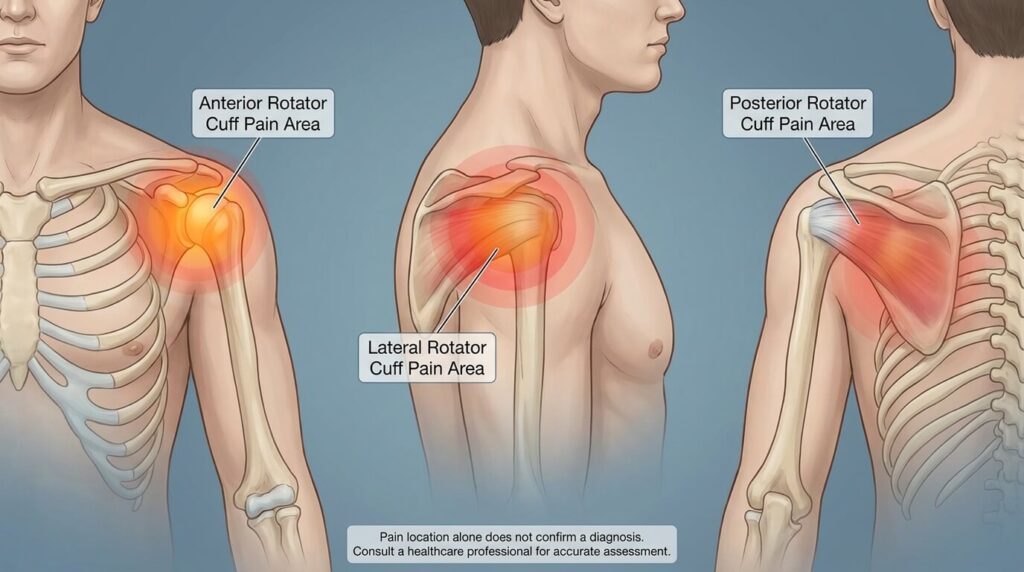
Rotator cuff symptoms can begin gradually or occur suddenly after a forceful delivery, throw, fall, or collision. Pain commonly sits at the front or outer shoulder and may travel down the upper arm. It can be worse during overhead activity, lowering the arm, reaching behind the back, throwing, or lying on the painful side.
| Symptom | What it may feel like in cricket |
|---|---|
| Deep shoulder ache | A dull pain after bowling, throwing, or batting practice |
| Pain during elevation | Discomfort when raising the arm to catch, throw, or reach overhead |
| Pain while lowering the arm | A painful arc as the arm comes down after a catch or delivery |
| Weakness | Reduced throwing distance, slower arm speed, or difficulty lifting equipment |
| Night pain | Pain when lying on the affected side or waking during sleep |
| Pain during rotation | Discomfort when cocking the arm to throw or placing the hand behind the back |
| Clicking or crackling | A catching or grinding sensation, which may also occur with other shoulder conditions |
| Loss of movement | Difficulty reaching overhead, dressing, or combing the hair |
| Sudden sharp pain | Possible acute strain, tear, instability, or another traumatic injury |
| Loss of confidence | Hesitation during a throw or inability to commit to a delivery |
Pain location can provide clues but does not establish the diagnosis. Neck problems, nerve irritation, labral injuries, biceps tendon disorders, AC-joint problems, and shoulder instability can produce overlapping symptoms.
Early Warning Signs
The earliest signs are often performance changes rather than severe pain. A player may notice:
- The shoulder feels heavy late in a bowling spell.
- Pace or throwing distance drops without an obvious technical reason.
- Accuracy declines because the player is protecting the arm.
- The arm takes longer to recover after training.
- Warm-up pain takes longer to disappear.
- The shoulder aches at night after a practice session.
- A previously comfortable gym exercise becomes painful.
- The player needs to change the bowling action or throwing angle.
- Pain increases the following morning.
A useful rule is to treat a trend as information. One brief episode of mild soreness may not indicate a major injury, but repeated pain, worsening symptoms, or a decline in function should prompt an assessment. Playing through pain can make it harder to distinguish a manageable overload problem from a more significant tear.
Diagnosis
Physical examination
A sports doctor or physiotherapist will ask how the injury started, which actions provoke it, whether there was a fall or sudden force, and how symptoms respond over 24 hours. They may assess:
- Active and passive range of motion.
- Strength during internal and external rotation.
- Scapular control.
- Painful arcs and resisted movements.
- Neck movement and nerve function.
- Shoulder stability.
- The elbow, thoracic spine, and kinetic chain.
- Cricket-specific actions such as throwing or simulated bowling.
No single shoulder test is perfect. Findings must be interpreted with the player’s history and functional limitations.
MRI
MRI can show the tendons, muscles, labrum, bone marrow, and other soft tissues. It may help identify a partial or full-thickness tear, muscle atrophy, tendon retraction, or alternative causes of pain. However, MRI findings need clinical correlation because structural changes can exist without symptoms.
An MR arthrogram may be considered when a labral injury or subtle instability is suspected. The choice depends on the examination and the clinical question.
Ultrasound
Musculoskeletal ultrasound can assess the rotator cuff dynamically while the arm moves. It is relatively accessible and can compare both shoulders, but the quality of the result depends on the equipment and the operator.
X-ray
X-rays do not show the rotator cuff tendons directly, but they can identify fractures, arthritis, bone spurs, dislocation, or other bony abnormalities. After a fall, direct blow, or sudden inability to raise the arm, an X-ray may be an important first investigation.
When imaging is needed
Imaging is more likely to be required when symptoms follow significant trauma, weakness is marked, the player cannot raise the arm, symptoms persist despite appropriate management, or the diagnosis is uncertain. A scan should answer a clinical question rather than be ordered simply because pain is present.

Severity Levels
Severity is determined by the tissue involved, the size and depth of a tear, strength loss, pain, movement, functional demands, and whether the injury is acute or longstanding.
| Level | Typical description | Cricket implication | Usual approach |
|---|---|---|---|
| Irritation or mild tendinopathy | Pain with selected movements but preserved strength | Training may be possible with modification | Relative rest, load adjustment, physiotherapy, gradual strengthening |
| Muscle or tendon strain | Overloaded fibres with pain and possible weakness | Bowling, throwing, or batting may be restricted | Protection initially, then progressive mobility and loading |
| Partial-thickness tear | Part of the tendon thickness is damaged | High-speed throwing or bowling may remain painful | Medical assessment, structured rehabilitation, possible specialist review |
| Full-thickness tear | Tendon disruption through its full thickness | Marked weakness or loss of overhead function may occur | Specialist assessment; rehabilitation or surgery depending on context |
| Acute traumatic tear | Sudden injury after a fall, collision, or forceful action | Rapid loss of function is concerning | Prompt assessment and imaging |
| Chronic degenerative tear | Gradual tendon change over time | Symptoms may fluctuate with workload | Individualised rehabilitation and workload management |
A tear’s size does not automatically dictate treatment. Age, playing level, position, dominant arm, symptoms, strength, timing in the season, and response to rehabilitation all matter.
Treatment Options
Relative rest
Relative rest means avoiding or reducing the specific movements that aggravate the shoulder while maintaining comfortable general activity. It does not usually mean immobilising the arm completely. Gentle, pain-limited movement can help prevent stiffness.
For a cricketer, this may mean stopping bowling and maximum-effort throwing while continuing lower-body conditioning, running, cycling, or carefully selected strength work. A sling should not be used routinely without medical advice because prolonged immobilisation can contribute to stiffness and weakness.
Ice and heat
A cold pack wrapped in cloth may temporarily reduce pain after an aggravating session. NHS guidance commonly advises short applications rather than placing ice directly on the skin. Heat may feel better for stiffness in some players, but neither ice nor heat repairs a torn tendon.
Medication
Paracetamol or an anti-inflammatory medicine may help some people, but medication must be appropriate for the individual. Players should consider allergies, stomach or kidney problems, asthma, blood-thinning medication, pregnancy, dehydration, and other medical conditions. Ask a doctor or pharmacist before taking medication, particularly if pain persists.
Pain relief should support normal movement and rehabilitation—not enable a player to hide symptoms and bowl through a worsening injury.
Physiotherapy
Physiotherapy is often the foundation of non-surgical treatment. A programme may include:
- Pain-modified range-of-motion work.
- Rotator cuff isometrics and strengthening.
- Scapular control and endurance.
- Thoracic and shoulder mobility.
- Trunk, hip, and lower-body conditioning.
- Gradual throwing and bowling exposure.
- Education about training load and recovery.
Exercise dosage should be individualised. Mild discomfort during rehabilitation may sometimes be acceptable, but sharp pain, escalating pain, loss of movement, or a substantial next-day flare suggests that the programme needs adjustment. Many rotator cuff-related shoulder problems are managed successfully without surgery when education, load modification, and progressive exercise are applied consistently.
Injections
A corticosteroid injection may reduce pain in selected cases, especially when pain prevents sleep or makes physiotherapy impossible. It does not restore tendon strength or correct poor workload management. Repeated injections may have risks, and an injection close to a planned tendon repair requires specialist discussion.
Other injections, such as platelet-rich plasma, have mixed evidence and should not be marketed as guaranteed tendon healing. Discuss expected benefits, uncertainties, cost, and alternatives with a qualified clinician.
Surgery
Surgery may be considered for selected acute traumatic tears, substantial full-thickness tears, persistent weakness, or symptoms that do not improve with an appropriate rehabilitation programme. Procedures may include arthroscopic repair, debridement, treatment of associated pathology, or other interventions based on the diagnosis.
Surgery is not a shortcut to immediate cricket. A repair needs biological healing followed by progressive restoration of movement, strength, power, and sport-specific tolerance. Return to competitive bowling or throwing commonly takes substantially longer than return to daily activities.
Best Exercises
Exercises should be prescribed according to the diagnosis and stage of recovery. The examples below are educational starting points, not a substitute for assessment. Stop and seek guidance if an exercise causes sharp pain, sudden weakness, numbness, instability, or worsening night pain.
Mobility
Pendulum
Support the healthy arm on a table, allow the affected arm to hang comfortably, and make small relaxed circles. Keep the movement gentle rather than forcing the shoulder.
Assisted elevation
Use the other arm or a stick to help the affected arm move forward within a comfortable range. Progress gradually and avoid forcing a painful end position.
Thoracic extension
Sit upright with hands across the chest and gently extend the upper back over the back of a chair. This can help the player move from the trunk rather than demanding excessive movement from the shoulder.
Cross-body movement
A gentle cross-body stretch may help some players, but it should not create sharp pain at the top of the shoulder. Players with suspected instability or labral injury should obtain individual advice.
Strength
Isometric external rotation
Stand with the elbow tucked against the side and the forearm pointing forward. Press the back of the hand gently into a fixed object without allowing the arm to move. Hold for a few seconds, relax, and repeat.
Isometric internal rotation
Use the same position but press the palm inward against a fixed object. Keep the shoulder relaxed and avoid shrugging.
Side-lying external rotation
Lie on the opposite side with the affected elbow close to the body. Rotate the forearm upward slowly using a light weight, then lower it under control. Begin with a very light load.
Scapular row
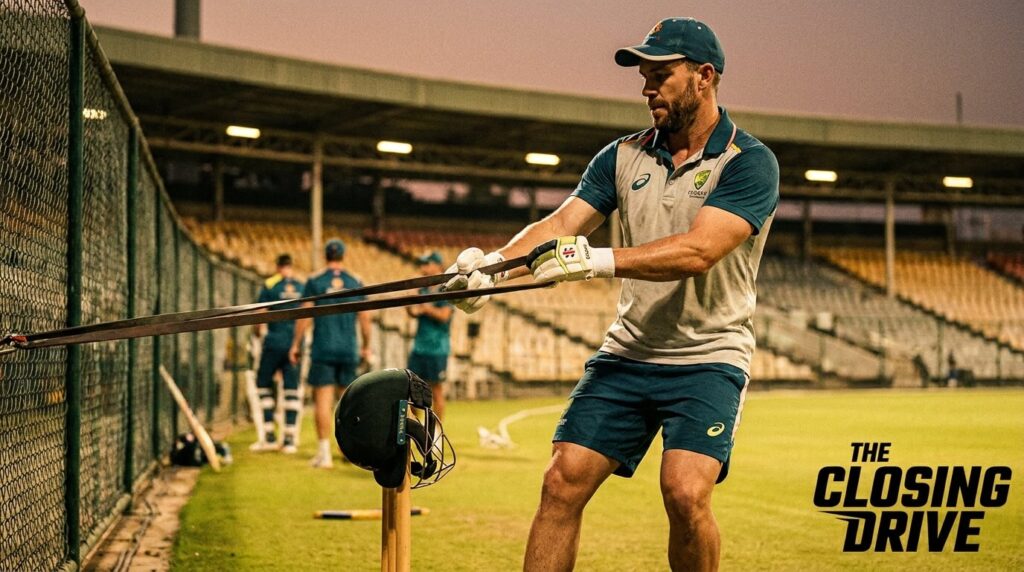
Use a resistance band with the arms low or near the ribcage. Pull the band back while keeping the neck relaxed and the shoulder blades controlled—not aggressively pinched.
Stability
Wall push-up
Place the hands on a wall and perform a controlled push-up. Progress the angle only when the shoulder remains comfortable and stable.
Scapular push-up
In a wall or incline position, keep the elbows relatively straight and gently move the shoulder blades around the ribcage. Do not collapse through the shoulders.
Quadruped weight shift
On hands and knees, shift weight gently from side to side. Progress to controlled shoulder taps only when the shoulder tolerates loading.
Wall slide
Place the forearms against a wall and slide them upward within a comfortable range. Maintain ribcage control and avoid shrugging excessively.
Cricket-specific rehabilitation
Graduated throwing
Begin with short, low-intensity throws using a comfortable technique. Increase one variable at a time: distance, speed, repetitions, or frequency. Do not progress all four simultaneously.
Shadow bowling
Rehearse the run-up and bowling sequence without releasing a ball. This allows the player to assess rhythm, trunk control, and shoulder comfort with reduced load.
Medicine-ball drills
Light chest passes, rotational throws, and controlled scoop throws may be introduced after basic strength has returned. They should be coached and progressed gradually.
Bowling progression
A return-to-bowling plan may move from low-intensity, short spells to higher-intensity deliveries and normal spell lengths. Rest days and symptom monitoring are essential. Fast bowlers may require a longer progression than batters because of repeated high-speed arm deceleration.
Fielding progression
Begin with catching close to the body, then add gentle underarm throws, short overarm throws, longer distances, and finally maximum-effort boundary throws. Include both the dominant and non-dominant shoulder where relevant.
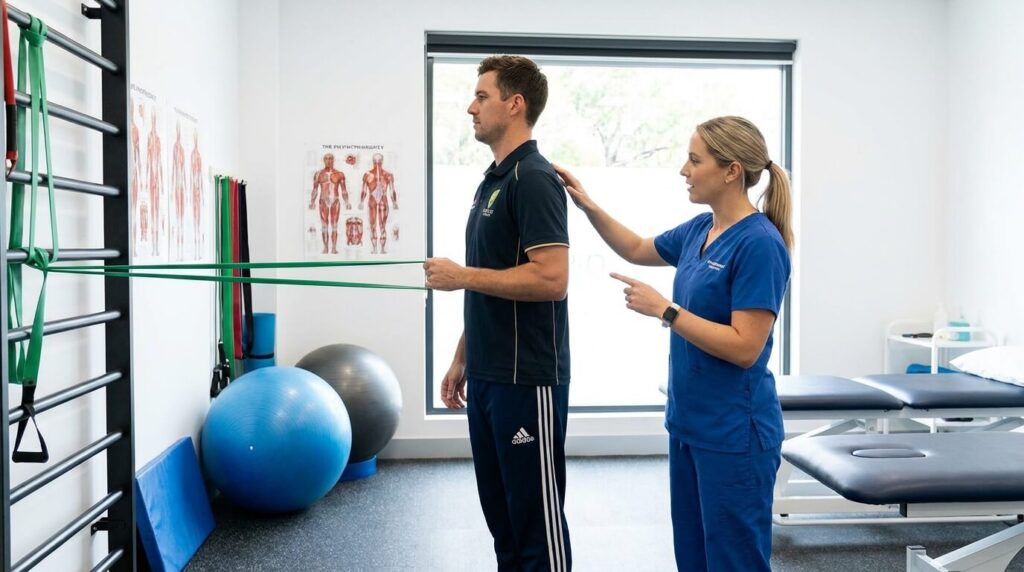
External rotation exercise
External rotation is important because the external rotators help control the arm during throwing and bowling. Keep the elbow close to the body, use a light resistance band, rotate slowly, and avoid letting the shoulder roll forward. Quality is more important than a heavy band.

Stretching and warm-up mobility
Stretching should complement strength and movement control rather than replace them. Useful options may include:
- Gentle arm circles.
- Thoracic rotation.
- Controlled cross-body movement.
- Wall slides.
- Light band pull-aparts.
- Dynamic shoulder flexion.
- Sport-specific rehearsal.
Long, forceful static stretches immediately before maximum bowling are not necessary for every player and can irritate a sensitive shoulder. Use dynamic movements before activity and longer, comfortable mobility work later if prescribed.
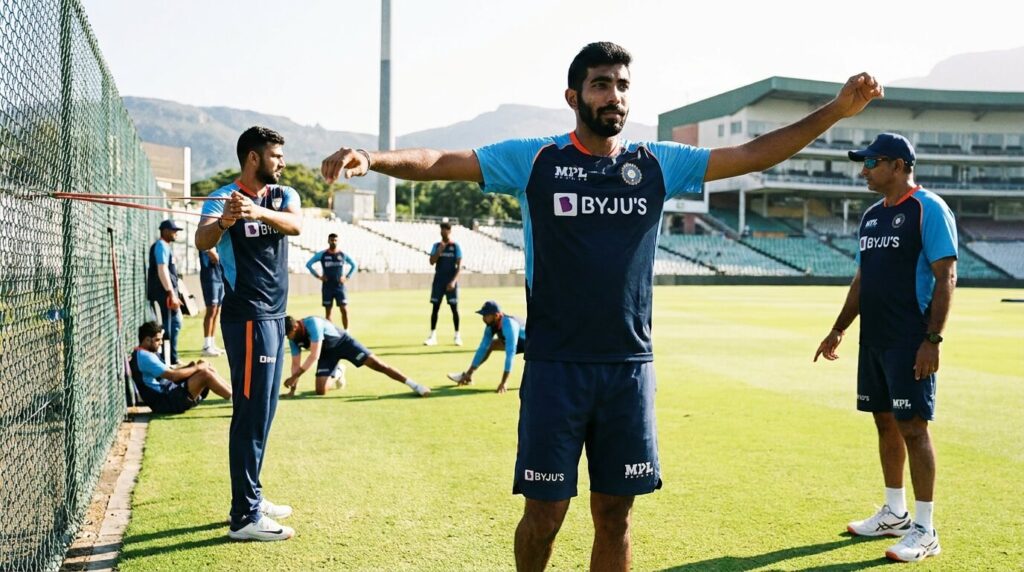
Recovery Timeline
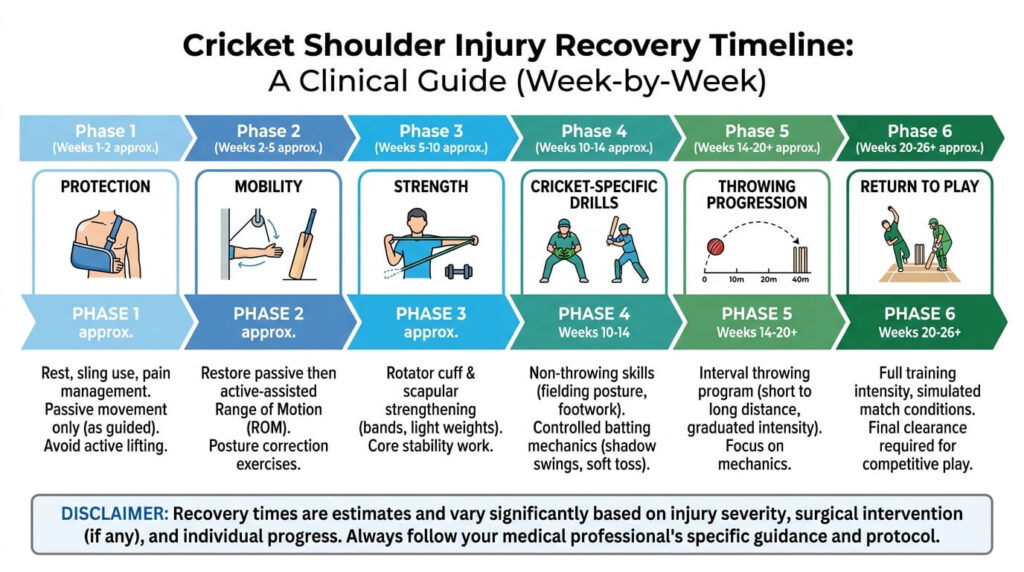
Recovery varies widely. A mild overload problem may improve over a few weeks, while a significant tear or surgical repair may require several months. The timeline below is a framework, not a promise.
| Time period | Typical goals | Cricket activity |
|---|---|---|
| Days 1–7 | Protect the shoulder from aggravating loads, control pain, maintain comfortable movement | No painful bowling, maximum throwing, or heavy shoulder lifting |
| Weeks 2–3 | Restore basic movement, begin isometrics, maintain lower-body conditioning | Running and lower-body work if pain-free; technical shadow work may be possible |
| Weeks 3–6 | Build cuff and scapular strength, improve movement quality | Short, gentle throws or non-ball drills only if symptoms are controlled |
| Weeks 6–8 | Increase resistance, endurance, and cricket-specific movement | Gradual fielding and batting exposure; controlled bowling progression for suitable cases |
| Weeks 8–12 | Develop power, speed, and tolerance | Progressive throwing, catching, and bowling volume |
| Three to six months | Restore competition-level capacity where appropriate | Full return only after objective testing and workload progression |
| After surgery | Protect repair, restore movement, then rebuild strength and power | Return depends on tear, repair, surgeon protocol, strength, and sport demands |
Progress should be guided by function, not just the number of days since injury. A player may have little pain but insufficient strength or endurance for a full spell. Another may have an imaging abnormality but good function and require a different plan.
A practical progression criterion is that the shoulder remains settled during training and the following morning. If pain or stiffness increases substantially for more than 24 hours after a progression, reduce the volume or intensity and reassess.
Returning to Cricket
Return to cricket should be staged. The player should not progress because a fixture is approaching. Before competitive play, the shoulder should have comfortable functional movement, adequate strength, and the ability to tolerate cricket-specific repetition.
Fast bowlers
Fast bowlers should progress through:
- Shadow bowling.
- Low-intensity bowling from a reduced run-up.
- Short spells at moderate intensity.
- Increased intensity and normal run-up.
- Longer spells with full recovery.
- Match simulation.
- Competitive bowling with monitored workload.
The player should demonstrate consistent control and no meaningful loss of pace or technique caused by pain or fatigue.
Spin bowlers
Spin bowlers can begin with technique drills and low-volume bowling, then progress variations, intensity, and spell length. Repeated shoulder elevation and wrist variations should be monitored carefully.
Batters
Batters should progress from shadow batting to front-foot and back-foot shots, then add pace, range, lofted shots, and repeated net sessions. A batter returning after shoulder injury should also test defensive shots, pulls, and high catches if these are relevant triggers.
Wicketkeepers
Wicketkeepers need gradual exposure to low catches, takes at different heights, quick releases, dives, and repeated squatting. Throwing should be progressed separately from catching because it creates different demands.
Fielders
Fielders should build from short catches and underarm throws to longer throws, overhead throws, boundary work, diving, and maximum-effort release. The player must be able to throw accurately without protective movement or hesitation.
Workload management
A safe return includes a plan for the week after the first match. The shoulder may tolerate one short session but flare after several consecutive days. Track overs, throwing distance, intensity, soreness, sleep, and recovery. Coaches, strength-and-conditioning staff, physiotherapists, and medical staff should communicate clearly.
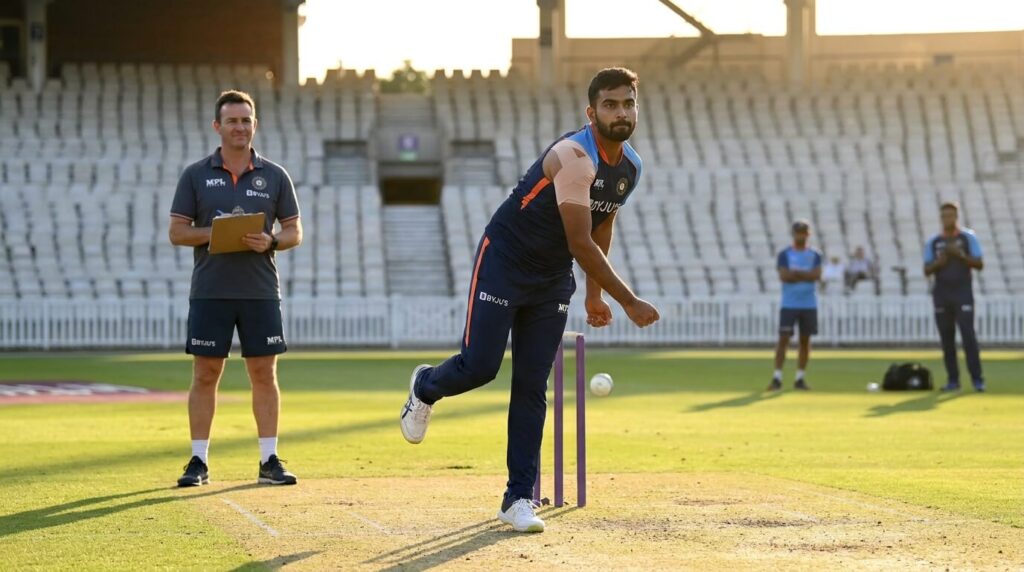
Prevention
Prevention does not mean eliminating all shoulder stress. It means improving the shoulder’s capacity, managing exposure, and identifying problems early.
Warm-up
A useful warm-up should gradually raise body temperature and prepare the movement patterns required for cricket. Include:
- Light jogging or skipping.
- Thoracic rotation.
- Controlled arm circles.
- Scapular movement.
- Light resistance-band external and internal rotation.
- Progressive throwing.
- Bowling rehearsals before full-speed deliveries.
Do not begin a session with maximum-effort throws or full-pace bowling.
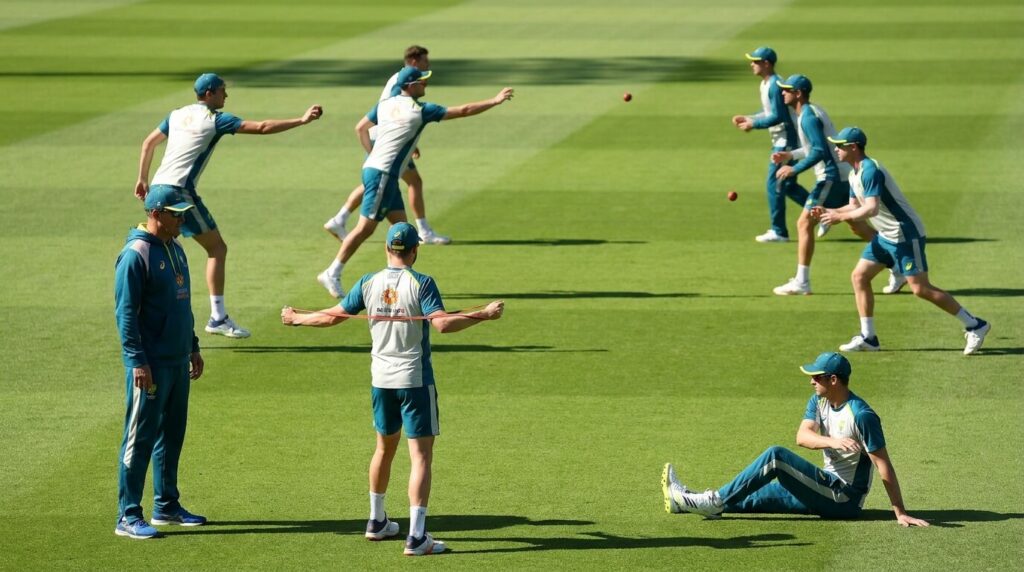
Bowling limits
Use age-appropriate and level-appropriate bowling plans. Avoid sudden changes in overs, intensity, or training frequency. Young players need particular care because competition schedules and growth can change their capacity quickly.
Strength training
Train the rotator cuff, scapular stabilisers, trunk, hips, and legs. Include both endurance and strength. A strong shoulder still needs good technique and adequate recovery; strength training is not a licence to ignore pain.
Recovery days
Recovery days should be real recovery days, not hidden high-volume throwing sessions. Active recovery, mobility, sleep, nutrition, and reduced shoulder loading can help the player adapt.
Sleep
Poor sleep can affect pain sensitivity, concentration, reaction time, and recovery. A consistent sleep routine is particularly important during tournaments, travel, and periods of increased workload.
Nutrition and hydration
Adequate energy, protein, carbohydrates, fluids, and micronutrients support training and tissue recovery. No supplement can replace appropriate rehabilitation or repair a torn tendon. Players with restrictive diets, repeated injuries, or poor appetite should speak with a qualified sports dietitian.
Common Mistakes That Delay Recovery
Use this checklist:
- Continuing full-speed bowling because the pain is “manageable.”
- Treating every shoulder problem with complete rest.
- Starting heavy band exercises before restoring comfortable movement.
- Using pain medication to conceal worsening symptoms.
- Assuming an MRI result alone determines treatment.
- Returning to maximum throwing before testing short throws.
- Increasing distance, speed, repetitions, and frequency at the same time.
- Ignoring pain that wakes the player at night.
- Training the shoulder but neglecting the trunk, hips, and legs.
- Changing technique without assessment from a qualified coach.
- Comparing recovery with a teammate who has a different injury.
- Stopping rehabilitation as soon as daily pain improves.
- Failing to plan the week after the first match.
- Assuming injections are a permanent solution.
- Delaying assessment after a fall or sudden loss of function.
Do’s and Don’ts
| Do | Don’t |
|---|---|
| Reduce the movement that clearly aggravates symptoms | Don’t keep bowling through sharp or escalating pain |
| Keep comfortable movement within limits | Don’t immobilise the shoulder for long periods without advice |
| Record bowling, throwing, gym, and match loads | Don’t count only match overs |
| Progress exercises gradually | Don’t chase heavy resistance at the expense of technique |
| Use a physiotherapist for a structured plan | Don’t copy a teammate’s rehabilitation programme |
| Re-test function before returning to cricket | Don’t return because the fixture is important |
| Discuss medication with a clinician or pharmacist | Don’t use pain relief to mask a serious injury |
| Seek review if strength is falling | Don’t assume all shoulder pain is ordinary soreness |
When Should You See a Sports Doctor?
Arrange a sports medicine or orthopaedic assessment if:
- Pain persists despite reducing aggravating activity.
- Symptoms repeatedly return after bowling or throwing.
- Night pain affects sleep.
- The shoulder feels weak or unreliable.
- Throwing distance, pace, or accuracy has declined.
- You cannot raise the arm normally.
- There is significant pain after a fall, collision, or direct blow.
- You feel catching, instability, or repeated slipping.
- Rehabilitation has not produced meaningful progress.
- You need a diagnosis before an important return to play.
Seek urgent medical attention for:
- A visibly deformed shoulder.
- Suspected dislocation or fracture.
- Sudden inability to move the arm after trauma.
- Severe pain with rapidly increasing swelling.
- Numbness, persistent pins and needles, or a cold or pale hand.
- Chest pain, shortness of breath, sweating, or pain spreading to the jaw or arm.
- Fever, redness, and marked warmth around the joint.
A clinician may combine examination, X-ray, ultrasound, or MRI depending on the injury pattern. Do not delay urgent assessment while waiting to see whether the pain settles.

Frequently Asked Questions
1. Can a cricketer play with a rotator cuff injury?
Sometimes a player can continue modified activity, but playing through worsening pain, weakness, or loss of movement is unwise. Bowling and maximum-effort throwing should be reduced or stopped until the shoulder has been assessed.
2. Is shoulder pain after bowling always a rotator cuff tear?
No. It may involve muscle fatigue, tendinopathy, bursitis, labral injury, instability, AC-joint irritation, neck pain, or another condition. A physical examination is needed to distinguish them.
3. How do I know whether the injury is a strain or a tear?
You cannot reliably determine this from pain alone. Sudden weakness, a popping sensation, bruising, or inability to raise the arm increases concern, but imaging and clinical examination may be required.
4. Can a partial rotator cuff tear heal without surgery?
Many partial tears and rotator cuff-related pain problems are managed without surgery through activity modification and progressive rehabilitation. The appropriate approach depends on symptoms, tear characteristics, strength, age, and playing demands.
5. How long does a rotator cuff injury take to heal?
Mild overload symptoms may improve over several weeks. More substantial tears can take months, and surgical repairs require a longer protected rehabilitation period. Functional testing is more useful than relying on one fixed recovery estimate.
6. Should I use ice after cricket?
Ice may temporarily reduce pain after an aggravating session. Wrap it in cloth and use short applications; it should not be placed directly on the skin. Ice does not repair a torn tendon.www+1
7. Are resistance bands good for rotator cuff injuries?
They can be useful when selected and progressed appropriately. Begin with a resistance and range that the shoulder tolerates, and obtain advice if the exercise causes sharp pain or next-day deterioration.
8. Should I stop all shoulder exercises?
Not necessarily. Complete rest can lead to stiffness and deconditioning. The right programme usually reduces provocative loads while maintaining comfortable movement and gradually rebuilding capacity.
9. Can I bowl if I have no pain at rest?
Absence of resting pain is not enough. You should also demonstrate comfortable movement, strength, endurance, and progressive tolerance to bowling-specific loads.
10. Can an MRI show why my shoulder hurts?
MRI can identify structural findings, but the scan must be interpreted alongside symptoms and examination. Some abnormalities are present in people without pain.
11. Is surgery always needed for a full-thickness tear?
No. Treatment depends on the tear, symptoms, weakness, age, playing demands, and response to non-operative care. Acute traumatic weakness and high-level overhead demands may prompt earlier specialist discussion.
12. Are steroid injections safe for cricketers?
They may provide short-term pain relief in selected cases, but they do not restore tendon strength. The timing, number of injections, tendon condition, and possible surgery should be discussed with a clinician.
13. Which exercise is best for the rotator cuff?
There is no single best exercise. A complete programme usually develops mobility, external and internal rotation strength, scapular control, endurance, trunk control, and cricket-specific capacity.
14. How can fast bowlers prevent shoulder injury?
Manage bowling and throwing workload, warm up progressively, develop whole-body strength, maintain technique, schedule recovery, and respond early to pain or declining performance.
15. When can I return to competitive cricket?
Return when symptoms are controlled, movement and strength are adequate, and the shoulder has passed a gradual cricket-specific progression. The final decision should involve the treating clinician and coaching team, particularly after a tear or surgery.
Final Thoughts
A rotator cuff injury can affect every cricket role, from a fast bowler’s delivery to a wicketkeeper’s throw and a batter’s backlift. The most reliable approach is early recognition, accurate diagnosis when needed, sensible workload reduction, progressive rehabilitation, and a staged return to bowling, throwing, batting, or keeping.
Do not use pain alone—or a scan alone—to decide whether you are ready. A shoulder that is strong, coordinated, and able to tolerate the demands of your specific cricket role is a safer shoulder to return with.
Medical Disclaimer
This article is for general education and does not replace an examination, diagnosis, or personalised treatment plan from a qualified doctor, sports physician, physiotherapist, or other licensed healthcare professional. Shoulder pain in a cricketer may result from conditions other than a rotator cuff injury, and online information cannot determine the severity of a tear.
Do not use this article to decide whether to continue playing, take medication, receive an injection, or avoid surgery. Seek prompt medical attention after significant trauma, sudden weakness, deformity, suspected dislocation, numbness, severe swelling, or inability to move the arm. Any exercise or return-to-play programme should be adapted to the individual player’s age, injury, medical history, playing role, and clinical findings.