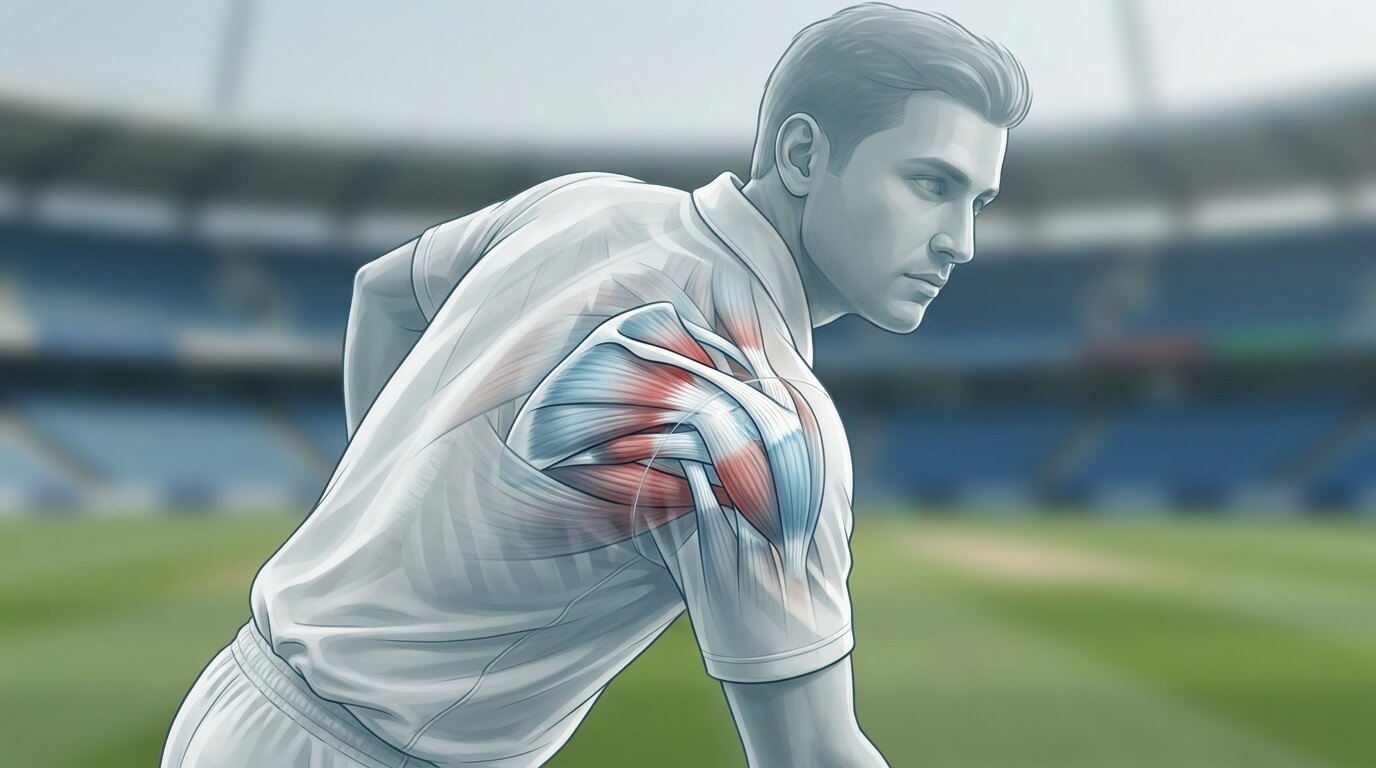
Hamstring strains are among the most frequent and disruptive injuries in cricket, particularly for fast bowlers, fielders, and batters who rely on explosive sprinting, rapid acceleration, and sudden deceleration. A single misstep during a delivery stride, a desperate chase in the deep, or an urgent run between the wickets can trigger a sharp pull at the back of the thigh—forcing players out of training, matches, or entire phases of the season.
This guide brings together sports medicine expertise and cricket-specific performance insight to explain what happens during a hamstring strain, why cricketers are especially vulnerable, how injuries are assessed and graded, and what a safe, structured return to bowling, batting, and fielding actually looks like. It is written for athletes, coaches, physiotherapists, and parents who want more than generic advice—they want a clear, evidence-informed roadmap tailored to the demands of cricket.
Quick Summary
- What it is: A hamstring strain is an overstretch or tear of one or more muscles at the back of the thigh (biceps femoris, semitendinosus, semimembranosus).
- Why cricketers are vulnerable: High-speed running, sudden acceleration/deceleration, repeated sprint efforts, and fatigue during long innings or multi-day matches place extreme load on the hamstrings.
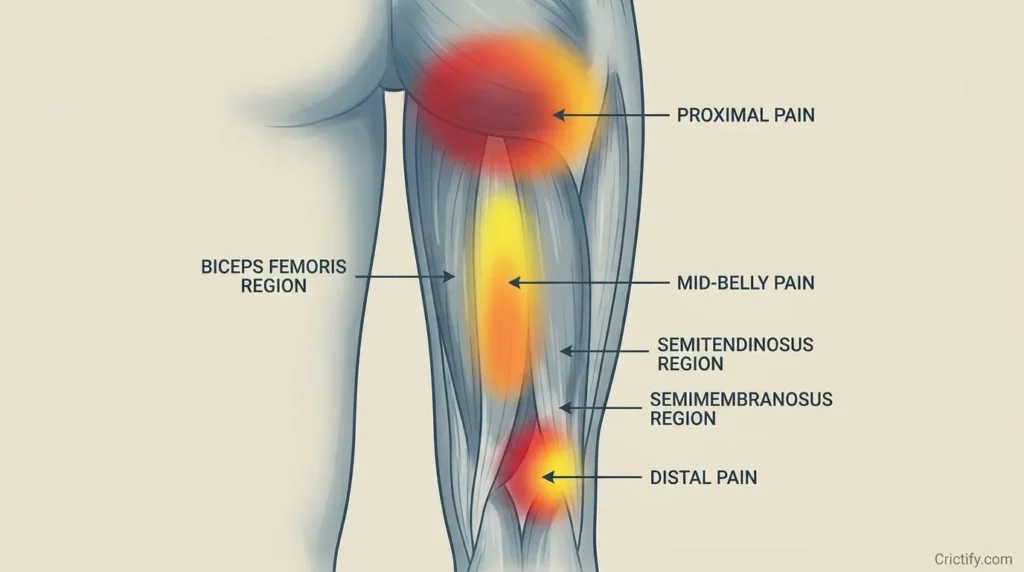
- Main symptoms: Sudden sharp pain or “pulling” sensation in the posterior thigh, tightness, weakness, pain when stretching or sprinting, possible bruising or swelling.
- Typical treatment approach: Relative rest, pain management, progressive loading (isometric → concentric → eccentric), running reintegration, cricket-specific drills, and strength maintenance.
- Why rehabilitation matters: Pain often resolves before strength and intramuscular control return; premature return significantly increases re-injury risk.
- When medical assessment is important: Severe pain, inability to walk normally, major swelling/bruising, audible “pop,” recurrent injury, or persistent symptoms beyond a few days.
What Is a Hamstring Strain?
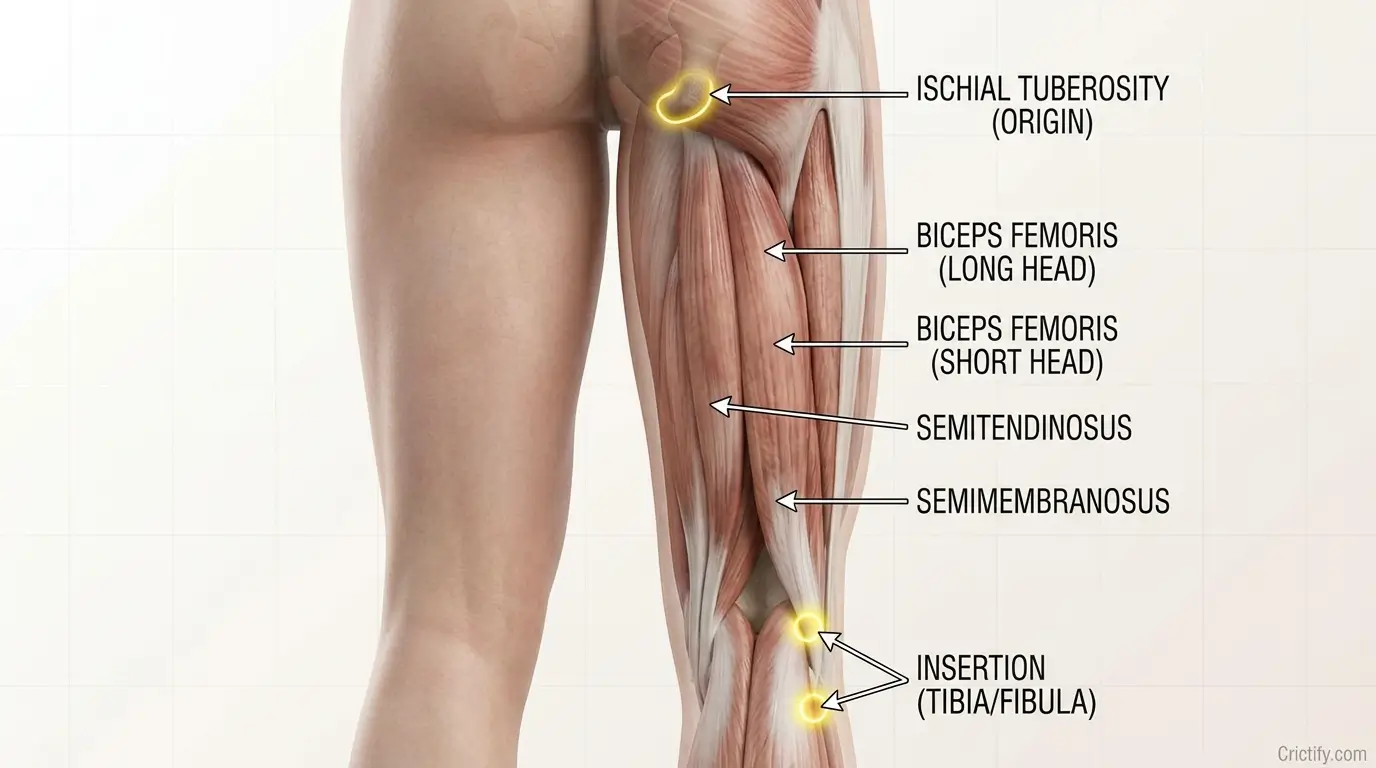
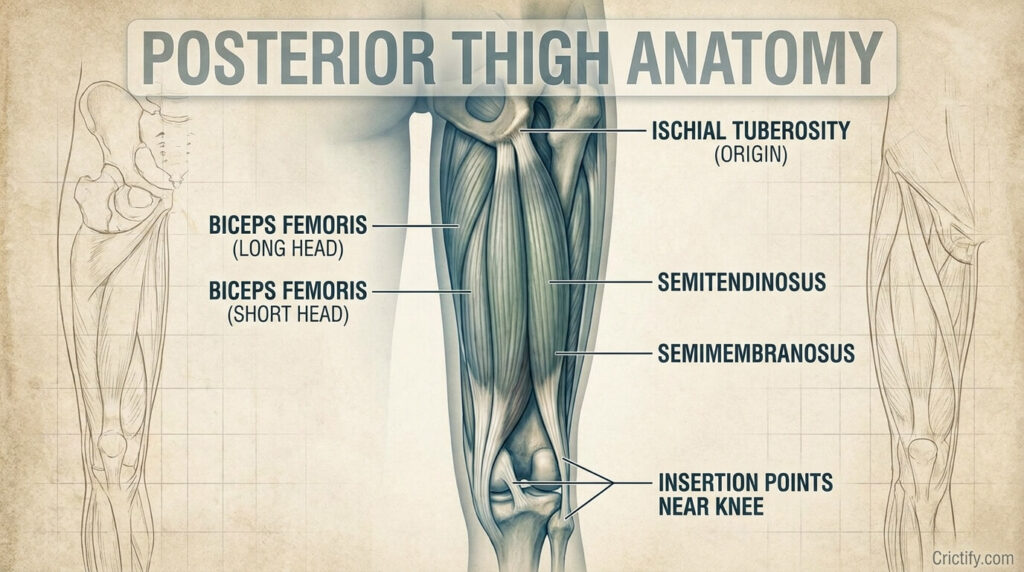
The hamstrings are a group of three muscles running along the back of the thigh, from the pelvis (ischial tuberosity) to just below the knee. They play a critical role in hip extension (moving the thigh backward) and knee flexion (bending the knee)—both essential for sprinting, jumping, and rapid changes of direction.
The Three Hamstring Muscles
- Biceps femoris: Located on the outer (lateral) side of the posterior thigh. It has two “heads” (long and short) and is the most commonly injured hamstring muscle in sprinting athletes.
- Semitendinosus: Runs more centrally and medially; contributes significantly to knee flexion and hip extension.
- Semimembranosus: Lies deeper and more medial; important for stabilizing the knee and controlling deceleration.
These muscles work together but can be stressed differently depending on movement patterns. In sprinting and fast bowling, the biceps femoris long head is frequently overloaded during the late swing phase of the leg, just before foot strike—when the muscle is lengthening while contracting (eccentric loading).
Muscle vs Tendon
A strain can occur in the muscle belly (the fleshy middle part) or at the myotendinous junction (where muscle meets tendon), or—less commonly—in the tendon itself (e.g., proximal hamstring tendinopathy near the sit bone). Tendon injuries often present with more gradual onset pain and may require different management than acute muscle strains.
What Happens During a Strain?
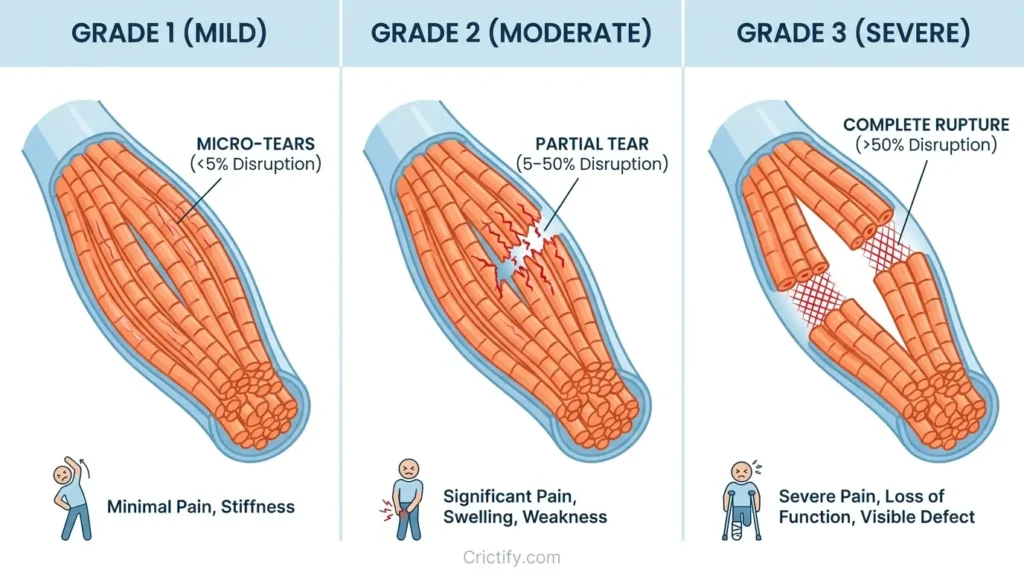
A hamstring strain occurs when the muscle or tendon is stretched beyond its capacity, causing microscopic tearing (Grade 1), partial tearing (Grade 2), or complete rupture (Grade 3). This is not simply “tightness”—it is structural damage that needs time and appropriate loading to heal.
- Overstretching: The muscle is lengthened too far, too fast—often during high-speed running or sudden acceleration.
- Tearing: Fibers physically rupture. The more fibers involved, the more severe the injury and the longer the recovery.
Why Hamstring Injuries Happen in Cricket
Cricket may not appear as continuously high-intensity as soccer or rugby, but its movement demands are highly explosive and intermittent—creating ideal conditions for hamstring overload.
Cricket-Specific Mechanisms
- Sprinting: Chasing a boundary, running hard between wickets, or closing down a single all require rapid acceleration to near-maximal speed.
- Bowling run-up: Fast bowlers build momentum over 15–25 meters, then decelerate abruptly into the delivery stride—placing massive eccentric load on the lead-leg hamstring.
- Delivery stride: The front leg braces while the back leg drives through; both hamstrings experience high forces during this split-second action.
- Sudden acceleration: A batter reacting to a misfield, a fielder darting forward to stop a drive.
- Sudden stopping/deceleration: Sliding to field a shot, braking after a sprint to the stumps.
- Running between wickets: Repeated short sprints with quick turns at the crease, especially in hot conditions or late in an innings.
- Fielding dives: Extending the leg fully while sprinting or diving can overstretch the hamstring.
- Direction changes: Cutting across the field to intercept a shot requires rapid deceleration and re-acceleration.
- Long playing sessions: Fatigue reduces neuromuscular control and increases reliance on passive structures, raising injury risk.
- Poor conditioning: Inadequate eccentric hamstring strength, weak glutes/hips, or poor sprint mechanics leave the hamstrings vulnerable.
- Previous injury: A prior hamstring strain is one of the strongest predictors of future injury—especially if rehabilitation was incomplete.search.
During high-speed running, the hamstrings act as a “brake” to control the swinging leg before foot strike. If the muscle is fatigued, weak, or overloaded, it can fail to absorb these forces—resulting in a strain.

Which Cricketers Are Most at Risk?
Fast Bowlers
Fast bowlers face the highest hamstring injury rates in cricket. Their workload combines:
- Repeated high-speed run-ups
- Explosive acceleration into the delivery stride
- High braking forces on the front leg
- Cumulative fatigue over multi-over spells and multi-day matches
The lead-leg hamstring (often the left leg for a right-arm bowler) is particularly vulnerable during the delivery stride, as it must absorb and redirect large ground reaction forces while the trunk rotates and the arm delivers the ball.
Batters
Batters may underestimate their hamstring risk, but rapid running between wickets—especially for quick singles, turning two, or reacting to overthrows—requires repeated acceleration and deceleration. Turning at the crease also demands explosive push-off from a stationary or near-stationary position, loading the hamstrings significantly.
Fielders
Fielders cover large distances, often at high speed. Chasing a lofted shot, diving to stop a drive, or sprinting in from the boundary all place the hamstrings under eccentric stress. Late in the innings, fatigue compounds this risk.
Wicket keepers
While wicket keepers spend much time in a squat, they also perform short explosive sprints (e.g., charging down the stumps for a stumping, chasing a deflection) and repeated lateral movements. The transition from deep squat to sprint can load the hamstrings unexpectedly, especially if not adequately warmed up.
Spin Bowlers
Spin bowlers generally have lower hamstring injury rates than fast bowlers, but they are not immune. A sudden sprint to field their own delivery, a dive to stop a driven ball, or an aggressive run-up in limited-overs formats can all trigger a strain—particularly if they are fatigued or returning from another injury.
Junior Players
Young cricketers face unique risks:
- Growth spurts: Rapid bone growth can temporarily outpace muscle-tendon adaptation, increasing strain susceptibility.
- Training load: Sudden increases in match frequency, bowling volume, or intensity without adequate recovery.
- Technique: Poor running or bowling mechanics can place uneven stress on the hamstrings.
- Strength differences: Underdeveloped posterior chain (hamstrings, glutes, lower back) relative to quadriceps.
- Recovery: Inadequate sleep, nutrition, or rest days between matches/tournaments.
Coaches and parents should monitor workload, ensure age-appropriate conditioning, and encourage open communication about pain or tightness.
Causes
Hamstring strains in cricket rarely have a single cause. Instead, they result from a combination of intrinsic (within the athlete) and extrinsic (external) factors.
Primary Causes
- Sudden acceleration: The most common trigger—especially when the athlete is not fully warmed up or is fatigued.
- High-speed running: Sprinting places peak eccentric load on the hamstrings during the terminal swing phase of the leg.
- Overstretching: Extending the leg fully while sprinting, diving, or reaching for a ball.
- Fatigue: As muscles tire, coordination and force absorption decline, increasing strain risk.
- Inadequate warm-up: Starting high-intensity activity without progressive activation leaves muscles unprepared for load.
- Sudden increase in training load: A rapid jump in bowling overs, sprint drills, or match frequency without gradual adaptation.
- Poor eccentric strength: Inability to control lengthening under load—critical for deceleration and sprinting.
- Muscle imbalance: Quadriceps dominance (strong front of thigh, weak back) shifts load away from the hamstrings’ supportive role.
- Reduced hip strength: Weak glutes and hip stabilizers force the hamstrings to compensate during running and bowling.
- Poor movement mechanics: Over striding, excessive trunk lean, or asymmetrical running patterns increase hamstring stress.
- Previous hamstring injury: Incompletely rehabilitated strains leave residual weakness and altered neuromuscular control.
- Insufficient recovery: Lack of sleep, poor nutrition, or inadequate rest between sessions impairs tissue repair and adaptation.
Note: Lack of static stretching alone is not a primary cause of hamstring strain. Dynamic preparation and strength are far more influential.
Risk Factors
Risk factors can be modifiable (changeable through training, load management, or behavior) or non-modifiable (inherent traits).
| Risk Factor | Why It Matters | Can It Be Modified? |
|---|---|---|
| Previous hamstring strain | Strongest predictor of re-injury; residual weakness or altered movement patterns persist | Partially—through comprehensive rehab and maintenance |
| Age | Older athletes may have reduced tissue elasticity and slower recovery | No |
| Eccentric hamstring weakness | Inability to control high-speed lengthening increases strain risk | Yes—via Nordic curls, RDLs, sliders |
| Hip/glute weakness | Forces hamstrings to overwork during sprinting and bowling | Yes—targeted strengthening |
| Fatigue | Reduces neuromuscular control and force absorption | Yes—load management, recovery strategies |
| Sudden workload increase | Tissues don’t adapt quickly enough to new demands | Yes—gradual progression |
| Poor sprint mechanics | Overstriding or asymmetrical patterns increase hamstring load | Yes—coaching, drills |
| Inadequate warm-up | Muscles unprepared for high-intensity effort | Yes—dynamic routines |
| Reduced hamstring flexibility (extreme) | May limit range under load, though evidence is mixed | Partially—mobility work |
| Playing surface | Hard or uneven grounds increase impact forces | Partially—footwear, field selection |
Symptoms
Symptoms vary by severity but typically include:
- Sudden sharp pain in the back of the thigh during sprinting, bowling, or diving.
- Pulling or tearing sensation at the moment of injury.
- Tightness that worsens with stretching or walking.
- Pain during sprinting or acceleration—often the first sign something is wrong.
- Weakness when trying to bend the knee or extend the hip.
- Bruising (ecchymosis) appearing 24–72 hours post-injury, especially in Grade 2+ strains.
- Swelling around the injury site.
- Difficulty walking or a limp, particularly in moderate to severe strains.
- Reduced stride length when running—subconsciously guarding the injured leg.
Mild strains (Grade 1) may only cause localized tenderness and tightness, allowing continued activity with discomfort. Severe strains (Grade 3) can make walking nearly impossible and require immediate medical attention.
Early Warning Signs
Not all hamstring injuries happen without warning. Many athletes experience subtle signs in the days or weeks before a major strain:
- Increasing tightness that doesn’t resolve with normal warm-up.
- Reduced sprint speed or reluctance to accelerate fully.
- Pain after training that lingers longer than usual.
- Persistent soreness in the posterior thigh, especially in the morning.
- Reduced range of motion when bending forward or lifting the leg.
- Pain during acceleration—even in practice drills.
- Difficulty performing high-speed running without discomfort.
If these signs appear, it’s wise to reduce high-intensity load, increase recovery, and seek assessment—especially if you have a history of hamstring issues. Continuing to train through warning signs significantly increases the risk of a full strain.
Severity / Grading
Hamstring strains are classified into three grades based on the extent of muscle fiber disruption.
| Grade | Typical Symptoms | Functional Limitation | Medical Assessment | General Recovery Considerations |
|---|---|---|---|---|
| Grade 1 (Mild) | Localized pain, mild tightness, minimal swelling, no bruising | Can walk normally; sprinting uncomfortable but possible | Clinical exam often sufficient; imaging rarely needed | Days to a few weeks; focus on pain-free loading and strength symmetry |
| Grade 2 (Moderate) | Sharp pain, noticeable weakness, bruising (24–72 hrs), possible palpable defect | Limping; unable to sprint or accelerate fully | Clinical exam + possible ultrasound/MRI to assess tear extent | Several weeks; structured rehab with progressive loading and running |
| Grade 3 (Severe) | Severe pain, major swelling/bruising, inability to bear weight, possible “pop” | Cannot walk without significant pain; major functional loss | MRI usually recommended; surgical consult if tendon avulsion suspected | Months; extensive rehab, possible surgery, careful return-to-sport testing |
Recovery timelines vary widely based on injury location (muscle vs tendon), athlete age, prior injury history, and adherence to rehab. Never assume a specific number of days guarantees readiness.
When to See a Doctor
Seek professional medical assessment if you experience any of the following “red flags”:
- Severe pain that prevents normal walking or standing.
- Inability to bear weight on the injured leg.
- Major swelling or rapid bruising within 24 hours.
- Audible “pop” at the time of injury—suggests possible complete tear.
- Significant weakness or inability to bend the knee against resistance.
- Recurrent injury in the same area—indicates incomplete rehab or underlying issue.
- Persistent symptoms beyond 7–10 days without improvement.
- Numbness, tingling, or neurological symptoms down the leg—could indicate nerve involvement.
- Suspected complete tear or tendon avulsion (especially near the sit bone).
- Significant trauma, such as a direct blow or fall.
Early assessment helps rule out serious injury, guides appropriate imaging, and ensures rehab starts on the right track.
Diagnosis
Clinicians diagnose hamstring strains through a combination of:
- Medical history: How the injury occurred, symptoms, prior injuries, training load.
- Physical examination: Palpation for tenderness, swelling, or defects; observation of gait.
- Strength testing: Comparing knee flexion and hip extension strength between legs.
- Range-of-motion testing: Assessing flexibility and pain during straight-leg raise or knee extension.
- Functional testing: Single-leg bridge, squat, or controlled lunge to evaluate load tolerance.
Imaging is not always necessary for mild strains. Clinical diagnosis is often sufficient for Grade 1 injuries. However, moderate to severe cases—or those not improving—may benefit from imaging to guide prognosis and rehab planning.
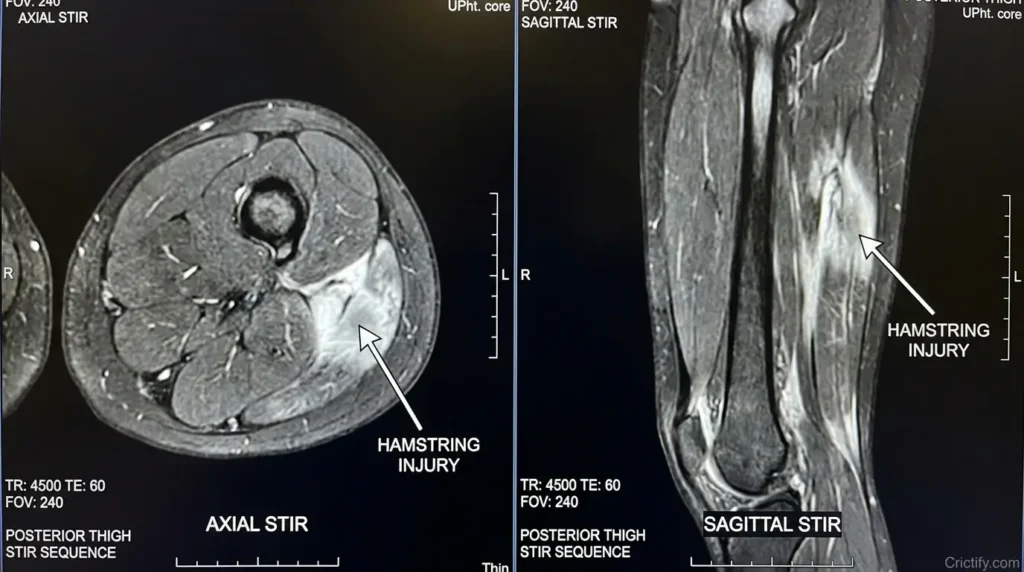
MRI
Magnetic Resonance Imaging (MRI) provides detailed visualization of soft tissues and is the gold standard for assessing hamstring injury severity.
When MRI May Be Useful
- Suspected Grade 2 or 3 strain with significant functional loss.
- Unclear diagnosis after clinical exam.
- Recurrent injuries needing precise localization.
- Pre-surgical planning for tendon avulsions.
- Prognostic guidance for elite athletes with tight return-to-play windows.
What MRI Can Show
- Muscle injury: Location and extent of fiber disruption.
- Tendon involvement: Whether the injury extends into the proximal or distal tendon.
- Injury location: Intramuscular vs myotendinous junction vs tendon—each has different healing timelines.
- Severity: Percentage of cross-sectional area involved.
- Prognostic considerations: Tendon involvement or large intramuscular tears may take longer to heal.
Not every hamstring strain requires MRI. For mild, improving injuries, clinical monitoring is often sufficient.
Ultrasound
Ultrasound is a dynamic, real-time imaging option that can detect:
- Muscle fiber disruption
- Tendon thickening or tearing
- Fluid collection (hematoma)
Advantages
- Lower cost and wider availability than MRI.
- Can assess tissue during movement (dynamic scanning).
- Useful for guiding injections if needed.
Limitations
- Operator-dependent—quality varies with technician skill.
- Less detailed for deep structures or complex tears compared to MRI.
- May miss small intramuscular injuries.
Ultrasound is often used for initial assessment or follow-up, especially in resource-limited settings.
X-Ray
X-rays do not show muscle or tendon injuries. However, they may be useful in specific scenarios:
- Suspected avulsion fracture: When a tendon pulls off a piece of bone (more common in adolescents).
- Rule out bony pathology: Stress fractures, hip joint issues, or referred pain from the spine/pelvis.
- Post-trauma assessment: After a fall or direct blow to the thigh/hip.
For typical hamstring strains, X-ray is not the primary diagnostic tool.
Initial Management
Immediately after injury, the priority is to protect the tissue and prevent further damage.
What to Do
- Stop aggravating activity: Do not continue playing, sprinting, or bowling through pain.
- Relative rest: Avoid activities that reproduce sharp pain, but maintain gentle movement (e.g., walking as tolerated).
- Protect the injured area: Use crutches if walking is significantly painful; avoid aggressive stretching in the first 48–72 hours.
- Medical assessment: Seek evaluation if symptoms are moderate to severe, or if unsure of the diagnosis.
- Avoid aggressive stretching: Early overstretching can disrupt healing fibers and delay recovery.
- Gradual loading: Begin pain-free isometric contractions (e.g., gentle hamstring squeezes) within 48 hours if tolerated.
The outdated “RICE” (Rest, Ice, Compression, Elevation) protocol has evolved. While ice may help with pain, complete rest is no longer recommended—early controlled loading promotes better healing.
Medication
Pain relief should be individualized and discussed with a healthcare provider.
- Pain relief options: Paracetamol (acetaminophen) is often first-line for mild pain.
- NSAIDs (e.g., ibuprofen, naproxen): May reduce pain and inflammation but should be used cautiously—especially in the first 48 hours, as they may interfere with early healing processes.
- Why medication should be individualized: Underlying health conditions, other medications, and injury severity all influence safety and efficacy.
- Risks of self-medication: Overuse of NSAIDs can cause gastrointestinal, renal, or cardiovascular issues.
- When medical advice is appropriate: Persistent pain, uncertainty about diagnosis, or need for stronger analgesia.
Never use medication to “mask” pain and return to play prematurely.
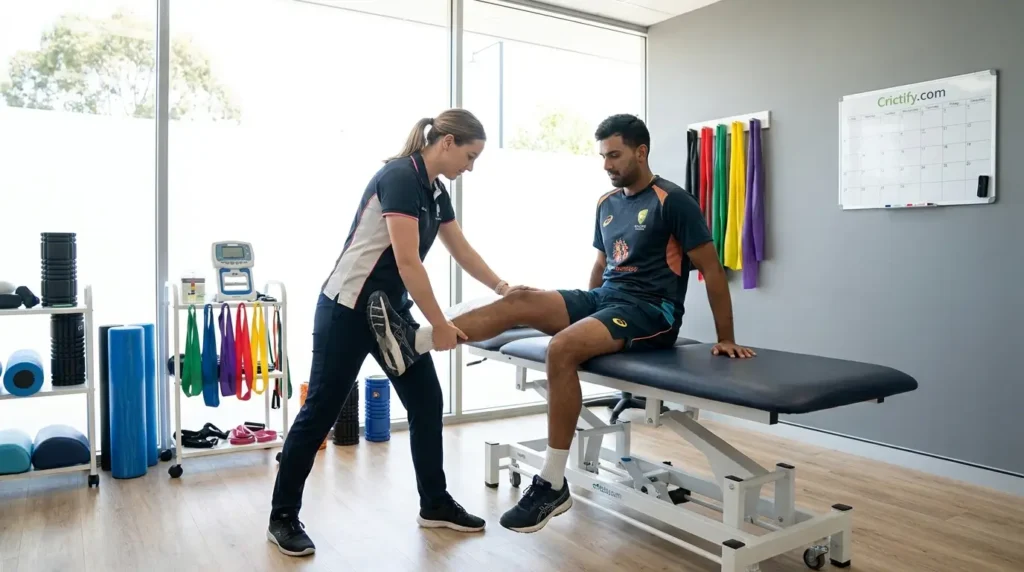
Physiotherapy
Physiotherapy is the cornerstone of hamstring rehabilitation. A structured program addresses pain, mobility, strength, and sport-specific demands.
Rehabilitation Principles
- Pain management: Modalities, manual therapy, and activity modification to reduce discomfort.
- Mobility: Gentle range-of-motion exercises to prevent stiffness—without aggressive stretching early on.
- Isometric loading: Static contractions (e.g., hamstring bridge holds) to activate muscle without lengthening.
- Strength development: Progressive resistance training for hamstrings, glutes, hips, and core.
- Eccentric strengthening: Controlled lengthening under load (e.g., Nordic curls) to rebuild resilience.
- Progressive running: Gradual reintroduction of jogging, acceleration, and sprinting.
- Sport-specific drills: Cricket movements (bowling run-ups, batting sprints, fielding patterns) at increasing intensity.
- Return-to-play testing: Objective criteria to ensure readiness before competition.
Rehabilitation Exercises
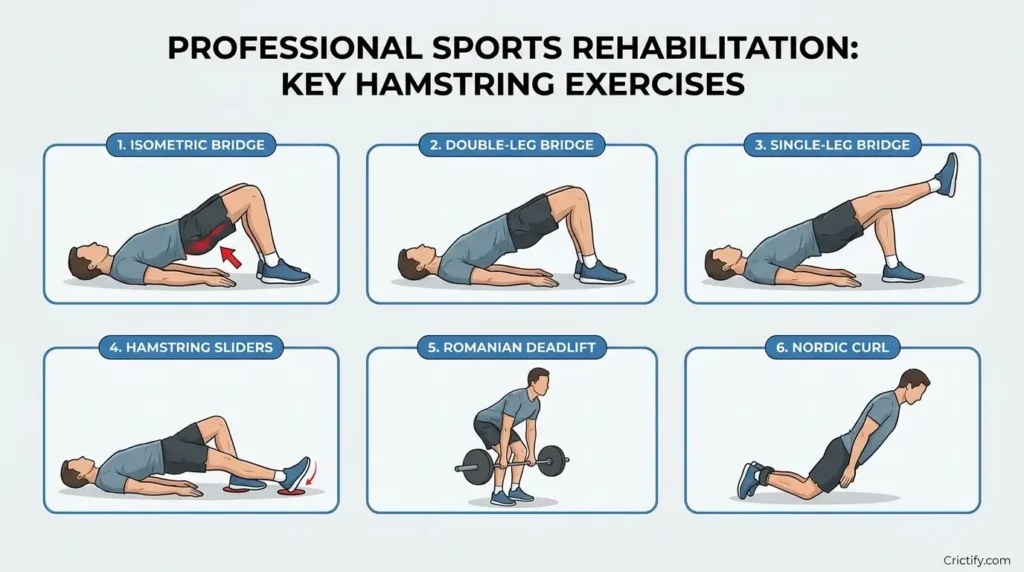
Exercises should progress from low-load activation to high-intensity eccentric work. Below are common examples—not a universal prescription. Always individualize based on pain, strength, and stage of healing.
Isometric Hamstring Bridge
- Purpose: Activate hamstrings and glutes with minimal joint movement.
- Technique: Lie on your back, knees bent, feet flat. Lift hips until shoulders-hips-knees form a straight line. Hold 10–30 seconds.
- Common mistakes: Arching the lower back, lifting too high, holding breath.
- When appropriate: Early phase (Grade 1–2), once walking is pain-free.
- When to avoid/modify: If hip extension causes sharp pain—reduce range or try double-leg first.
Double-Leg Bridge
- Purpose: Build concentric strength in hamstrings and glutes.
- Technique: Same setup as isometric bridge, but lower and lift hips dynamically (2–3 seconds up, 2–3 seconds down).
- Common mistakes: Using lower back instead of glutes/hamstrings, rapid uncontrolled movement.
- When appropriate: Early-mid rehab, once isometrics are pain-free.
- When to avoid/modify: If pain increases during movement—reduce range or return to isometrics.
Single-Leg Bridge
- Purpose: Increase load and address limb asymmetry.
- Technique: Same as double-leg, but one leg extended. Lift hips using the stance leg.
- Common mistakes: Hip drop on the non-working side, excessive lumbar extension.
- When appropriate: Mid-late rehab, once double-leg bridges are easy and pain-free.
- When to avoid/modify: If unable to maintain pelvic control—regress to double-leg.
Hamstring Sliders
- Purpose: Introduce controlled eccentric loading in a safe range.
- Technique: Lie on back, feet on towels/sliders. Lift hips, then slowly slide feet away while keeping hips elevated. Return by pulling heels back.
- Common mistakes: Letting hips sag, sliding too far (causing pain), using momentum.
- When appropriate: Mid-phase rehab, once bridges are pain-free.
- When to avoid/modify: If sliding triggers sharp pain—reduce range or pause progression.
Romanian Deadlift (RDL) Progression
- Purpose: Strengthen hamstrings and glutes through hip hinge pattern.
- Technique: Stand with slight knee bend, hinge at hips while keeping back straight, lower torso until hamstrings stretch, then return.
- Common mistakes: Rounding the back, using arms to pull weight, excessive knee flexion.
- When appropriate: Mid-late rehab, once basic strength is restored.
- When to avoid/modify: If hip hinge causes pain—start with body weight or reduce range.
Nordic Hamstring Exercise
- Purpose: Gold-standard eccentric strengthening for injury prevention and rehab.
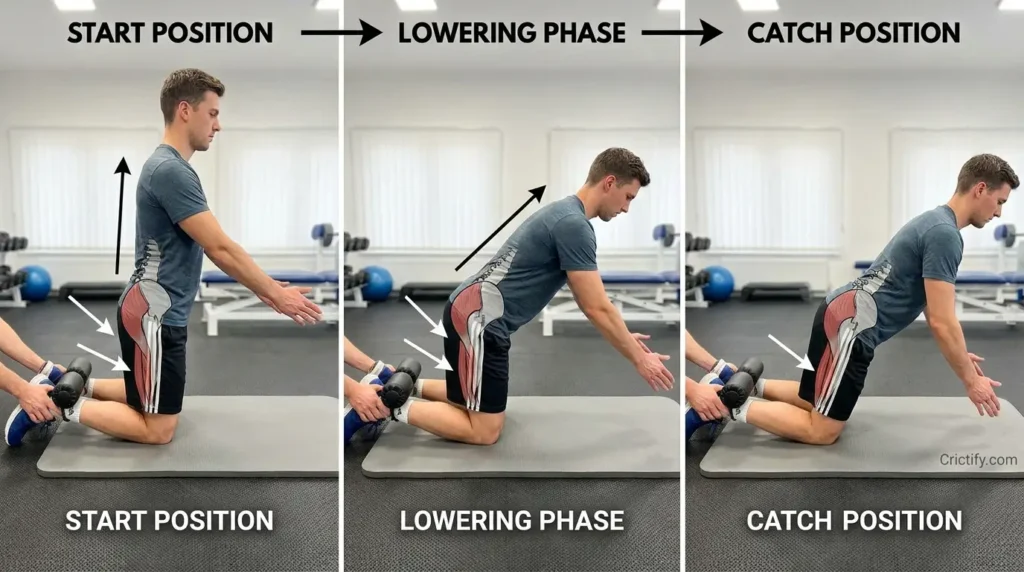
- Technique: Kneel with ankles anchored (partner or machine). Slowly lower torso forward while resisting with hamstrings. Use hands to catch yourself, then push back up.
- Common mistakes: Dropping too fast, hyper extending the back, progressing volume too quickly.
- When appropriate: Mid-late rehab, once basic strength and control are established.
- When to avoid/modify: If unable to control descent—start with partial range or assisted versions.
Hip and Glute Strengthening
- Purpose: Reduce hamstring overload by improving proximal stability.
- Examples: Clamshells, side-lying leg raises, banded walks, single-leg RDLs.
- When appropriate: Throughout rehab—especially if hip weakness is identified.
Calf Strengthening
- Purpose: Support sprint mechanics and reduce compensatory hamstring loading.
- Examples: Double-leg and single-leg calf raises, eccentric heel drops.
Core Stability
- Purpose: Maintain trunk control during bowling, batting, and sprinting.
- Examples: Dead bugs, planks, bird-dogs, Pall of presses.
Nordic Hamstring Exercise
The Nordic hamstring curl (NHC) is one of the most researched exercises for hamstring injury prevention and rehabilitation.
What It Is
A kneeling eccentric exercise where the athlete lowers their torso forward while resisting with the hamstrings, then uses their hands to push back up.
Why Eccentric Strength Matters
During sprinting, the hamstrings lengthen while contracting to decelerate the swinging leg. Eccentric training specifically targets this capability, improving the muscle’s ability to absorb high forces without tearing.
How It May Help Injury Prevention
Studies show Nordic programs can reduce hamstring injury risk by approximately 50% in sprinting athletes. They also lower re-injury rates when included in maintenance programs.
Progression
- Assisted Nordic: Use a band or partner to reduce load.
- Partial range: Lower only halfway, then return.
- Full range: Lower as far as controllable, catch with hands.
- Volume increase: Start with 1–2 sets of 3–5 reps, 1–2x/week. Build to 3 sets of 8–12 reps over weeks.
Common Mistakes
- Dropping too quickly (losing eccentric control).
- Arching the lower back excessively.
- Progressing volume too fast—leading to soreness or setback.
Why Beginners Should Not Immediately Perform Excessive Volume
The NHC places high eccentric load on the hamstrings. Doing too much too soon can cause excessive muscle damage, delaying rehab. Start conservatively and build gradually.
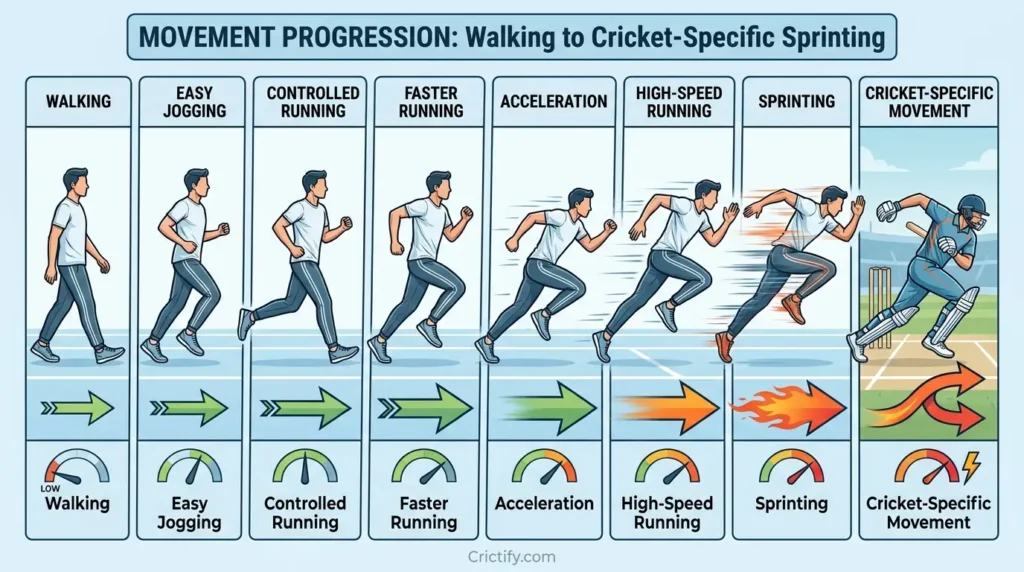
Running Rehabilitation
Returning to sprinting must be progressive. Jumping from pain-free walking to full-speed cricket risks re-injury.
Progressive Stages
- Walking: Pain-free, normal gait.
- Easy jogging: 50–60% effort, short duration (5–10 minutes).
- Controlled running: 60–70% effort, building to 15–20 minutes continuous.
- Faster running: 70–80% effort, introducing gentle accelerations.
- Acceleration drills: 5–10 meter build-ups at moderate intensity.
- High-speed running: 80–90% effort, straight-line sprints.
- Sprinting: >90% effort, full-speed efforts with full recovery.
- Cricket-specific movement: Bowling run-ups, batting sprints, fielding patterns at match intensity.
Why Not Jump Straight to Sprinting?
Sprinting places peak eccentric load on the hamstrings. If the tissue hasn’t been progressively exposed to increasing speeds, it may fail under sudden high demand. Each stage should be pain-free during and after, with no increase in soreness the next day.
Recovery Timeline
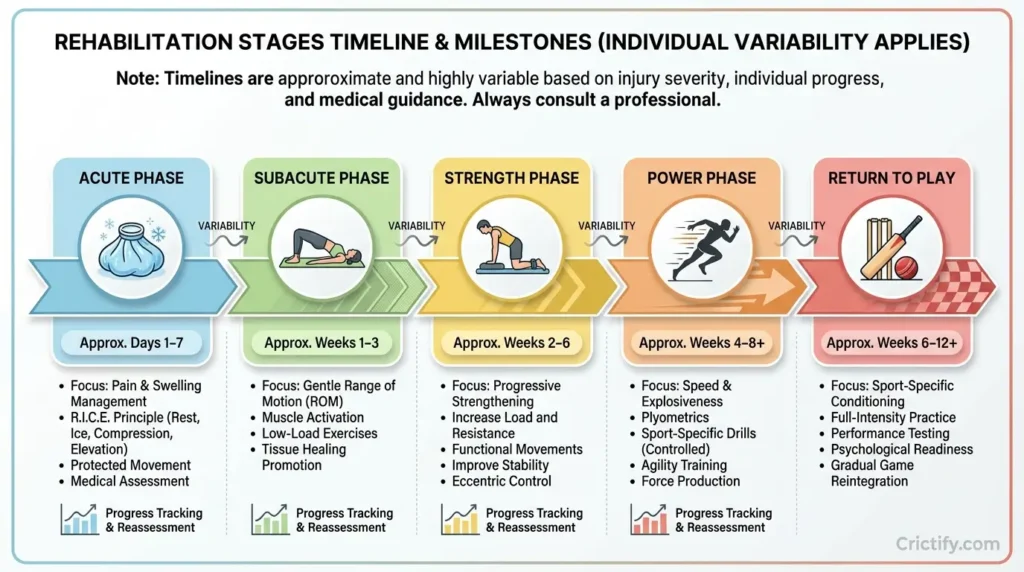
Recovery varies by grade, location, athlete history, and rehab adherence. Below is a general framework—not a guaranteed timeline.
| Stage | Main Goal | Typical Activities | Progression Criteria |
|---|---|---|---|
| Acute (Days 1–7) | Protect tissue, manage pain, maintain mobility | Relative rest, gentle walking, isometric holds | Pain-free walking, no increase in symptoms |
| Subacute (Weeks 1–3) | Restore strength, introduce loading | Bridges, sliders, light RDLs, easy jogging | Pain-free strength exercises, normal gait |
| Strength (Weeks 2–6) | Build eccentric capacity, reintroduce running | Nordic progressions, faster running, acceleration drills | Pain-free jogging → controlled running |
| Power (Weeks 4–8+) | Develop sprint capacity, cricket-specific drills | High-speed running, sprinting, bowling/batting drills | Pain-free sprinting, strength symmetry |
| Return to Play (Weeks 6–12+) | Match readiness, load tolerance | Full training, simulated match scenarios | Objective testing passed, psychological readiness |
Grade 1 injuries may resolve in 1–3 weeks; Grade 2 in 4–8 weeks; Grade 3 in 3+ months. Tendon involvement or recurrent injuries often take longer.
Return to Cricket
“Pain-free” does not automatically mean “ready for cricket.” Return requires meeting multiple criteria:search.
- Strength: Hamstring strength within 90% of the uninjured leg (ideally tested objectively).
- Range of motion: Full, pain-free hip and knee mobility.
- Sprinting: Ability to accelerate and sprint at match speed without pain or compensation.
- Acceleration/Deceleration: Controlled high-speed changes of direction.
- Repeated high-intensity running: Tolerance for multiple sprints with short recovery (simulating match demands).
- Cricket-specific drills: Bowling run-ups, batting sprints, fielding patterns at full intensity.
- Confidence: Psychological readiness to trust the leg under load.search.
Skipping any of these steps increases reinjury risk—especially in fast bowlers and sprint-dependent fielders.
Return to Batting
Batters should progress through running demands before returning to match play.
Progressive Return
- Stationary batting: Shadow shots, net practice without running.
- Footwork drills: Quick feet, lateral movement, no sprinting.
- Short running: Single steps between wickets at 50% effort.
- Singles: Full run at 70–80% effort, one repetition.
- Doubles: Two runs with turn at crease, monitoring pain and mechanics.
- Turning: Explosive push-off from the crease, building to match intensity.
- Match-intensity running: Simulated match scenarios with multiple quick singles and doubles.
If pain or tightness returns at any stage, regress to the previous pain-free level.
Return to Bowling
Fast bowlers require careful progression due to the high eccentric loads in the delivery stride.
Key Considerations
- Run-up: Start with walk-throughs, then light jog, then full run-up without bowling.
- Delivery stride: Begin with half-pace, then three-quarter pace, then full pace—monitoring pain and mechanics.
- Bowling intensity: Gradually increase from 50% to 100% over multiple sessions.
- Bowling volume: Start with 1–2 overs, build to 4–6, then full spells—allowing 48 hours between sessions initially.
- Repeated spells: Reintroduce multi-spell workloads only after tolerating single spells without symptoms.
- Sprint exposure: Include short sprints (e.g., chasing a wide) in training before match play.
- Recovery between sessions: Ensure adequate rest (48–72 hours) between bowling sessions early in return.
Fast bowlers should not return to competition until they can complete a full training session—including run-up, delivery stride, and fielding—without pain or compensation.
Return to Fielding
Fielders must rebuild confidence in sprinting, diving, and rapid direction changes.
Progressive Stages
- Jogging: Light movement around the field.
- Sprinting: Straight-line sprints at increasing speeds.
- Direction changes: Zig-zag runs, curved paths, reactive drills.
- Pick-and-throw: Fielding ground balls, picking up, and throwing at increasing intensity.
- Ground fielding: Diving practice on soft surfaces, progressing to match-like efforts.
- Diving: Full dives only after pain-free sprinting and strength are restored.
- High-intensity fielding: Simulated match scenarios with repeated high-effort actions.
Fielders should complete at least one full training session with high-intensity fielding drills before returning to competition.
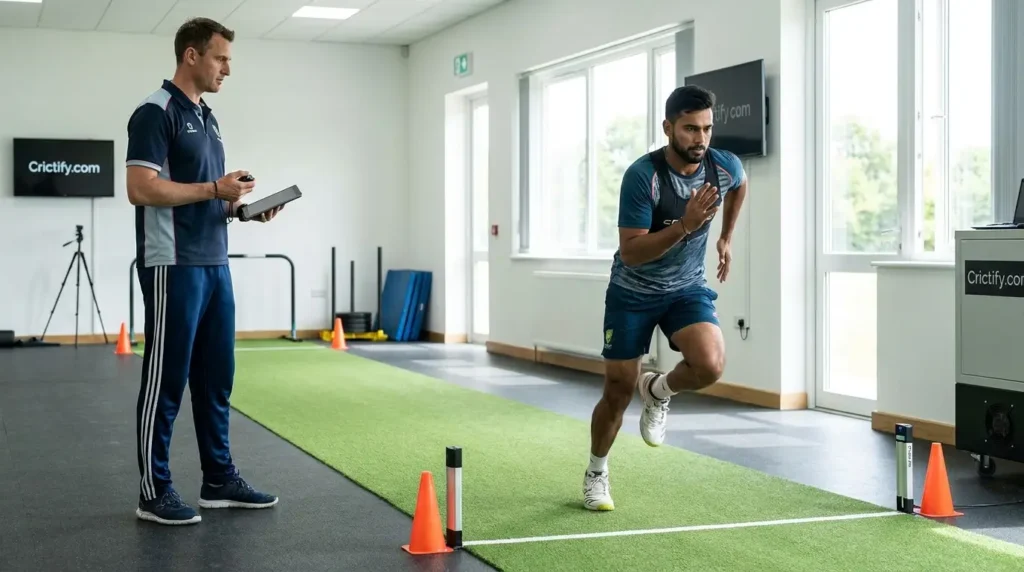
Return-to-Play Testing
Objective testing helps ensure readiness beyond “feeling fine.”search.
Useful Criteria
- Pain-free movement: No pain during walking, jogging, sprinting, or cricket drills.
- Strength symmetry: Hamstring strength within 90% of the uninjured leg (ideally measured via isokinetic or handheld dynamometry).
- Hamstring strength: Ability to perform single-leg bridge, Nordic curl, and RDL with good control and no pain.
- High-speed running exposure: Completed progressive sprint program up to 95–100% effort.
- Sprinting: Pain-free maximal sprints with normal mechanics.
- Functional movement: Single-leg squat, lunge, and hop tests with no compensation.
- Cricket-specific drills: Full-intensity bowling, batting sprints, and fielding patterns without symptoms.
Psychological readiness is also critical—if an athlete hesitates or guards the leg during drills, they may not be truly ready.
Prevention
Preventing hamstring strains requires a multi-faceted approach targeting strength, load management, and recovery.
Key Strategies
- Strength training: Regular hamstring, glute, hip, and core work—especially eccentric exercises like Nordic curls.
- Eccentric training: Prioritize lengthening under load to match sprinting demands.
- Sprint exposure: Maintain regular high-speed running throughout the season—even in off-peak periods.
- Warm-up: Dynamic, cricket-specific routines before every session and match.
- Mobility: Adequate hip and ankle range to support efficient sprint mechanics.
- Hip strength: Strong glutes reduce hamstring overload during running and bowling.
- Glute strength: Essential for pelvic stability and force transfer.
- Core strength: Maintains trunk control during high-speed actions.
- Load management: Avoid sudden spikes in bowling overs, sprint drills, or match frequency.
- Recovery: Prioritize sleep, nutrition, hydration, and rest days.
- Sleep: 7–9 hours nightly for optimal tissue repair.
- Nutrition: Adequate protein for muscle repair, carbohydrates for energy, micro nutrients for recovery.
- Hydration: Dehydration impairs muscle function and increases injury risk.
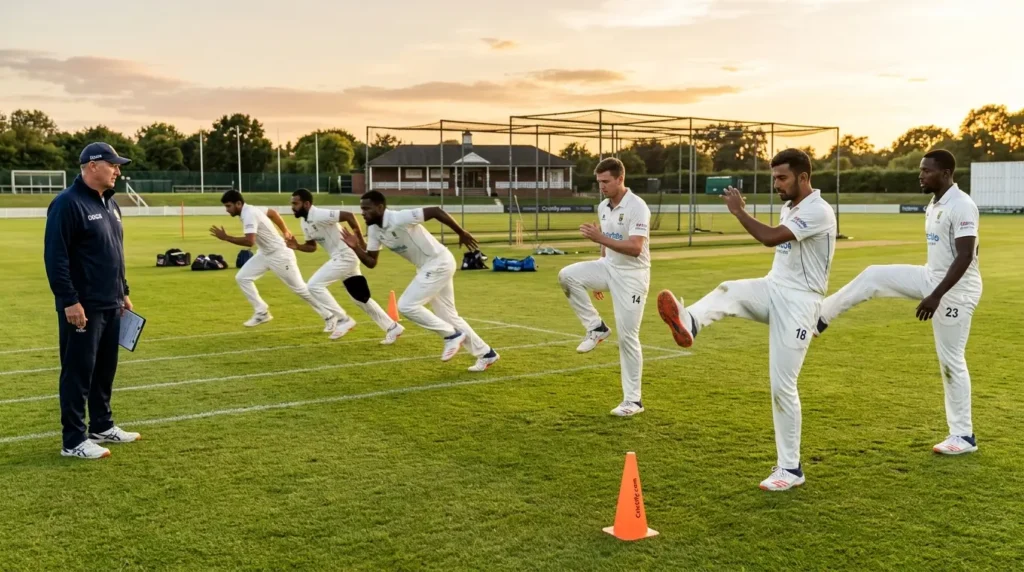
Cricket Warm-Up
A proper warm-up prepares the hamstrings for high-intensity demands.
Practical Framework
- General movement: 5 minutes of light jogging, skipping, or cycling to raise body temperature.
- Dynamic mobility: Leg swings, walking lunges with twist, hip circles, ankle mobilizations.
- Running drills: High knees, butt kicks, A-skips, B-skips to activate hamstrings and improve mechanics.
- Activation: Glute bridges, band walks, calf raises to “turn on” key muscles.
- Progressive acceleration: Build from 50% to 90% sprint efforts over 4–6 short runs (20–30 meters).
- Cricket-specific preparation: Bowling run-throughs, batting footwork, fielding movement patterns at increasing intensity.
Avoid static stretching before activity—dynamic preparation is more effective for sprint performance and injury prevention.
Stretching
Stretching has a role—but timing and type matter.
- Dynamic stretching before activity: Leg swings, walking lunges, and active knee extensions prepare muscles for load.
- Static stretching: Best reserved for post-training or separate mobility sessions. Aggressive static stretching immediately after acute injury can disrupt healing.
- When stretching may be appropriate: If an athlete has genuine flexibility deficits contributing to altered mechanics.
- Why aggressive stretching of an acute injury can be problematic: It may increase fiber disruption and delay recovery.
Stretching alone does not prevent hamstring strains—strength and load management are far more influential.
Strength Training
Strength is the foundation of hamstring resilience and cricket performance.
Key Areas
- Hamstring strength: Concentric and eccentric work (bridges, RDLs, Nordics).
- Eccentric strength: Critical for deceleration and sprinting—Nordic curls are gold standard.
- Hip strength: Abductors, adductors, and rotators for pelvic stability.
- Glute strength: Maximus and medius for hip extension and control.
- Core strength: Anti-rotation, anti-extension, and dynamic stability for trunk control.
- Calf strength: Supports sprint push-off and reduces compensatory hamstring loading.
Stronger athletes tolerate higher loads, recover faster, and are less prone to strain.
Nutrition & Hydration
Nutrition supports tissue repair and energy availability—but no single food “heals” a tear.
- Protein: Essential for muscle repair (1.6–2.2 g/kg/day for athletes).
- Carbohydrates: Fuel training and recovery, especially during high-load phases.
- Micronutrients: Vitamin C, zinc, and magnesium support collagen synthesis and recovery.
- Hydration: Even mild dehydration impairs muscle function and increases injury risk.
- Recovery nutrition: Protein + carbs within 1–2 hours post-training to optimize repair.
Work with a sports dietitian for individualized plans—especially during rehab or multi-day matches.
Sleep & Recovery
Sleep is when the body repairs damaged tissue and adapts to training load.
- Sleep quality: Aim for 7–9 hours nightly; poor sleep delays healing and increases injury risk.
- Recovery between matches: Allow 48–72 hours between high-intensity sessions early in return.
- Training load: Avoid sudden spikes in volume or intensity—progress gradually.
- Travel: Long trips disrupt sleep and recovery—plan extra rest when possible.
- Busy cricket schedules: Multi-day matches, tournaments, and back-to-back games require careful load management to prevent overload injuries.

Common Mistakes
Avoid these pitfalls to reduce reinjury risk:
- Returning too soon: Playing before strength and sprint capacity are restored.
- Ignoring pain: “Pushing through” sharp pain often worsens the injury.
- Stretching aggressively: Early overstretching can disrupt healing fibers.
- Sprinting too early: Jumping to max speed before progressive exposure.
- Skipping rehabilitation: Stopping rehab once pain disappears—strength may still be deficient.
- Poor strength progression: Not advancing to eccentric or high-load work.
- Ignoring previous injuries: Failing to address residual weakness or movement faults.
- Sudden workload increases: Rapid jumps in bowling overs, sprint drills, or match frequency.
Do’s and Don’ts
| DO | DON’T |
|---|---|
| Get assessed when symptoms are moderate to severe | Play through severe pain or limping |
| Follow progressive rehabilitation (isometric → eccentric → sprint) | Sprint immediately after injury |
| Restore strength symmetry before return | Assume pain-free means fully recovered |
| Reintroduce sprinting gradually (walk → jog → sprint) | Copy another player’s rehab programme |
| Complete cricket-specific drills at full intensity | Return to competition without adequate preparation |
| Maintain eccentric strength work (e.g., Nordics) in-season | Skip warm-ups or dynamic preparation |
| Monitor workload and recovery between sessions | Ignore early warning signs (tightness, reduced speed) |
Preventing Reinjury
Previous hamstring injury is the strongest predictor of future strain. Prevention requires:search.
- Strength: Maintain eccentric hamstring strength year-round (e.g., Nordic curls 1–2x/week).
- Sprint exposure: Regular high-speed running—even in off-season—to keep tissues adapted.
- Load management: Avoid sudden spikes in bowling, sprinting, or match frequency.
- Conditioning: Address hip, glute, and core weaknesses that may overload hamstrings.
- Technique: Work with coaches to optimize running and bowling mechanics.
- Rehabilitation completion: Ensure full strength, sprint capacity, and cricket-specific readiness before return.
- Monitoring: Track soreness, tightness, and performance—adjust load if warning signs appear.

Cricket-Specific Checklist
Before returning to cricket, consider the following (educational only—not a substitute for professional clearance):
☐ Pain-free daily activity (walking, stairs, light jogging)
☐ Appropriate strength recovery (single-leg bridge, Nordic, RDL without pain)
☐ Progressive running completed (walk → jog → run → sprint)
☐ High-speed running exposure (multiple sessions at 80–95% effort)
☐ Cricket-specific drills completed (bowling run-ups, batting sprints, fielding patterns)
☐ Bowling progression completed where relevant (half-pace → full-pace, overs built gradually)
☐ Batting running progression completed where relevant (singles → doubles → match intensity)
☐ Fielding progression completed (sprinting → direction changes → diving)
☐ Medical/physio clearance where appropriate (especially for Grade 2+ or recurrent injuries)
☐ Confidence restored (no hesitation or guarding during drills)
When Can I Play Again?
There is no single recovery date for every cricketer. Readiness depends on:
- Injury severity: Grade 1 vs Grade 2 vs Grade 3.
- Location: Muscle belly heals faster than tendon or myotendinous junction.
- Prior injury history: Recurrent strains take longer and require more careful rehab.
- Strength and function: Objective testing (strength symmetry, sprint capacity) matters more than calendar days.
- Cricket role: Fast bowlers need higher sprint and eccentric capacity than spinners or wicket keepers.
- Psychological readiness: Confidence to accelerate, dive, or bowl at full pace without fear.
Work with a physiotherapist or sports medicine professional to determine individual readiness—especially for competitive play.
15 Frequently Asked Questions
1. How long does a hamstring strain take to heal?
Recovery varies by grade: Grade 1 may resolve in 1–3 weeks, Grade 2 in 4–8 weeks, and Grade 3 in 3+ months. Tendon involvement or recurrent injuries often take longer. Individual factors (age, prior injury, rehab adherence) significantly influence timelines.
2. Can I play cricket with a hamstring strain?
Playing through acute pain is not advisable—it risks worsening the injury. Mild Grade 1 strains may allow modified activity if pain-free, but moderate to severe strains require rest and rehab. Always prioritize long-term recovery over short-term participation.
3. Can a hamstring strain heal without surgery?
Yes—most hamstring strains (Grade 1 and 2, and many Grade 3) heal with conservative rehab. Surgery is reserved for complete tendon avulsions or cases with significant functional loss.
4. When should I get an MRI?
MRI is useful for moderate to severe strains, recurrent injuries, or when diagnosis is unclear. Mild, improving injuries often don’t require imaging.
5. Is walking good for a hamstring strain?
Yes—pain-free walking maintains mobility and circulation without overloading the tissue. Avoid limping; use crutches if walking is significantly painful.
6. When can I start running?
Once walking is pain-free and basic strength exercises (e.g., bridges) are tolerated—typically 1–2 weeks for Grade 1, longer for Grade 2+. Start with easy jogging and progress gradually.
7. When can I sprint again?
Only after completing a progressive running program (walk → jog → run → acceleration → high-speed) without pain or compensation. This often takes 3–6+ weeks depending on severity.
8. Can fast bowlers return quickly after a hamstring injury?
Fast bowlers typically need longer rehab due to high eccentric loads in the delivery stride. Rushing return increases reinjury risk—prioritize full strength and sprint capacity before competition.
9. Does stretching prevent hamstring injuries?
No—static stretching alone does not prevent strains. Eccentric strength, sprint exposure, and load management are far more effective.
10. Are Nordic hamstring exercises effective?
Yes—Nordic curls reduce hamstring injury risk by approximately 50% in sprinting athletes and lower reinjury rates. They should be progressed gradually and maintained in-season.
11. Can a hamstring strain come back?
Yes—reinjury rates are 15–30%, especially if rehab is incomplete or eccentric strength is not maintained. Ongoing strength work and load management reduce this risk.search.
12. What is the difference between a strain and a tear?
“Strain” and “tear” are often used interchangeably. Technically, a strain refers to any degree of muscle fiber disruption (micro-tears to complete rupture). “Tear” usually implies more significant fiber disruption (Grade 2 or 3).
13. Can I bat while recovering?
Yes—if pain-free. Start with stationary shots, then progress to footwork and short runs. Avoid sprinting between wickets until running rehab is complete.
14. When can I return to fielding?
After completing sprint and direction-change progressions without pain. Start with light jogging, then build to high-intensity drills before match play.
15. How can cricketers prevent hamstring injuries?
Through eccentric strength training (e.g., Nordics), regular sprint exposure, dynamic warm-ups, load management, adequate recovery, and addressing prior injury deficits.
Final Thoughts
Hamstring strains are a persistent challenge in cricket—especially for fast bowlers, sprint-dependent fielders, and batters who rely on quick running. Early assessment, accurate grading, and structured rehabilitation are essential to minimize time lost and reduce reinjury risk.
Key takeaways:
- Early assessment matters: Don’t ignore sharp pain or limping—seek evaluation if symptoms are moderate to severe.
- Progressive rehabilitation is non-negotiable: Pain-free status alone doesn’t equal readiness. Strength, sprint capacity, and cricket-specific drills must be restored.
- Strength and sprint preparation prevent reinjury: Eccentric training (e.g., Nordic curls) and regular high-speed running are critical.
- Returning too early is risky: Reinjury rates are high when athletes skip rehab stages or return before objective criteria are met.search.
- Individualized guidance is important: Work with a physiotherapist or sports medicine professional to tailor rehab and return-to-play decisions.
For cricketers at every level, the message is clear: respect the injury, commit to the process, and prioritize long-term resilience over short-term returns. Your future self—and your team—will thank you.
Medical Disclaimer
This article is for general educational purposes only and does not replace professional medical assessment, diagnosis, or treatment. Hamstring pain can arise from various causes—including muscle strain, tendon injury, nerve irritation, or referred pain from the spine or hip—and cannot be reliably diagnosed from an online article.
Exercise selection, loading, and return-to-play decisions must be individualized based on injury severity, medical history, and functional testing. Players with severe symptoms (e.g., inability to walk, major swelling/bruising, audible “pop,” or persistent pain) should seek prompt evaluation from a qualified healthcare provider.
Always consult with a physiotherapist, sports medicine physician, or other licensed professional before beginning any rehabilitation program or returning to sport after injury.